[00:00:00] Intro
Stefan Halbherr: Liposomes have stood the test of time, and I think they are largely underappreciated. Oncology is a good example. You can load the chemotherapy in there, and that is very potent, but it has so bad side effects. You can mitigate all of that by putting that drug into a liposomal shell. I was amazed.
Philip Hemme: One thing that struck me as, as well is a story of the company.
In 2013, basically finished the PhD and then started engineering lipos- or working in the cellar.
Stefan Halbherr: People living in the building came, was like, “Man, what are you guys doing? Is that a drug laboratory or so?” I was like no, it’s pharmaceutical drugs. Very legal what we do.” Eventually, after two years, then we knew now it’s time to get out of the cellar.
Philip Hemme: Who is one of your biotech heroes?
Stefan Halbherr: From an entrepreneurial mindset, I look a lot sometimes to Elon Musk. The tech industry shows how it goes if it’s going fast and innovative. I think it’s a, a great spirit, and pharma can learn from it.
Philip Hemme: Welcome to a new episode. I’m your host Philippe, and on The Flood Bio Show, I’m interviewing the best Europeans in biotech to help you grow. Very few European biotechs have never taken any VC money. One of them is Inomedica. It has been funded by over 1,600 shareholders without being publicly listed. The Swiss company develops liposome-based drugs for Parkinson’s and in oncology.
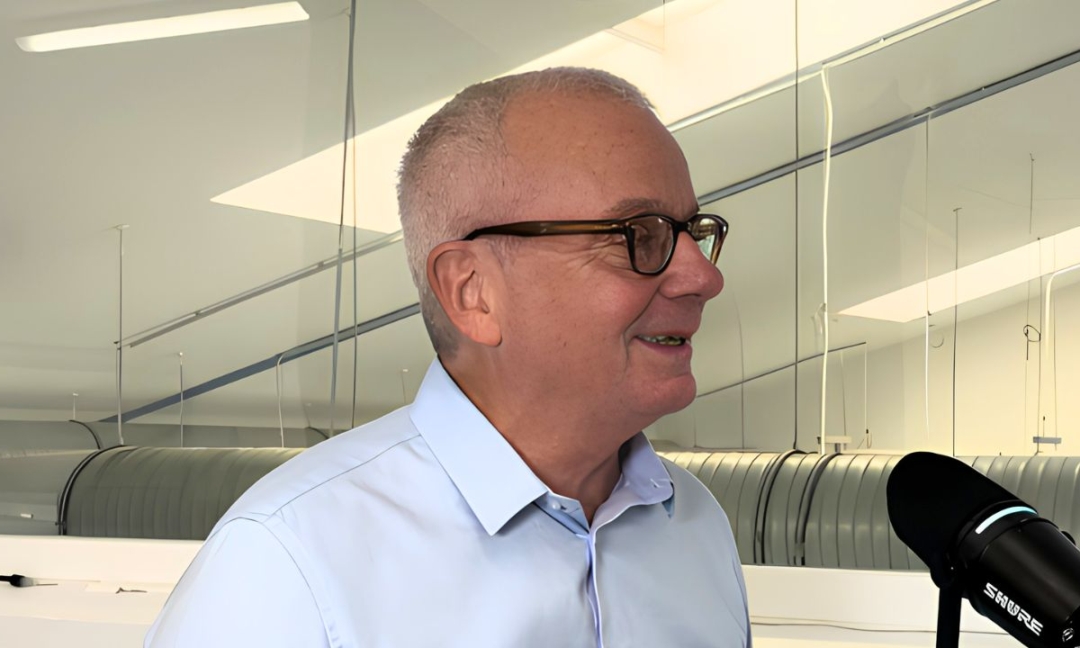
So I took the train to Fribourg in the center of, Switzerland to meet with the company’s co-founder, Stefan Habher, inside their own factory. I didn’t know Stefan, but he has been a longtime listener of the podcast. We talked about improving drug delivery with liposomes and about the challenges of building your own factory.
We also talked about making the hard decision needed to build a biotech. For transparency, this episode has been sponsored by Inomedica. So here’s my conversation with Stefan, and please hit the like or review button if you’re enjoying it.
Nice.
Stefan Halbherr: Hello, Philippe. Welcome. Welcome to this, Stefan. Thank you so much for having me, Philippe. Thanks.
Philip Hemme: Cool. Thank you for the lunch and here in, in Fribourg.
Stefan Halbherr: You’re most welcome.
[00:02:31] Why InnoMedica Built Its Own Nanofactory
Philip Hemme: Yeah. And so yeah, we’re in Fribourg and we are in your factory. My first question is first, why, basically why building your own factory versus maybe outsourcing it like a lot of biotech do to like a CDMO or outside supplier?
Stefan Halbherr: Oh, yeah. Build or buy, I think is a very relevant question for many people, especially to us. I think if you have technology that is fairly established, let’s say monoclonal antibodies, I think y-you will have huge resistance in competing with the people and the players that are already established in that field.
However, liposome technology, although it is I think an established form of galenics in formulation sciences, it’s I think much more segregated. There-there’s no one, one player that does it really well, and nobody else can– cannot compete. Even though I would even go further, like there is not a single pharma company that actually focuses on liposomal-based drug delivery.
Even though from a scientific point of view, liposomes are greatly popular, mostly amongst academic researchers- Yeah … for example.
Philip Hemme: Okay. And yeah, because the whole company, your platform is based on the liposome technology, and so I guess you also needed it kind of custom manufacturing.
The, the whole integrated you had needed the integration.
Stefan Halbherr: Yeah, that was the make or buy decision we had to decide on quite early. We were looking around what are the CDMOs able to deliver? And they were just not able to produce the product that we wanted to have, which are extraordinarily small liposomes, very cholesterol-rich membranes.
And the option to have not PEGylated lipids in there is where pretty much all the technologies– We always screened the, entire markets and all the systems, including microfluidics and everything, and at that last point where all the manufacturing techniques fall short, they always depend on the use of PEG lipids as well to get good particles.
Philip Hemme: Yeah.
Stefan Halbherr: Yeah.
Philip Hemme: Makes me– we talked about mRNA just before, but it makes me a bit the parallel where they also– there’s no one who could manufacture it because the tech was so different, so they had to build their own factories. But I guess it’s a similar parallel if in biotech, in drug, you are a bit too a-ahead Or a bit of very unique technology, you have to own the manufacturing as well.
So
Stefan Halbherr: yeah. And I think there, is example going into both ways. Like when, it played out really well, let’s say maybe Kite Pharmaceuticals with the CAR T-cells for them, And then they do their own
Philip Hemme: manufacturing.
Stefan Halbherr: Yes. For example, it was a, a very good example that you can save a lot of time and- Yeah
possibly money with it. And actually to, us also a big element is that you own that innovation cycle by actually figuring out all the solutions to the problems that come from GMP production. That is a great source of getting technologically on the edge and win the competition.
Yeah.
[00:06:12] How The Liposome Platform Solves Pharma’s Drug Delivery Challenge
Philip Hemme: And can we talk about about the, the platform itself? I know you kind of- I just not licensed it, but it came originally from Japan. And you’re basically solving a part of the delivery, which right now people are talking a lot about, like the delivery problem or the delivering the drug to the right tissue.
Can you talk a bit more about, yeah how, unique is your platform and what’s the, benefits there?
Stefan Halbherr: Yes. To my best knowledge what our production technique can do and others can’t is we can work without solvents if we want, or just water and lipids. We can make really small double-layered proper liposomes in the range of 30 nanometers.
Even though they have very high molar percentages of cholesterol in there, which is a very important prerequisite if you want the particle to perform in the bloodstream, and this is where most or all of the technologies that we are aware of and we routinely have them here at our factory to present their materials, and then we provide them the lipid mixtures that we work with.
So “Hey, does it work in that system?” And then, yeah, their answer is unfortunately no. And so we stick with the process that we have and are very happy with the attributes that the particles have that come out of that process. Very high cholesterol content, perfectly spherical, very small and very uniform, so small polydispersity index.
Philip Hemme: Okay. Yeah.
Stefan Halbherr: Yeah.
Philip Hemme: And we will talk– I- I’m curious on the, delivery thing because I, talked with a few guests on the show that said that delivery was a huge challenge in the industry right now, either to deliver small molecules or, let’s say biologics, but– or most, mostly to deliver also mRNA or, gene therapy.
H- how, like, how do you look at all of that? How,
Stefan Halbherr: Yeah, I think it, it depends a bit what cargo you want to deliver matters in the sense that yeah, if you want to deliver a whole virus sort of backbone genetic elements and all you do, and obviously you are working with viruses and you’re constrained there.
Then you have all the pros of using with viruses. They’re very infectious. They transform cells where they get very efficiently into cells. However, they are very immunogenic. Yeah, sometimes. And you have issues with biosafety and manufacturing. So I think liposomes, they have proven they have stood the test of time, and I think they are largely Underappreciated in the sense that in some areas, let’s say oncology is a good example, you can load the chemotherapy in there that is very potent, but it has so bad side effects that you have basically a guaranteed hair loss 100%.
You have guaranteed immunosuppression that come– can become life-threatening with febrile neutropenia, et cetera, very bad for the bone marrow, and some of the side effects are even irreversible, like cardiotoxicity. And you can mitigate all of that by putting that drug into a liposomal shell. And that was what– When I encountered that evidence I was amazed.
I was like, “Okay, with just loading the same drug into a different sort of excipient a functional excipient then suddenly it behaves like a different drug.” It has an entirely different PK profile. It has an entirely different risk-benefit ratio. And so I think it proves the point that you can be extremely successful doing that.
And I found it very compelling that you can carve out or, produce a biological carrier that in itself is completely non-toxic, fully synthetically assembled but still changes the, drug’s behavior entirely. And so I think I calculated out of that, and when I finished my PhD, Jacques Cannell dropped that famous Nature paper where they said yeah, there is a decline in R&D productivity that I think still holds that Eroom’s law, Moor-Moore’s Law backwards, yeah. So th-there was that big problem where people were thinking about, like, how do we increase productivity in pharmaceutical R&D? And to me, I think it wasn’t too clear. It’s still not clear yet if we will be successful with that mission, but I think I have good reason to believe- that with that model, to take all the champions molecules of the market or even some that dropped in between the l- the R- R&D productivity that got dropped you can rely– re-re-reinvent them by really advanced liposome systems and make some magic happen.
Yeah. Science happen. Yeah.
[00:11:38] Clinical Phase 1 Results and GM1 Ganglioside
Philip Hemme: And talking about magic, can you talk about your in your pipeline on your lead assets? ‘Cause at the end, I mean- It’s great to have a drug delivery technology, but what you want to show is you want to show also the, clinical trial and the clinical benefit in a human clinical trial.
So I guess– can you, yeah, ta-talk especially with Tidineur and your Parkinson’s drug Yeah. What were the results and what did you observe? What did you observe?
Stefan Halbherr: Yes, absolutely. So we treated 11 patients for three and a half years straight once weekly intravenously- With our drug, which is liposomal GM1 ganglioside.
And what we found is obviously because it was a phase one, we were looking mostly to safety signals, of course, and it was nice to find that a chronic application, which is possibly necessary in such a slowly degenerating condition, likely you don’t die from Parkinson’s, so you n- you need a medicine that somehow does what you want to actually cure the disease, that would be perfect.
But if you’re more secular just halting it or, stabilizing it somewhat or slowing it down would be highly desirable, so the drug should be safe enough in a way that you can give it for years. And so three and a half years was a good window to observe that with and get a lot of confidence then moving forward from that.
It was very safe. We had some infusion reactions that we were not prepared for, interestingly. Like the first infusion, you can give full speed, nothing happens. Second and third infusion, somehow you need to be cautious interestingly. So somehow not immunoglobulins or so, we checked all of that.
Somehow the, the body gets sens- sensibilized to the drug, and infusion two and three, you need to infuse very slowly. Otherwise there can be these acute immune reactions to the infusion itself, and which is likely have– it has something to do with the complement system we haven’t fully understood yet.
But there afterwards, like infusion four, five, and six- Yeah … thereafter, no problem at all. And even more interestingly, obviously, you look at efficacy signals like MDS, UPDRS scores, and we found that none of the patients got worse through the three-and-a-half-year period and some of them improved very dramatically.
Yeah. Even– Like, I think the best response was almost like 20 points of improvement.
Philip Hemme: The average was 10 points.
Stefan Halbherr: Average is minus 10, 11 points. Depends a bit which months against baseline you take. But the interesting part was that initial pushback of about 10 points, which reflects about two and a half years of natural Parkinson’s progression, that the clock got turned backwards.
That was something that was already described for the non-liposomal API for GM1 ganglioside. It was tested already in some academic studies in Parkinson’s, which was also to us a, a big de-risking. Yeah. And we were happy to see that we could reproduce what others have found already with a bigger magnitude although we reduced the dose by a factor of two.
We reduced the injection frequency from twice daily to once weekly. And the side effect profile got improved, and the, the magnitude was about twice as big, and then fully consistent over three and a half years. Yeah.
Philip Hemme: Yeah. Awesome. Yeah. It sounds like, yeah, really good results already. And but I’m curious for the for the payloads of GM1 because it’s– it is something that has been discovered before.
It’s-
Stefan Halbherr: Certainly, yeah.
Philip Hemme: Yeah. So but you can, you can– it’s generic or you can use it
Stefan Halbherr: but- One would say like- It’s like the generic … if there was a drug- Yeah … it would be a generic API.
Philip Hemme: Yeah.
Stefan Halbherr: However in Switzerland, Europe, US and all these high price attractive countries for pharma companies of most countries no, there is no drug.
There is actually in China, GM1- Yeah … is a thing.
Philip Hemme: Yeah.
Stefan Halbherr: And in some parts of Southern America, so I think Brazil has it on the market as a non-liposomal form, obviously- Yeah … in China too, and Argentina. So there are some companies that produce it GMP grade- Yeah … to make prefilled syringes out of it for subcutaneous injections.
And somehow it’s interesting that like for us, we had a good supply chain, even with quite a resilient one with, different companies that produce it, like in China or so. And fortunately, there was that company that produces it even in Switzerland and then exports it to Brazil, Argen- Argentina, and China and sells the drug there.
I was completely unaware that they existed when we set off with that. I just found GM1 for totally other reasons an interesting molecule because it’s a lipid, it’s an ideal sort of drug molecule to, be formulated as a liposome. It had pharmaceutical properties that no other entity can ever do.
GM1 is in the mechanics of life anchored. And so y- what GM1 does, if you administer it, you can never achieve by having an RNA or a, a protein-based therapeutic just by the way it works. Like it’s part of the lipid membrane. It transduces growth signals to neurons, for example.
It provides neuroprotection and so forth. So I think to me that was very exciting, you had a good supply chain even in Switzerland where is our home base. We had the GMP producers, so Swiss quality is always a big topic for us and having of course, reliable business relationships is also key in these kind of things.
And it was de-risked, like there, there were already significant amounts of evidence from, pre-clinics, from clinics even from various players, including leading academic research groups, which then led me to that event when we prototyped talin urine and it took shape. Yeah.
Philip Hemme: The– On the– I saw, that when I researched it on, the Chinese usage, and I saw that it’s in the billion dollars of sales annual.
I don’t know how much it’s true, but like it’s not like a few people using it. It’s like at a massive scale.
Stefan Halbherr: Yeah.
Philip Hemme: It’s crazy that it’s only in– or almost not exclusive in China, but it’s mostly in China and not in the Western world. It’s-
Stefan Halbherr: It’s interesting to know, like- Yeah. Weird,
Philip Hemme: like- …
Stefan Halbherr: We, live in that bubble where we always think like Switzerland is the greatest country of all and everybody is behind us.
And we obviously hear sometimes that’s maybe true, but sometimes that’s not. And interestingly, yeah, in China, it’s one of the top five selling drugs, or at least used to be. I think at one point then government stepped in a bit and- Yeah … started to tighten the rules because they really used it for pretty much everything- Yeah.
Yeah … Which is possibly not a good thing with all the pharmaceuticals. If you put it into the drinking water yeah. It’s not the best idea. Yes, exactly. But certainly it proves the point that it’s an interesting molecule. It has a great potential, even in an unrefined, simple way to administer it subcutaneously.
There, I think the issue is like there’s no IP, and most of the Chinese don’t care, like because they can– they are very strong in producing and they they like that space. But to us, obviously, it’s paramount to have new IP, and with the liposome we provide that and provide significant benefits.
So you have like once weekly instead of twice daily. Yeah. I think we will be able to stretch that even further to once every two weeks or so. Yeah. And you reduce the dose by about half. Yeah. It’s also always great, and we have a much better safety profile because these daily– twice daily subQ injections, they produce irritations of the skin, hematoma, sort of skin-related, injection site-related side effects that damages the skin, especially for like chronic administrations, you need something that is feasible.
Yeah. So yeah, we’re not fully there yet. Obviously- Yeah … the best way to, do it would be an oral dosage form. Yeah. Somehow that has worked in animals very well actually, very reproducibly. But I was too scared to try that in clinical trials directly because like as a startup, yeah, you have one failure in a clinical trial and then you’re cooked.
Yeah. So I have– I’m holding that back for maybe later on.
[00:21:31] Crossing The Blood–Brain Barrier
Philip Hemme: Yeah. Yeah. Okay. And how is it with the, like crossing the blood blood-brain barrier-
Stefan Halbherr: Yeah …
Philip Hemme: for the liposomes? And because in the end, you want to target mostly the brain for Parkinson’s the neural cells. And I guess also your GM1, if it’s just injected intravenously, like most of it get degraded also in the, blood system or how– and, then– and how much data do you have there on the-
Stefan Halbherr: Yeah.
We do have quite strong biodistribution data investigating mostly obviously our medicine. Yeah. Not so much what others could do or could– can do. How it works is, I think twofold. There, there are two mechanisms that we exploit that make it to go– to pass the BBB. Yeah. One of them is on the BBB, there is obviously the transferrin receptor that Roche and BioArctic and other people are trying to, exploit as a, shuttle mechanism.
We do– we go different way. We go with the Mincle receptor. Yeah. So Mincle receptors usually recognize body-own lipids or body foreign lipids. Yeah. And if they encounter body foreign lipids, somewhat like a toll-like receptor, a bit different. It’s an immune receptor. If it encounters like fungi or, LPS or so from bacteria, it will trigger inflammation.
However it can also recognize body-own lipids, and when it does, it just shuttles them and apparently the minkle receptor is highly expressed at the BBB, which makes a lot of sense because the brain somehow is the fattiest part of the human body- besides maybe belly fat. The composition of the fat of the brain is very special, and it is to the highest degree, it’s made of these glycolipids called gangliosides.
And to me, I think that is just an overwhelmingly interesting scientific rationale because I sometimes say like the whole bio– the whole pharma industry has that protein bias. MRNA encodes for protein or all the, the monoclonals, et cetera. It’s all proteins. However nature obviously uses proteins to build stuff, but it uses also carbohydrates and lipids besides, and nucleic acids obviously as these sort of chain-like polymer molecules And I think for the brain, the evidence is most striking that you can think yeah, not all diseases that brains can have are possibly connected to the protein realm of the brain, given that it’s made mostly out of lipids, actually, not out of proteins.
And so with the proteinopathies like Parkinson’s and Alzheimer’s, it gets really naughty. Somehow we see that these things arise with age it’s almost completely absent in the younger phases of life. So seems to be a process that connects to, aging and somehow you can-
Philip Hemme: Because the onset is 60 or something.
Stefan Halbherr: Yeah I, wouldn’t– I would need to check out the median onset, but it’s certainly like in the o-older phases of life, I would say. And you can somehow see that the, the whole mass of the brain actually starts to reduce in sort of you have this pathological weight loss of or an atrophic brain in ma-many of the cases where not only like you s- it’s not like with that idea that Alzheimer’s is only defined by having amyloid beta plaques or tau or so, and Parkinson’s would be only like having alpha-synuclein clumps and Lewy bodies.
That just falls way too short. And so I think, yeah, for us, that’s an exciting time. I think it’s fairly de-risked. There is so much academic research also o-on that end about lipids and how they impact the, the neural– neurological functioning system, and we’re alone. I think on one hand it’s good to have no competition.
Obviously we compete with all the other approaches, be it like regenerative medicine or these targeted monoclonals or so at the end. It doesn’t matter what modality you give at lo- as long as it’s good medicine. Yeah. Yeah.
Philip Hemme: Okay, and- Okay.
Stefan Halbherr: Sorry, I think I forgot to mention the second point.
You asked how it reaches the BBB, right? Yeah, And how it goes through. One is the Mincle receptor- Yeah … that shuttles that. Yeah. Recognizes it as endothelial and endogenous lipid, because Taliolirine is made of body-owned lipid, sphingomyelin, cholesterol, GM1 ganglioside. Yeah. Just the three. And then there is this other mechanism that in the very, very fine capillaries of the brain, so as these blood vessels branch out, they become thinner and thinner.
In these very, very thin capillaries, nanoparticles that are sufficiently small can also extravasate into the BB– through the BBB quite efficaciously. So we have, I think, one mechanism that is receptor-mediated with Mincle receptor and one other that is more related to the physical form and the size, yeah.
[00:27:23] The Clinical Trial Timeline
Philip Hemme: Okay. Okay. And then– Okay, so you have this– you have these results You know the biodistribution and then so what’s the next steps then you want– you go into a phase two with, more patients because you already have some efficacy data, so you want to expand or what’s the- Yeah … What’s the next step there?
Stefan Halbherr: Yeah, after these 11 patients we had another cohort enrolled with 10 more because we needed to figure out how to control that infusion reaction. We knew from these 11 patients that it occurred about in about 50% of the patients for reasons we didn’t fully understand. But it was an issue because it would trigger immediate unblinding in a placebo-controlled setting.
You would know, like– Yeah … you get the, the reaction like you’re, getting the Verum. So– And anyways, it was a safety concern that we needed to address. How do you administer it safely? And that was the second cohort of 10 further patients, and there we had an adapted dosing schedule where we gave the infusion two, three, and four in four hours.
Philip Hemme: Okay.
Stefan Halbherr: Which is a bit cumbersome to do, but if you do it very slowly at the beginning, then somehow nothing happens, and you can administer it very safely. So that was that second proof, figuring out the an- administration scheme that is well suited to– for chronic administrations. And then the study went on a bit, like the fir– the, the second cohort only got six months of treatment, and we saw again that pushback of the disease and had some follow-up.
We also had a follow-up with those 11 patients that got three and a half years and interestingly, they did not deteriorate again. Once we stopped the treatment for nine and 12 month– nine and 12 months, we had a follow-up where they did not get treatment and just were under observation, and if we only treated the symptoms, a dopaminergic- Yeah
Levodopa or so, you would expect that those patients join basically the natural progression that they would have had. Yeah. And they didn’t So they stayed well below where the natural progression would expect them to lie, which-
Philip Hemme: Long-lasting effect
Stefan Halbherr: Yes, which I think to us is very encouraging again that pro-possibly we have modified some underlying thing that produces that chronic progression.
Although I have to say like we have reason to believe, we don’t have full proof yet. It’s the, the strength of our phase one is that it’s a signi-significant body of evidence with not so many patients, but a very long treatment. And so what’s- But it lacks placebo
Philip Hemme: And what’s the next step you need then?
So you need to compare to placebo?
Stefan Halbherr: Yes, exactly.
Philip Hemme: That’s the- And the phase two, you go direct phase two or phase two three or what, like-
Stefan Halbherr: I think we call it phase two if it’s phase 2B or so, I wouldn’t know. But that’s– I think the one missing piece is certainly that placebo-controlled efficacy in Parkinson’s.
Everybody knows like you can get placebo effects if you get unlucky. Certainly they are not– They’re usually in the magnitude of one or two points, never really 10 or so. So we still think okay we, made– Based on the phase one, we made our statistical calculations. We ended up with about 10 patients that would already be sufficient in the treatment arm, so 10 and 10 theoretically could give enough if our treatment, if our– if the statistical effect size is as big as we got it from phase one.
If it’s a bit smaller, 10 and 10 would already be too short, too weak of a sample, so now we powered it with 20 calculating some dropouts if anything happens there, and some buffer for– from the statistics point of view. But we didn’t formulate it as a hypothesis testing clinical trial. It’s still a hypothesis generating clinical trial.
The primary endpoint is an efficacy endpoint in the sense that we measure part three, UPDRS part three motor scores, like the gold standard that also FDA recommends. But we don’t do a prospective hypothesis testing. We just say we, collect descriptive statistics want to know the 95% confidence interval, so to say.
And obviously, you can then retrospectively from that data, you could do p-value calculations. Yeah. But we don’t already now in that phase two want to announce that. Basically the, the, idea behind it is now to approach a beta test, you could say where we want to see how mu- how big is our s- placebo-controlled statistical effect size.
From phase one, we know the non-placebo effect size, and from phase two now we want to know the placebo-controlled mathematical effect size. And from that, you then have a very comfortable, I think situation to power your phase three. Also, we have some more biomarkers. We didn’t have any biomarkers. We just had those descriptions through the questionnaires that the neurologists use all the time, the UPDRS scores.
And now in phase two, we have biomarkers with serum and neurofilament light chain, for example and some digital biomarker. That was also quite a, a nice project to see. We work with Virtuosis, which has a, a voice biomarker. So since Parkinson’s is like a muscle motor disease- Okay … apparently how you produce sound with your voice is an act of muscle, obviously.
Yeah. And somehow a microphone is a very sensitive- How you vocal
Philip Hemme: chord-
Stefan Halbherr: Yeah.
Philip Hemme: Activate basic… Okay.
Stefan Halbherr: That’s right. Yeah. And they had– have a very nice software that based on 30 seconds or a minute of audio it can analyze the, way the, the audio structures, how do these waves come, sound waves, and can detect very precisely how well the patient is actually doing in an unbiased way.
Otherwise the gold standard of Parkinson’s still has the rater bias, so to say.
Philip Hemme: If you ask, it’s a questionnaire. Yeah. Like- You ask the
Stefan Halbherr: patient … you still fill it out, yeah.
Philip Hemme: It’s like in pain or the-
Stefan Halbherr: Yeah,
Philip Hemme: yeah … The– Yeah. Okay, and then just quickly, but on the timeline, then what, how– without being too precise, but what’s like roughly, what’s the timeline you, I don’t know, for the f- when are you stopped and, yeah. When will you be done with it? The next steps, like?
Stefan Halbherr: Yeah. I think The study is likely to start in December formally.
Philip Hemme: Yeah.
Stefan Halbherr: But we cannot really recruit patients at the 20th of December, and then immediately have the protocol deviations and everything because people are on Christmas leave and New Year, et cetera.
We possibly, if everything goes well it’s formally approved in December, but recruitment will start early January. We’re ready with six hospitals now all over Switzerland and hope that Swissmedic gives us the final approval in the next weeks. Then we have a couple of enrollment stages.
So first 10 patients are included in one wave, then 10 more patients are included in the second wave, and then in the third wave, 20 patients at one blow gives together 40 patients. That gives a bit of a staggering-
Philip Hemme: Yeah …
Stefan Halbherr: As the study unfolds. So even though the treatment duration is 24 weeks, so almost like half a year the whole study until the last patient has the last infusion of that double-blinded placebo-controlled part can easily take a bit more than a year.
Okay. So I think towards summer 2028 or so, we are in a very safe space to have that readout. Yeah. That might be the one most exciting thing in my career probably, I think. Yeah. We are all a bit afraid, of course what the data will tell us, but also we look into the future with a lot of confidence still.
I think you can always fail especially as a scientist in pharma, right? But I think we made our checks and balances very, well. We work, The risk profile of GM1 in Parkinson’s is so different than if you have these new chemical or biological entities Where you really know nothing basically, or if you know– just know the thing that your R&D was able to do.
And I think that’s the, the, the hard part like how should you de-risk your asset with an in vitro test or so if the disease is Parkinson’s, it’s such a poorly understood disease. Yeah. So
Philip Hemme: yeah. That’s why most neo-neuro drugs fail as well, like- Exactly … we can talk about it. I think we can talk about neuro a bit more general and Parkinson’s a bit more general.
But before that, I’m curious just on the, rest of your pipeline, because you’re the oncology drug, which I think you deprioritized.
Stefan Halbherr: Yeah.
Philip Hemme: Or like– so right now your main asset is talinurine in Parkinson’s.
Stefan Halbherr: That’s right.
Philip Hemme: Yeah. And then the rest is more in preclinical- Yes … or early stage.
Okay.
Stefan Halbherr: That m-mainly comes from our financial limitations. Like the, the– these later stages of clinical development burn a lot of dry powder. And we have to be cautious not to, stretch our liquidity reserves, et cetera. Now, at these delicate phases, like you have to, take one step at a time in a very controlled way.
And so I think the oncology drug, Talidox, is a great asset, and we have it, IP protected, and we’re working on the smaller flame still on it. It certainly deserves to see the light of day at one point, but given that we had to prioritize and focus our financial resources now very f- decisively talinurine is just entirely new.
Like it’s a glycolipid that’s a new substance class, where almost no therapy exists. The most of the brain mass is composed out of it. Yeah. And so I think, yeah, the– we have just very little competition and a gigantic upside to realize there, which led us to that decision to prioritize. Makes sense.
I hope it will be r- … not like my biggest mistake ever made or so, but we’ll see. Yeah.
Philip Hemme: Hope so too. It’s biotech and biopharma. I mean-
Stefan Halbherr: Yeah …
Philip Hemme: have to keep fingers
Stefan Halbherr: crossed. The universe will do what it does.
[00:39:28] Financing Without VCs: Partnering, Licensing and IPO
Philip Hemme: And on the, I’m curious on the financing side because that’s one thing that quite struck me-
Stefan Halbherr: Yeah
Philip Hemme: When I looked you guys up is that you never went with venture capital. You’re not publicly listed, but you also have a very large shareholder base, I think with, kind of doing– You had some secondary sale or like you organized kind of secondary sales. Yeah. Can you talk a bit about on the whole financing on how you structure it, why you structure it that way?
Yeah.
Stefan Halbherr: I think- You have to look at it from a sort of evolutionary perspective, how the company was started off as a financing construct where I had nothing to do with it. The idea was that Innomedica Holding invests in healthy aging a bit similarly as some other traded funds or so that are publicly listed because they are big enough or so.
So they were preparing already to have a listing on SIX at some point. Then the, subprime crisis in 2008 told them to go a different way, but sort of the ticker symbol at SIX already existed. They already had quite some shareholders. Most of them obviously wanted to go out and then that buyback or buyout came- It was publicly listed?
No, it was- No, it had a ticker.
Philip Hemme: It had a ticker, okay.
Stefan Halbherr: It had a ticker, but it was not listed yet.
Philip Hemme: Okay.
Stefan Halbherr: So they were in the- Just- … in the racks. They wanted to do it, but then as as they were ready, their business model was hel- was investing, et cetera, just went up in flames and nobody cared anymore.
And so the company just had that ticker symbol at SIX a- and a shell and some money, but no project, no– zero employees. And that’s when my brother and I and my dad and some of my friends stepped in and we used sort of that shell company, Innomedica to make it into an operational new company that has nothing to do with the old one.
But we had already quite some shareholders from them. Okay. So like in the 15 or so, and our first capital increase was with those guys and ourselves a very small circle of friends, family, and fools, and whatever you wanna call the people that do these kind of crazy adventures. Believers, I don’t know.
And then just the circle started to spread. Like we, we had projects that people could relate to. Every– Our our, pioneering effort was just oncology, safer, better chemotherapy. For a lot of time, everybody knows somebody who died from cancer and maybe had chemo before and how horrible that was.
And so we had– we were doing R&D on topics that many people could relate to, and so they… Then my dad, I think, was the key player there. He said, “Look, in Switzerland, if you have a good prospectus, you can file it at SIX regulations.” And then you can actually raise money from the public. That’s Swiss law allows that, and he said “Let’s try that.”
Because he felt like those topics are something the public relates to, and probably also the public wants to own it to some degree and, have a say in it, where it goes, and be a player in there. And so this is how we then started very small first, these public capital increases where the public was just friends and family.
But eventually the, the public became a bit broader, like people from Switzerland that felt it’s interesting what we do. We had some events throughout Switzerland where we pitched. Yeah. People could ask questions, and now we have 1,650 shareholders. Yeah. I think the, smallest shareholders have invested like 10, 12K, sort of the minimum amount.
And the bigger ones obviously double digit million tickets or so, yeah. Yeah.
Philip Hemme: Okay. But the– Okay, so it’s still a six- Kind of framework, but you’re not publicly listed, so you don’t have a tech stock taker.
Stefan Halbherr: Yes.
Philip Hemme: Not publicly listed stocks.
Stefan Halbherr: Not yet. Soon, hopefully.
Philip Hemme: Not yet.
Stefan Halbherr: Yeah.
Philip Hemme: Okay.
Stefan Halbherr: That’s I think my battle plan-
Philip Hemme: Okay
Stefan Halbherr: is with that placebo-controlled efficacy. Yeah. If the data looks great possibly that will be such a weightful evidence that we’ll be able to partner. We were not able to partner yet because what we do is not what others do. We don’t have a technology that boosts the performance of things that they already do.
Novartis and Roche and others, they don’t really focus on liposome technology. They have other things like small chemicals or, biologics. And so I think they say “Look, it’s super interesting what we do– what you do, very promising data, but too– for us it’s too early for– we want to see that placebo-controlled efficacy,” and really have no more reason to say no, basically.
Then it’s when they step in, and so that’s the current battle plan is with that efficacy readout, possibly we can make a nice licensing deal to then do the phase three, maybe some early approvals, conditional approvals throughout the line there, and possibly go IPO.
Philip Hemme: Okay.
Stefan Halbherr: So don’t know exactly.
We-we’ll not promise to do it, but it’s a plan.
Philip Hemme: It’s I mean-
Stefan Halbherr: Yeah …
Philip Hemme: we talk with a lot of guests about in biotech you want optionality. And you- it’s, it makes sense and IPO is, an option for most biotechs.
Stefan Halbherr: Yeah. Why not? Especially for us- To finance … because we have so many shareholders.
Philip Hemme: And for you yeah It’s interesting because it’s basically so– crowdfunding in a way.
Stefan Halbherr: Yeah. You could call it like that, yeah …
Philip Hemme: basically, because if you raise only from angels, it’s very at a limited scale, notarized, whatever. It’s when the dozens of people, I guess you cannot go to 1,000 people.
But then– But I know also that crowdfunding, some people tried it for biotechs, and then it was always very national regulation or– But I guess Swiss, if you– I know there’s always different frameworks from different- Government doing it yeah There was never like a really European or like a more global framework.
So- As
Stefan Halbherr: always, each country has its own rules. I, I think to my m- best knowledge also like SpaceX- Yeah … for example, in the US they, have it sometimes quite similar. SpaceX in its earlier days before it got listed- obviously it was a stock that many people found very interesting, and so they had also in the thousands of shareholders already without being a listed company.
Yeah, And I w- don’t know the US law- The employees had Yeah, that, but that doesn’t matter. What matters is to my knowledge, is when you have a certain amount of shareholders, eventually you have to list- Yeah … and really become a public company. Yeah. And SpaceX was testing the waters there a bit.
Yeah. Yeah.
Philip Hemme: That’s and,
Stefan Halbherr: But it’s possible, like you can do public- Yeah … if you want yeah.
[00:47:43] Cash Flow and the New Raise
Philip Hemme: And and how much on the, more on the cash flow point of view? Because I saw you had some fundraising time to time. You talked about how much dry powder or how much cash you have to run the trial, like- How, much is– what do you disclose from a cash flow point of view?
Or do you– I mean, I don’t know how much is public or not, like-
Stefan Halbherr: Yeah. Most of it is visible in our business plans that are more or less public.
Philip Hemme: Okay.
Stefan Halbherr: Certainly they are non-confidential- … If that’s synonymous as public. But yeah, it depends a bit on the activities. Like if the company just runs the nano factory, the clean room, and some some R&D, we’re in the range of a half a million a month.
Philip Hemme: Yeah.
Stefan Halbherr: And obviously if we have multiple centers recruiting patients, need to produce a lot of batches then the burn rate starts to increase to approximately a million a month.
Philip Hemme: Okay.
Stefan Halbherr: So yeah.
Philip Hemme: That’s 12 million a year. And then-
Stefan Halbherr: Yeah …
Philip Hemme: Roughly when, let’s say whatever, 10 to 12. And then what was the last fundraising or how much you have like liquidity on the, like on the balance sheet, basically?
Stefan Halbherr: Yeah. The last financing was at a valuation of around 70 million with 250 a share, and we raised 7.6 million.
Philip Hemme: Okay.
Stefan Halbherr: Which was I think a, a very fortunate turn back then because we had some issues with Swiss medic blocking the recruitment of patients into the clinical trial because they had concerns about the quality of the medicines we made.
And now we had to invest a lot of money actually to change the buffer with the old talinarine was formulated in sodium chloride at physiological concentration. That was great and all, but in some instances it produced visible particulate matter during storage which made the regulator go bonkers and stop everything.
And we tried to find a quick fix through filtration, which they did not allow, unfortunately. So we had to move even further and actually make a, a product that, does not have any issues of aggregation Which was a known thing for liposomes per se or LNPs or even viruses these days have these kind of issues.
And found, a solution, solved it, and now had a huge dialogue with the regulators throughout the last six to nine months showing piles and piles of stability and production data. And now on the 26th of October we got note from Swissmedic that they accept the quality of the new drug product to the full extent.
That’s a good news. Have some more question about other things again, but, There are always questions. Yeah, Certainly that one then was a huge relief to us. Yeah. So
Philip Hemme: last, last week, basically.
Stefan Halbherr: Yeah, pretty much. Yeah. Like on Thursday it came and we were like, “Oh, yes, finally that one is off the table.”
Because to us that was very painful sort of wanting to do that placebo-controlled research, but still had to, work on the formula but the great thing is we have a new– we can file a new patent now on it. Yeah. And if we want to extend the IP for again 20 years.
Philip Hemme: Okay. And so how– so– and on the– so how much cash you have left on the balance sheet then for– or like how- Yeah
what’s your runway basically?
Stefan Halbherr: Yeah. Now we rai- we’re raising again a smaller capital injection of 5 million. Yeah. Again, at the, the valuation of last year of 70 something million for the company. Because we had sort of– we, we saw the fuel in the tank is not that great anymore, it reached a, tipping point in the three, four millions where we said “Look, we have to get action and we have to get active.”
Back then it was not Thursday the 26th where we did not know what Swissmedic will say and had to decide look, it’s playing with fire if we wait longer. Obviously, we want to wait longer and have a, a more concrete thing from Swissmedic in our hands to raise money, but we didn’t.
So entrepreneurs move forward. You have to get going and work with whatever you have, right? So we said “Look, let’s raise a bit of cash, not all that we need or so, but some just to get that study now off the ground, possibly as we are raising capital that green light from Swissme- Swissmedic will come, but one can never know what the regulator does.
So yeah, let’s do that. So we’re raising 5 million now at I think a very attractive valuation and general the risk profile of the company is a very different one now, especially that the new formula from a quality point of view got fully accepted. So with that 5 million of fresh cash the Libra study, the placebo-controlled efficacy study can start and enroll I think the first 10, 20 patients.
And then we’ll do a refinancing to do the rest and finance the, the whole thing through so that we can read the data of the double-blinded phase fully. Yeah.
Philip Hemme: By summer, you said by summer 2028-
Stefan Halbherr: Yes …
Philip Hemme: you will result. Okay. Yeah. Okay. And,
Stefan Halbherr: That one will be then announced maybe in March, April next year or so.
Philip Hemme: Yeah. Yeah. Okay. Yeah, so if Swiss Swiss people are watching. I guess it’s only for Swiss investors then if it’s
Stefan Halbherr: We can accommodate also foreign investors- Yeah. Okay … especially if they have a UBS account. Things are easier- … because UBS is very helpful for, these kind of things. We work very closely with them.
Okay. Worked with Credit Suisse before also, but they ceased to exist. They got gobbled up. But also now we have we have a hedge fund that invested seven digit from Russia and some US citizens as well, but smaller parts obviously. But yeah,
Philip Hemme: It’s possible.
Stefan Halbherr: Okay. Yeah
[00:54:30] Beginning in the Cellar: How Stefan Halbherr Launched InnoMedica
Philip Hemme: Let’s talk– there are a few topic we can cover, but one thing that struck me as, as well is the story of the company.
You mentioned a bit in our discussion now the history of the company and how you pivoted, and you talked to me when we walked through the factory and how you entered the story. That is pretty cool. I found that in 2013, you basically finished your PhD and then you started engineering light bulbs or working on in the, cellar-
Stefan Halbherr: Yeah
Philip Hemme: Trying to get the company or the, at least the, the pharma part of the ground. Can you t-talk a bit on the, where the story of some of the missing piece compared to what you said now in, in the story and in your personal involvement?
Stefan Halbherr: How that went? Yeah. I think- like hindsight I was not in control of the situation back then.
I just went with the flow in the sense that I did my PhD and actually my brother and my dad said like my brother was anyways fed up with universities like, “Oh, it’s not for me that I’m not doing that.” And my dad was an entrepreneur for his entire life and so he said “Yeah, look let’s do– you guys do something with that Inomedica thing I have.”
So he got quite sick and went to the US for a a big surgery and he tell, told my brother then “Look go, into the office and pay the bills so I don’t get any issues. And while you’re at it maybe you have an idea what you can do with Inomedica. It has– It’s a company. It has one patent I have from a friend of mine for one buck and but no employees but maybe you have an idea.”
Like companies need people with ideas and then that’s usually the start. And so he went in there he wanted to become a musician actually. He’s a great piano player. But he went in there and paid the bills and read the patent and at, at night when I finished my PhD lab work, we were discussing like, ah, what we can do with that patent and He’s like, “Yeah, probably nothing, but with other things you could maybe do these liposomes in a really good way.”
So he, during paying the bills, he then searched the web. I went on, did my PhD still and he found Noboru Yamazaki.
Philip Hemme: Yeah.
Stefan Halbherr: And naive as he was, he just tried to contact him by phone and by email and eventually actually w- he found him. So the Japanese- That was the- …
Philip Hemme: guy in a Japanese company.
Stefan Halbherr: That’s right. Yeah. That was Dr. Noboru Yamazaki from Yamazaki Drug Delivery Systems- From Ibaraki- Okay … and Tokyo, and he had 25 y- years of research in highly ranking academic institutes in Japan in drug delivery using liposomes. So my brother found him and told him “Look, hey, we have this Innometica thing, and we really like liposomes.”
Philip Hemme: “And you have really good ones, I
Stefan Halbherr: think. Do you want to work together?” That’s basically what he did. Wow. And then Noboru immediately replied “Yeah you can right now decide to basically take the blue pill and work with me personally or take the red pill and work with my employee– employer, which was his research institute where he was still in.
Philip Hemme: Okay.
Stefan Halbherr: And then my brother did not think twice. He’s like, “I don’t care about who you are employed with. I care about you and your liposomes and maybe some IP you have to it or so. Can we talk?” Yeah. And then he was immediately very, open and friendly to, that dialogue, and eventually we fused the two companies together.
Did not spend a single dime, basically- But had a lot of IP, a lot of talent, a lot of knowhow from a guy who did not much else than liposomes for his entire life. So then my dad was like, “Look, you have to-” fly that guy in, give him a bed and an apartment, and learn from him directly. This is how things are done.
And he was old school. And I think it has its legitimization to me, that was totally new. I, was– I, I just finished my PhD then- Yeah … And I had no clue about how you do actually things as a businessman, so- or as an entrepreneur. So we flew him in, we fused the companies, and then he told us for two years straight, I was living mostly in the cellar of that office building we had, doing liposomes with him.
And sometimes people living in the building came. It’s like, “Man, what are you guys doing? Is that drug laboratory or?” And it’s like “No, it’s pharmaceutical drugs,” it’s different. It’s very legal what we do. And we all had a good laugh and yeah, we didn’t have this garage to be a garage startup.
We were a cellar startup. Yeah. But yeah we, ordered from AliExpress and all kinds of sort of online shops the, the things we needed to, to get prototyping going as quickly and dirty as possible. Yeah. Cost saving, of course. And that proved to be very good to have that samurai-like mentor on the side.
That gave us such a boost to sort of– He was at the end of his career- Yeah … was a bit annoyed that a lot of his learnings or so are going to waste and rot in time now, and nobody cares about it. Typical academic you have all those fancy papers, nobody reads them or cares about them.
And so he was like, for him, that was the opportunity, which I think gave him the, reason to do it with us. Yeah. And so we had a private teacher for two years. And then eventually after two years, I think we, ate all the evidence he fed to us and all, all the techniques and started to go our own way a bit even further than where he was.
Yeah. And that was the birth then of TaliDox and TaliNeuron. Yeah, okay. So we filed new IP- Yeah … For those drug products.
Philip Hemme: That’s when you started also preclinical.
Stefan Halbherr: Yeah. And then-
Philip Hemme: Everything else,
Stefan Halbherr: yeah … yeah. Then we knew now it’s time to get out of the cellar.
Philip Hemme: What day was that? What, what year was that when you went out of the cellar?
Stefan Halbherr: I think it was 2015-ish.
Philip Hemme: Yeah,
Stefan Halbherr: okay. 2016, so two, two years- Yeah … after the company took shape. Yeah.
Philip Hemme: Yeah. That’s crazy. I love these stories.
Stefan Halbherr: Oh, yeah. It’s quite tough actually like being in the cellar all the time. It’s summer outside, it sucks. But if you love what you do– I think that’s my learning.
If you don’t like what you do- Yeah … You’re, going to crack under that pain. Yeah, And if you really enjoy– I think, like why, is Roger, Fe- Roger Federer such a great tennis player? Yeah. I think it’s a great question. I don’t know the answer though, but I can give at least my thinks- If you put some- My thinking is possibly Roger Federer just likes playing tennis a lot.
Yeah. Because like many people would pro-probably say “Now it’s enough tennis for me. I want to do something else, something more exciting,” and Roger just kept playing tennis, over and over again. So you have to get somehow even a-addicted.
And I think to me I’m quite addicted to this pharmaceutical space and drug design and liposomes I like a lot.
Philip Hemme: Yeah. That’s good.
Stefan Halbherr: Yeah.
[01:02:43] Love What You Do, and Cultivating Emotional Intelligence
Philip Hemme: I was about to ask you about more lessons or personal lessons from your journey, but,
Stefan Halbherr: Yeah …
Philip Hemme: I think that’s a good one. Yeah. And y-you– Yeah. I can, relate to it.
And I heard it several guests told it, and me personally the same Yeah. You need to love what you do, I think, in life in general, but when you build a company, it’s so, difficult that if you don’t love it and you don’t have fun doing it it’s, not impossible, but it’s hard. Very hard.
Especially in pharma. What did I read last week or two weeks ago that the– that you said that the biopharma industry is a soul-crushing industry or something?
Stefan Halbherr: Any industry is, I think. They suck the life out of pretty much everything when optimizing profits, like-
Philip Hemme: Yeah. Yeah. But just from a, like– No, but you were saying more from a rate of failure and then how difficult it is to get through.
Oh, yeah.
Stefan Halbherr: Yeah.
Philip Hemme: And I think it is technically true, and you need something to outbalance it, and you need some, yeah, fun and some passion and some fun. Otherwise it’s hard to go through,
Stefan Halbherr: I think it’s the one thing that all these high achievers have in common. At least also the professional sports athletes or Steve Jobs, Elon Musk, or so they just, enjoy so much what they do.
And they obviously then, once you’re in that positive feedback loop where the environment resonates positively to your actions, then you get even more sort of tailwinds and feel even more encouraged, and it’s easier to like what you do if people resonate and say “Keep going. It’s awesome.”
Philip Hemme: Yeah.
Stefan Halbherr: But to get there, you have to actually a- face a lot of resistance, and if you then don’t like what you do you just, you stop too early. I think that’s the one parallel that all these successful people have. They liked it very early already for whatever reason. People can like almost everything.
Philip Hemme: You need to, explain.
Stefan Halbherr: Yeah.
Philip Hemme: You need to, have the passion, not necessarily to know all the
Stefan Halbherr: reasons
Philip Hemme: for
Stefan Halbherr: it. It doesn’t- Yeah. Which is interesting, no? Because we teach in schools and universities, you get taught anything but emotional intelligence. And now you and I sit here, we look each other into the eyes yeah, emotional intelligence is probably one of the most important skills you need to have to be a successful individual in any kind of undertaking you want to do, right?
Yeah. Interesting.
Philip Hemme: You learn it after.
Stefan Halbherr: Yeah.
Philip Hemme: I’d, I, I discovered emotional intelligence literally discovered it in, I don’t know, 2019.
Stefan Halbherr: How?
Philip Hemme: A mentor of mine said “You’re really good at, like- At like being rational, I was very rational, very structured, very processed, like getting things done, stuff.
But she said but emotion, I think you, you there is something to explore there.” I was like, “Got no idea.” And then you have this book, “Emotional Intelligence,” and you can look quite deep. But then I went also down the rabbit hole, and it was true, right? Very little feeling for my own emotion, but also it’s not just your own, it’s also how you interact with people, how you manage people, a lot of things and- yeah, there is a lot.
Stefan Halbherr: There are a lot- It’s complicated to formulate in, in, in good words, actually. Yeah. You could even say yeah, if you don’t work with your emotions too, you just work with half of your brain because certainly half of the brain is somehow related to emotion. Emotions are su- is in a
Philip Hemme: like large, in a like psychology-
Stefan Halbherr: Yeah,
Philip Hemme: exactly.
Stefan Halbherr: Yeah …
Philip Hemme: like kind of way, and you can be more on autopilot, more like rational decision-making, but the psychology part plays a huge role, so
Stefan Halbherr: Yeah Yeah. Yes.
[01:06:42] Quick-Fire Questions
Philip Hemme: Okay. I’m seeing the time. I wanna finish. I think we can finish with more, a quick quick fire. So more like quick questions, quick answers.
One question, first question: Will, we have a drug that slows Parkinson’s in the next 10 years? Approved
Stefan Halbherr: 80% yes. I would give it a like, no.
Philip Hemme: Yeah, because we didn’t talk about the Parkinson’s basic yet. No, there’s basically nothing is- It’s interesting- … more developed on this, and then there’s no drug that like actually was like, like changing– like a physiologically changing effect or reversing this, basically nothing like, Yeah.
But okay. 80%. For another discussion.
Stefan Halbherr: Cure it completely?
Philip Hemme: Yeah.
Stefan Halbherr: Cure it,
Philip Hemme: But even just reverse or even like disease modifying
Stefan Halbherr: is almost nothing. Yeah, if you just stop it at the very early stage or so, I would say yes.
Philip Hemme: Okay.
Stefan Halbherr: Like completely rejuvenate- Yeah … the whole body and the brain or so, possibly no.
Philip Hemme: That will take-
Stefan Halbherr: No …
Philip Hemme: longer. Okay. One, the biggest mistake you made in the past 12 months?
Stefan Halbherr: I think I only make mistakes. That’s I think– My, my attitude is everything that’s wrong is my mistake. I think I’m sometimes at company meetings I say, CEO is being like the trash bin of the company, where everything that goes wrong is your problem.
And to me, I think, yeah, in, in retrospective, there is not a s-single thing which you could not do better- afterwards. Like you’re smarter, hopefully, or almost always. Like- and I think this is a very powerful attitude that you are always aware of your limits and that in hindsight, everything could be better, but you still need to move on, and that you use your power or so to… People sometimes are afraid of mistakes because it’s so negatively co-connoted and I– that’s I think a good leadership role that you tell people like, “Look, mistakes are nothing that are, is like per se bad, especially if you learn key things from them.”
Yeah. The, the biggest thing can be actually that one mistake.
Philip Hemme: One thing that investors misunderstand about Innomedica?
Stefan Halbherr: That venture funds could not invest in us. I think we, could carve out part of our business, be it like the neurology division or the oncology division in a separate company, put all the assets there or so, and then they can invest in a new cap table that they like sometimes very dearly.
But depends a bit. I think we’re certainly very open there.
Philip Hemme: Okay.
Stefan Halbherr: And
Philip Hemme: a more, light question. English, Français or Deutsch?
Stefan Halbherr: Or Schweizerdeutsch. I, yeah, I think my, my DNA is in Swiss German. Like- Yeah … it’s my mother tongue, so to say. Then English is like my business and the internet language.
And French I usually speak when I speak with Frenchies in France. It’s usually when I go surf, for example, in Biarritz or so. I spend a lot of my free time and yeah, I love Fr- French and it’s great. But I’m speaking it way worse than the other two,
Philip Hemme: that’s good. No, because actually in Fribourg it’s bilingual.
Yeah. So it’s really both versus-
Stefan Halbherr: And actually, yeah …
Philip Hemme: Versus some other part of Switzerland which is much more like French part, let’s say Geneva or Lausanne, and let’s say Zurich, which is definitely more, more German. But it’s cool to have these two and then obviously with English. One current or past biopharma company that especially inspires you
Stefan Halbherr: Oh, many.
What I found very interesting is that Aspen Biosciences just IPO’d I think what was that, two weeks ago or one week ago with their regenerative cell therapy approach in Parkinson’s.
Which I think with quite a nice market cap of around $400 million- which proves yes if-
Philip Hemme: They raised, what, 140 or something, 150 million?
Stefan Halbherr: I would need to check again how much they raised, but it was pretty good, I would say- Yeah … Given that they are still very early stage, et cetera. And in my opinion, Parkinson’s is as much as a systemic disease as a disease also of the CNS. So it has both. So Aspen and their IPO I found very encouraging.
But also that there’s the Omkepri, the– from Sumitomo which is again a cell-based medicine that got a-approved by the Japanese regulator very early, also from a phase one. Yeah. I find Cuti’s also pretty cool- Yeah … with their regenerative tissue. Yeah. I think that was on the show.
Yeah. So lots. Okay, cool. I could go on. Yeah.
Philip Hemme: And maybe a last one who is one of your biotech hero or like a mentor?
Stefan Halbherr: Huh. Hey, actually, I think from an entrepreneurial mindset, I look a lot sometimes to Elon Musk. I think politically I better not say anything, but when it comes to how to make enterprises or so, I think the guy is a genius.
And there, there– we do have some parallels to it also. It’s difficult to see, but the vertical integration, for example, I, I– that he had at Tesla- is something that I f- I take some courage from him and the Tesla example that it’s worth doing it, especially if you’re producing something that is difficult to produce, which is for us the case.
But then I think otherwise, obviously the story of Moderna and BioNTech are, great ones that are in the same range as we operate with these lipid nanoparticles and Stéphane Bancel and Ugur Sahin. Yeah, and I just genuinely like to, work with the oncologists and neurologists from the clinics and have, have a bit of everything.
One of my credos is like, everybody you will ever meet knows something you don’t. And so it’s very interesting sort of to, to speak to all these different players, including regulators, how they see the world. Like it’s so different. You have these many views, like VC kind of views on, the business, patients regulators.
It’s, yeah, it’s very interesting to have these different views actually, yeah.
Philip Hemme: But I like that also taking the inspiration also from a very large inspiration from-
Stefan Halbherr: Yeah, I think the tech industry shows how it goes if it’s going fast and innova-innovative. So I think the, the pharma industry has a lot it can learn from the semiconductor and software industry.
Although, yeah, we have a lot of guardrails from the regulations, et cetera. It’s obviously you cannot ship out a beta testing prototype in the hopes that maybe it will work or not. Yeah. Maybe it’s sterile or not, certainly. But still they– the way they, they– the philosophy of how they make companies, how they shape prototypes and move on, et cetera, I think it’s a, a great spirit and pharma can learn from it, yeah.
Philip Hemme: Cool. Great way to, to finish the thing. Great.
Stefan Halbherr: Thanks.
Philip Hemme: This was fun. Yeah. Great discussion.
Stefan Halbherr: My pleasure. Thanks, Philippe.
Philip Hemme: I’m impressed by how Stefan went from a cellar lab to where they’re, they are today in the clinics with some efficacy data while financing the company in a very original way. I’m also impressed by his passion and belief in liposomes. If you have enjoyed this episode, please hit the like, follow, or review button.
Any of these actions would help many more people discover the podcast. I would also love to hear what you think, so if you could leave a comment wherever you are or shoot me an email at philip@flot.bio. That’s P-H-I-L-I-P @-F-L-O-T.bio. Thanks again to Innomedica for sponsoring this episode and thank you for staying until the end.
See you in the next episode.