[00:00:00] Intro
Philip Hemme: GLP-1’s amazing results on diabetes, for sure, but also on obesity
Christian Angermayer: Lilly became a trillion-dollar company. It’s the first pharma company ever because of weight loss. And now all the biotech and pharma industry is waking up and it’s wow, there is a lot of money in vanity, in consumer biotech and here we are.
Philip Hemme: About AI in drug development, how much is there noise versus signal?
Christian Angermayer: It’s gonna be extremely speeding up preclinical development. You still have to go through the clinical stages. AI can smooth some things, but not dramatically reduce it. There is a lot of people who believe, oh, wow, from finding a drug till approval, it’s now just a year, and obviously that’s not gonna happen.
Unfortunately, we live in a society where we glorify sleep deprivation. If an investment banker tells me, “Oh, I’m working on a deal for you, and I did an all-nighter,” I… And I was like, “No, you practically, your IQ is as if you’re super drunk. Go home and sleep.”
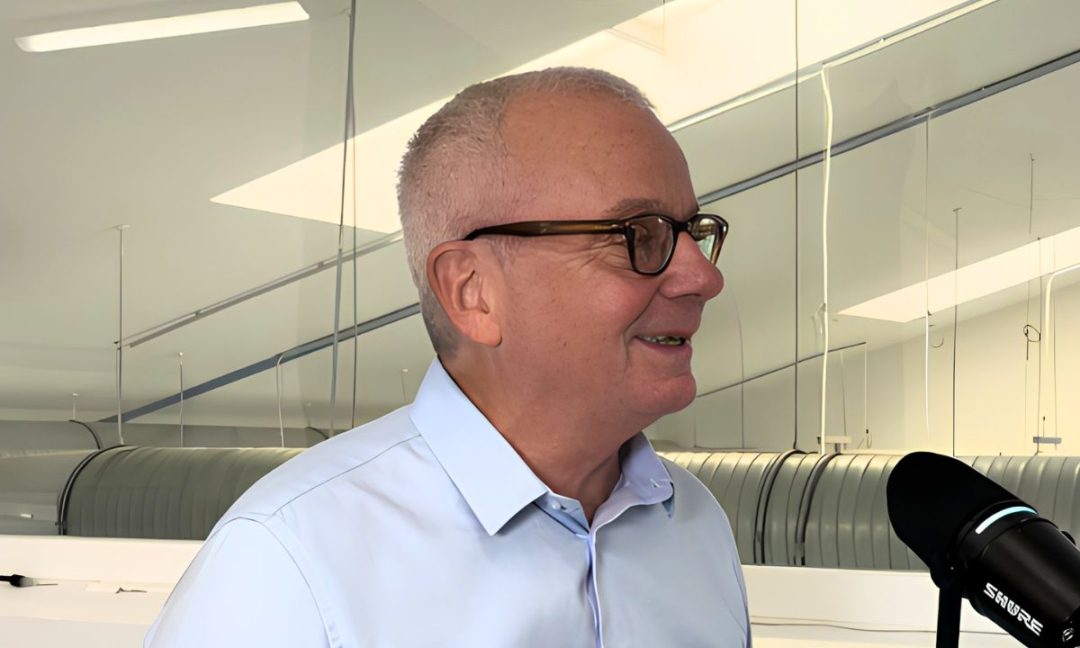
Philip Hemme: Welcome to a new episode. I’m your host Philip, and on The Flood Bio Show, I’m interviewing the best Europeans in biotech to help you grow.
Christian Angermayer is one of the most unusual European investors in biotech. He has successfully invested in consumer biotech/human enhancement, psychedelics, longevity, but also invest across a very large range, going from crypto, tech, media, and even natural resources, and he’s a billionaire at 48, and starting from basically nothing.
We have been in touch for a few years, but I have never talked with him live, so it’s a pleasure to sit down with him and to have him on the show. We caught up online while he was somewhere next to a stunning lake in Europe. We talked about his biotech investment, but with a scientific, clinical, and drug development angle.
We also talked about comparing things that seem completely crazy at the beginning, but are quite obvious in hindsight. So here’s my conversation with Christian, and please hit the follow, or subscribe button if you’re enjoying it. All right. Welcome to the show, Christian.
Christian Angermayer: Thanks for having me.
Philip Hemme: Yeah, it’s cool.
A- and I’ve seen that you went on quite a lot of podcasts recently, but I didn’t see one that is more like drug development biotech one,
Christian Angermayer: yeah. La- last weeks we had a– last month, like there was obviously we had enhanced games and there was a lot of interest in that and yes, but it’s– was always more like around the sports side, always a little bit of biotech, so very happy to dive deeper into biotech.
Yeah.
Philip Hemme: That’s cool.
[00:02:38] Crazy Consumer Demand for Mounjaro, Zepbound and Ozempic
Philip Hemme: And I wanna really start with consumer biotech ’cause like Mounjaro, Zepbound for, for– so for the audience, best-selling drugs ever now, like 37 billion last year ahead of cancer drugs. I think– And what’s crazy with the consumer biotech angle that 50% of the intake is consumers, so n- basically non-medical use.
So I’m wondering just to start how do you look, how do you look at it?
Christian Angermayer: Yeah, so by the way, A, I think it’s in the meantime even more, I think it’s more than 50%. And I would not call it just because non-medical use sounds so experimental. It’s medical. You get it from your doctor, but it’s called off-label.
So meaning people don’t use it for the indication- Yeah … Ozempic or Mounjaro, whatever, was originally developed from. Because as a reminder, I think actually not a lot of people even know that because they call it the weight loss drug, yeah. But like the drugs are clinically medically approved still for diabetes.
This is where they’re coming from. These are originally diabetes drugs. And then for really like heavily obese people, for clinically obese people.
Philip Hemme: Yeah.
Christian Angermayer: And so then- People figured out but why do I need to be clinically obese? For example, I’m on a GLP-1. Yeah. I’m hopefully, I’m not clinically obese, but like for me I call it outsourced discipline.
Yeah. Because like I’m a stress eater and even if it’s good stress, but when I’m like fully immersed in, in my job, which I’m most of the time, then oh my God, there is a cookie and there is this, and I’m hungry, like- Yeah … and yeah. And so I normally gain weight actually when things are going because like then I’m really busy.
And that just shuts that down, like this sort of thinking of food. So anyway, but so more than 50% are like me. They’re taking these GLP-1s to lose weight. Yeah. But from a medical sense, they don’t need it. So it’s called off-label use. It’s still medical use- Yeah … but not for the originally intended indications.
And I think that is only the first one because like I was always like… So I’m super happy at the moment about the topic because since I’m biotech, I started like 28 years ago, which makes me super old.
Philip Hemme: Yeah.
Christian Angermayer: I started my first biotech company, and the very first thing I did, I was 20 back then, the very first thing I did was like asking all these scientists I was meeting, “Oh my God, what can I do,” back then with 20, to either age slower, I was always thinking about aging already- but also like to be just like, to work harder, to be more concentrated- For me, it was always very normal that when you have– and obvious and consequential that when you have access to all these top scientists in the world and doctors were like, would you ask them, “How can I improve myself?” And it was a big no-go, by the way, because like- I don’t know why, but like the entire pharma and bi– I can tell you why. There is a reason, but like- a historical one. But like the entire pharma and biotech sort of industry was only focused on curing really diseases. Yeah. And obviously, by the way, that is very important. I know, like this should always be- Yeah
the number one sort of thing of biotech, but but they were very disregarding, and it was seen as dodgy and as like bad. “Christian, why do you wanna take medical drugs- If you’re not sick?” And I was like why? Because I wanna look better. I wanna- be smarter,” whatever.
Anyway, so- But, yeah … so I, I was always seen as the, a little bit odd one out or crazy one in my own industry. Yeah. The good thing is we had a lot of success in biotech, so people couldn’t say I’m idiot. But they were like, “Christian- … that was like, yeah, crazy.” Then I did psychedelics we can talk about, which was the same.
Yeah. Yeah,
Philip Hemme: let’s talk about it.
Christian Angermayer: And now suddenly, and actually really thanks to all these weight loss drugs, people are waking up to what exactly what you said in your intro. Oh my God, this is a huge business. A huge business. And I feel like, again, I don’t wanna I’m, again, I’m a little bit like happy about all this development because like I always told my colleagues, I was like, “Guys, like luckily not everybody is sick, but everybody has something you wanna improve.”
If we find drugs, medical drugs which improve something, weight loss, muscle gain, whatever, the market is much, much bigger than luckily the market for cancer is. Luckily the market for something bad is. So and they waking up now because they’re looking at the numbers. Yeah, look at Lilly.
Lilly became a trillion dollar company. It’s the first
Philip Hemme: pharma
Christian Angermayer: company- That’s another one … because of weight loss. And now all the biotech and pharma industry is waking up and is “Wow, there is a lot of money in vanity, in consumer biotech.” and here we are.
Philip Hemme: Yeah. It we’ll touch on a lot of topics you talked about from your personal f- career to psychedelics.
[00:07:45] Clinical Trials and Side-Effects: Can GLP-1s Benefit Non-Obese People?
Philip Hemme: To stay on the topic on what you said, and I wanna take a bit the other angle, more the challenging angle. I’m wondering on the– because one thing that I, and what I researched as well is on the GLP-1s. The clinical trial like amazing results on diabetes for sure, but also on obesity.
We are talking around whatever 20% gain loss, which is has never basically never been seen. And they even compare it to intense diet, and the intense diet is basically around 5%. So it’s like a, like even with a placebo controlled. But then one, one thing where, it’s less clear is if you take it on a, in a non-medical setting, as you said, in a non like
Christian Angermayer: obesity- Yeah.
Philip Hemme: Non-obese patient. Yeah … not clinically obese patient or even at a smaller dose that’s not demonstrated as in, in a clinical trial. And that there you have a bit of like gray area of how much it really works. Oh, I- Is there like-
Christian Angermayer: I can tell you what- …
Philip Hemme: actually side effects or not, and how much actual value you get out of it.
What, how you, how do you like respond to that, like?
Christian Angermayer: So I’m not fully sure, but I can’t also say now that I know. Like I, my guess is because it’s like such a big business, they must have done studies which lesser obese people as well. Meaning I can tell you my N out of one, like I’m on a GLP-1.
Yeah. And I just started in January again because like end of last year was so busy, gained a little bit of weight. Then I went into the new year, I was like, “Oh my God, we have enhanced games in May. I’m not gonna look like…” Yeah. So I was very like, I need to look proper next to my athletes. So I started in January, and I think I lost like more than 10 kilos.
So it definitely, meaning it, it definitely works, I would say the same. Like I lost really like quickly, like over is it now five months six months. Yeah … so side effects, meaning side effects don’t really change If you’re starting as a clinically obese person or a normal person or a normal weight person, yeah the side effects are very well documented, and there are side effects.
I don’t think there are a lot, but look, that’s my– I tell for every medication is the good thing is once they through FDA approval, and then by the way, even more when they’re on the market for a long time. And don’t forget these GLP-1s are on the market for a fairly long time for GLP-1 for diabetes, so they’re not new.
Yeah, they may be new-ish, but new-ish in biotech means they’re like, they’re at least 10 years on the market, I wanna say. Because I heard the first time about the weight loss effect in 2018, but they were already on the market for a while then for diabetes. What I wanna say these are not super novel medications.
So A, we know the side effects because of all the FDA trials, but then we also know the side effects because there is the real life use cases. And as there is… Pharma companies have to follow up when medications are
Philip Hemme: on- Yeah. Phase four. Yeah. Yeah.
Christian Angermayer: So I would say we know everything we should know about about GLP-1s or you never know everything.
That’s maybe too strong a statement. But like we know really a lot.
Philip Hemme: No. Yeah. A good
Christian Angermayer: lot. Yeah. And, like with every medication, that’s why I was al- that’s the only reason why I was correcting you and was still, I… Still medical use, because you have to go through a doctor, get it with a doctor, and you have a doctor supervise you.
Because my whole point is yes, I’m a huge fan of what you call off-label use, meaning- using medications to improve yourself, even if this is not the originally intended indication. However, I’m very insistent that off-label use has to happen medically within the medical system with a doctor together, because only then can you really observe how you’re reacting to it.
And there is nothing in life really, at least in terms of intake of substances, which has zero side effects. By the way, if you drink excessive alcohol, has side effects. If you-
Philip Hemme: Or coffee or
Christian Angermayer: whatever. Yeah. So exactly. And you need to just know your body and observe it because like side effects are also very individual.
So- Yeah … so I, for example, don’t have any side effects on GLP-1, so I’m lucky. But if people had, I would tell then monitor it and then stop it. Yeah. So or stop it. Like it’s And so I’m lucky because I’m in the industry, I know my body I’m li- but even I am going like every two months to a doctor at least, like has full blood work done.
Like I’m extremely rigorous when it comes to monitoring my body, and if I did anything which is not good for me or has side effects I’m not willing to tolerate, yeah- Yeah … then I would just stop it.
[00:12:52] Prescriptions and Drug Risks
Philip Hemme: Yeah. At the end any drug even off label or on label is always benefits risk.
Christian Angermayer: Exactly. And by the way, that’s the whole life, by the way. If you’re like- I think
Philip Hemme: for y- what you said, it’s GLP-1, you have a pretty clear positive benefit-
Christian Angermayer: We, know the start point … at
Philip Hemme: least for you
Christian Angermayer: Do it with a doctor, observe it, and then- if you have some side effects, by the way, side effects always sound so negative.
Side effects can be mild. Okay- Yeah … if you have, if you’re a little bit nauseous, then you need to decide, do I wanna be that for a while? Because normally it goes away. Yeah. Or do I don’t want it? A- as you said, everything in life is if is if you get- Trade-off … if you get married and your wife or your husband wants monogamy and you don’t want it you’re like, “Okay, the side effect of marriage is monogamy.”
Are you willing to take it or not? You know what I mean? Everything is a trade-off in life. Literally everything, and it’s your subjective discussion if you wanna take this trade-off.
Philip Hemme: I like that. On the- What I’m curious also on the– ’cause another thing that is, that I is the off-label use.
What you describe is and what your approach is very, I would say quite rigid and solid scientifically, medically but what I feel also in the whole the industry is that some people will do it less medically or will take some shortcuts, and some people are pushing the– on the other side, the people selling it are pushing it quite like intensely as well, and making it easy that it’s not like– it’s still monitored, you still need a prescription, but like that you can do it online, telehealth, and that you form the form, y-you fill the form yourself, and that you can get the drug and that you can do it a bit more openly.
And then at the other side, you have a financial gain. As you said, it’s a huge market, huge needs, so some people are profiting from it. Do you like, do you see that
Christian Angermayer: okay. I– first of all, I think like as long as these medical drugs are still prescription drugs, which I’m very advocating for, and you have to go to a doctor, even if it’s telehealth, and by the way, I have with Enhanced Games, we have a-
Philip Hemme: Yeah
Christian Angermayer: telehealth side where we’re doing exactly that. So you can go online and get certain prescription drugs, including GLP-1s, but you have to still do that. I think that is a sufficient enough hurdle- To have people understand, again, what we just said, monetary side effect, whatever. Yeah. Yes, can people always game the system?
Can people do it not as rigid? Yes. But that again, that is humanity. That is life. That’s the same when– by the way, and we have much worse. I would actually say g- give me the, I give you the sort of counterexample where something is very toxic and we don’t limit access as all is alcohol.
Alcohol for me is a benchmark for a lot of my thinking. If you look scientifically at alc- at alcohol, it is the worst what people are doing. Yeah, the worst. Like for whoever like is watching now and has not seen it, because I always mention it in every podcast because I think it’s so graphic, and again I don’t want that many– I’m on a conquest against alcohol, but like I don’t wanna sound as a party pooper, but like I at least want people to know because they– it already starts with alcohol, that people don’t know that how bad it is because it’s- so prevalent and so around it. Whoever is, watching or listening, look up David Nutt, who’s a very famous and amazing neuroscientist. So David, and then the word Nutt, N-U-T-T, and then chart, because he wrote a whole book about that. But like the book is condensed in that chart, and it shows you the downsides of what we call colloquially recreational drugs.
It’s actually legal and illegal just to have- side recreational drugs. And if, and what the short version is the outcome is that alcohol Is by far the most dangerous and destructive and negative recreational drug, actually worse than heroin, which people normally think is the worst. Yeah. Then followed by everything what you think is bad, crystal meth, crack, whatever.
Yeah. So but alcohol really strongly, by the way, holds the first place. So why I’m saying that is because, A, alcohol is everywhere. Yeah. And I actually say, look, ideally alcohol should be illegal because it’s so bad, but we should at least limit it to a, prescription. I think that would be the minimum society should do, should say, “Look, if you wanna drink alcohol, you have to go to a doctor.
The doctor will tell you every single time how bad it is, and then you get your weekly prescription.” I know it sounds crazy, but again- if you look at the toxicity of alcohol, yeah, that should what we should do.
Philip Hemme: Yeah. That’s great. I remember the gra- I saw there’s a graph and- my remember is more about the level of addiction you develop in-
Christian Angermayer: it, it-
Philip Hemme: but there’s also toxicity, but, and it’s hard to argue that the toxicity of alcohol is worse than heroin.
I think it’s-
Christian Angermayer: Oh, it’s more complicated than you think scientifically because I, again, and I wanna make clear because that one-
Philip Hemme: Depends on the dose, but yeah …
Christian Angermayer: So the problem with heroin is that at a certain dose it kills you, which is of- by the way, but I wanna say like David really did an amazing job because he was quantifying all of that.
Exactly what you just said is like we need to quantify risks because there are different risks. Can you get addicted? Is it toxic for your body? Does it do permanent damage to your body? Can you die? Then you need to rank how worse is the risk of dying immediately versus the risk of being poisoned gradually.
And he made a very mathematical, scientific… By the way, never disputed. This was a Lancet published- sort of way of looking at it. Yeah. And yes, for example, heroin has, that’s why it’s the second place, has the very bad, super bad indication that, or super bad effect. If you take too much, yeah, then you die, and that is obviously very bad.
But otherwise, if you look at, I don’t wanna say names now, but there are pop stars out there, or rock stars out of the ’80s, yeah who I know because I have a touring company, and we worked with them, who definitely take a little bit of heroin every day with a doctor together. So if they do it every day with a doctor together, and I’m not advocating for it, I just wanna show you the difference.
But they don’t overdose. Yeah. The heroin itself in a low dose has less toxicity on the body, so they don’t have damage, which alcohol would do. Again, both is very bad, don’t get me wrong. But what I’m saying- is I really believe, and it’s your reaction proves it, that we’re defending alcohol too much.
So alcohol has this instinctive reaction. But no, but we’re doing it since a long time, and it’s No, it is really the worst. And we just in this societal delusion, yeah, that there is, that it’s not that bad. Yeah. Again, and like I only wanna go come back to your original question. I wanna use that as a measurement where I’m saying, look, people can always game the system.
Yes, and people can ac-access GLP-1s even with a doctor and then be loose with it. But it- can never be that bad than alcohol is, and we need to give a little bit of freedom to people. So but we give people an incredible amount of freedom and say, “Look, there is one of the worst drugs out there, alcohol.
You can access it in every shop.” Yeah. Which is, I think, almost too much freedom in terms of without- Knowledge and educated consent. So I don’t see why, as long as you access GLP-1s or any other medical drug with a doctor, why that should be bad, if that makes sense. My general view on all of that is what I would call educated consent, because I’m actually libertarian.
So I think, look, people should have freedom to choose for their own body. However, freedom without knowledge is not real freedom. You might believe it’s freedom, but it’s kind of stupidity. Yeah. So that’s why I believe actually for all of that stuff, but again, including alcohol, we should have the doctor in between.
Yeah. So that you have to go to a doctor that you– because like it’s also subjective. Like you need to look at your own body, as I said, do the side effects apply to you da. So and then the doctor can tell you, “Look, this works,” or can even tell you, “Look,” if you, if we come back to alcohol “It does these and these and these bad things.”
Philip Hemme: Are you- Do you want to go? Yeah.
Christian Angermayer: Yeah, I– and he can show it to you. He can look at your body like alcohol already ruined ABC. Are you really want your alcohol prescription? And I actually think if a lot of people would know and see really in their own data how bad alcohol is, they wouldn’t do it.
Yeah. So that’s why I– so because people sometimes criticize me from both sides, like the very libertarians are like, “Oh, Christian, why do you want like-” Even more. “… why do you want a doctor in between? Why don’t you freedom?” And I was like, because again, say it again, like freedom without knowledge is not real freedom.
Yeah, it’s stupidity. Yeah.
Philip Hemme: Especially when there is a health risk, which is also very hard to measure and to know exactly what’s going on and yeah. But on, on alcohol, honestly I’m just pushing back for pushing back and what moves the audience but- No,
Christian Angermayer: I love
Philip Hemme: it. Like I, I kind of-
Christian Angermayer: you’re French, you have to push back.
If you wouldn’t push back on alcohol, like you would almost like-
Philip Hemme: I, almost- …
Christian Angermayer: betray your country. I
Philip Hemme: almost– I personally, but I almost cut it out in early 2020. So it’s been five, six years. Now it’s been more than one year, I’m like zero. And there is a lot of positive and and I think also the only way to see the difference is when you actually stop or al-almost completely stop.
Yeah. And it’s crazy how you don’t realize actually some of the side effects that I got it, but I wouldn’t go too hard, at least my personal experience even to other drugs. Even whatever even weed, there is not much dependence, but you have quite some side effects, especially on the mental health side.
Cocaine, you have some crazy side effects as well, and crazy amount of dependence. And then if you go to the really heroin, fentanyl, that’s, we’re talking at least to my understanding a bit another ball game. Of course, if you micro dose it and super like control and you control your biomarker with a doctor, maybe, but Yeah.
The excess can be quite– at least is my view, but that’s more my personal view. Just to giving you like a-
Christian Angermayer: Yeah, but it was like confirming my view of what was the pro- Because like I would not, by the way, is what I’m completely against weed legalization. I think it’s very bad. I think it’s actually hitting the most vulnerable.
By the way, the other point is, so I have two very deep beliefs. So the one is like that all of even what we call recreational drugs, again, including alcohol, including weed, including cigarettes, yeah, everything which is legal now, yeah, I would limit to a prescription to a doctor because I think they’re very bad.
Yeah. Second, I would not allow, and I know I’m really the party pooper, I would not allow any of these substances. By the way, not even GLP-1s, not nothing under 18. I actually would not allow it personally under 21 because like-
Philip Hemme: In the US
Christian Angermayer: We know- It’s a bit- But we know especially the brain is not fully developed at 18.
Yeah. And I don’t think it’s good to take anything, at least we don’t know. I’ve always also like- with– But nobody has ever done a study, okay if I, if Kibning maybe we have done a sort of, what is it called? A hindsight study where we looked at the effect once kids do it, but there is no placebo control study where you give 16-year-olds weed.
Yeah. So but what I’m seeing in the science, it’s very bad. I have a 16-year-old godson. I tell him that all the time, “Look, you have a, you have an uncle who who’s working on psychedelics and who’s really ‘I’m the cool uncle,’ but don’t do that shit because your brain is developing and you always, you gamble away your whole life.”
That is what I’ve- like especially by the way, weed is shown-
Philip Hemme: It’s not re- it’s not reversible and-
Christian Angermayer: Exactly. And it’s especially weed has shown that it is actually reducing your IQ a bit for life. Who would want that? I’m actually very lucky for many reasons, but I never did anything which could, we call it a recreational drug till I was actually– The first one I did was coffee with 29.
Yeah. I was always extremely against everything, and I think it’s the right way to look at it.
Philip Hemme: Yeah yeah, to be clear I’m– I was not– I was at the beginning pushing back. Now I’m more like sharing a bit experience more for the conversation a bit of background as well. But yeah, I, I–
[00:25:57] The Trade-offs of Weight Loss, Testosterone
Philip Hemme: One thing that a bit puzzled me is on the the scientific study thing.
I mean- ‘Cause David Butt probably has solid data and it’s– but it’s one end of the spectrum. I’m pretty sure I haven’t looked, but you probably have dozens of studies that says the opposite as high impact factor, probably “Lancet” and high level as well that probably contradicts a bit, I would guess.
Christian Angermayer: No I, honestly no, you can’t win the argument. I don’t think there is-
Philip Hemme: No, you
Christian Angermayer: cannot argue … can contradict ever. The question is like how bad alcohol what the, Sorry, like I need to, like I never know how to put the signal off. Somebody’s calling on a signal call on the computer.
Give me a second. Oh, no, it’s gone anyway. Okay. I never know how to stop it because I thought I stopped it. Sorry for that. I think there is, I think there is nothing which can contradict or which can contradict what I said how bad alcohol is. Yeah. Can we debate if alcohol should be ranked not number one worst drug, but it’s maybe heroin is the worst and alcohol is only the second?
Maybe. Maybe. May- maybe you can exis- so maybe you can– So you can practically challenge David David’s system and rank certain negative effects better, but or better, like in a different way. Yeah. But alcohol will always be one of the worst drugs.
Philip Hemme: Yeah. No. Yeah. And on the– Yeah.
Okay. And so I gue- I guess also what’s, yeah, what’s interesting on the consumer biotech and the enhancement is like the– I think on the GLP-1 what’s quite interesting is that it’s much more physical impact as in like you can measure, I think it’s gastrointestinal side effects or you can measure your muscle mass.
The biomarkers are quite clear and then– But then if you go to more like mental side effects, that’s a bit harder to measure and it’s harder to measure on the short, middle, long term. You could have a bit of argument. But on the– I’m curious particularly on the, And then you have some other drugs.
Even I know you talked about testosterone as well and some other like enhancement. But there there, there is also some on, on– Maybe what I’m trying to say is like of those drugs that have more physical aspect, some have really clear benefits risk, some is a bit less clear benefits risk, and some have some more significant risk profile as well.
Yeah. Like from testosterone this I went a bit deep into the rabbit hole. Some thing have been debunked, but some stuff with the side effects are quite, and there’s quite a, like a, quite a good amount that over a six, 12, 24 months or even longer term, then you have quite ser- you can have quite serious side effects.
So how again, you, I guess you will say as long as you’re with a doctor, it will- Exactly.
Christian Angermayer: Yeah … We
Philip Hemme: can, work it out. Okay.
Christian Angermayer: It comes always back. So first decision is you need to know for anything which we would call consumer biotech, what do you really wanna achieve? By the way, it starts actually there.
Yeah. Do you wanna lose weight because you jump now to testosterone, which is more muscle gain, or do you want to feel better? It– and it’s really important to not just take any of these medical drugs to just say, “Okay, I don’t know. I don’t even know what to achieve,” because then you can’t measure it for yourself as well, not only with a doctor.
So first question is what do you wanna achieve? Second question, you consult with a doctor. Yeah. You understand risks, side effects, yeah, and upsides. Then there is always the individual factor. So when you decide in general that you’re accepting that side effect profile in general, because the side effects are not medically– it’s not that everybody has all the side effects as we know.
Like they’re- Yeah … even sorted, categorized In the manual, are they very common? Are they very rare? Whatever. So what could happen, then you go into that, so to say, and then you monitor yourself, and then you are checking out is any of these side effects happening to me or not?
Yeah. And then again, because they’re– it’s not that all side effects happen all the time, and then you have to decide on the way if- Yeah … there are side effects happening to you, is this what I still wanna tolerate? Because again, side effect is a bad word, but like it could be also very something minor.
Yeah. And oh, you have a headache, and you’re like, “Okay, it’s totally fine because I look amazing and have a headache.” Yeah. So you know that one. Or is it a side effect you don’t? And then by the way, so my first question is always, is everything reversible? I honestly- Yeah.
Philip Hemme: That’s, would
Christian Angermayer: never take anything where-
Philip Hemme: Speaking of test- on testosterone, I read that, that if you take it longer, one of the big risks is that your body just doesn’t produce testosterone and your glands just atrophy, and then it’s very hard to reverse over long term.
So that is a very- Just for a simple decide.
Christian Angermayer: That is a very good example, because if I take myself again, and I’m half speaking and trying to give you the scientific answer, and half like I’m switching to giving you my personal answer. So when I started testosterone replacement therapy, yeah, that was the risk I thought most about.
Because yes, the risk with testosterone therapy is that your body practically reacts on it, yeah, and is even producing less, yeah, then you take more. But at a certain point, you practically, let’s call it dependent, yeah- Yeah … on your testosterone. Yeah. And I took the decision when I started it like Oh my God, 18 years ago, that I take that risk because I think it’s not a bad one.
Yeah. For me, like it sounds so bad, but that is not a bad risk for me because like I have no problem taking testosterone for the rest of my life if that is the only downside.
Philip Hemme: Yeah. What’s the bad thing?
Christian Angermayer: Yes, we need to supplement it. Okay. So interestingly, it didn’t happen to me. I’m actually one of the very few ones.
So there is three groups of people. There is-
Philip Hemme: And you can really measure that one? Just, Yes. You can measure it. Yeah. Yeah. Okay.
Christian Angermayer: And there is the group of people who reacts the worst, so to say. The body stops testosterone production or lowers it, and it either doesn’t come back at all or very slowly.
Yeah. And I’m in the complete opposite. Actually, my body’s not reacting at it at all. So my body keeps producing the same, the natural amount, and I’m just adding. I’m lucky. Again-
Philip Hemme: The baseline and you add on top. Okay.
Christian Angermayer: But measure it. Yeah. By the way, most people are in the middle group, is testosterone is the body is reacting on on exogenous testosterone add on.
But once you stop it, the body’s bouncing back. That’s what most people are. Okay. They react a bit on it. And by the way, there are other medical drugs you can take at the same time which limit that feedback loop. That is, by the way, you can add that. Yeah. But but again, I was the lucky one. But again, it’s, I come always back.
It’s like you need to understand it, which the ordinary person cannot do without a doctor, and then you need to make your own sort of call what you wanna risk. Yeah. And then you monitor, and then you adjust. It’s very simple.
Philip Hemme: I li- I like that.
[00:33:18] Personal Optimization with Sleep and Diet
Philip Hemme: One thing I did- I didn’t mention that I went pretty deep into optimi- my optimizi- optimizing myself, like really down the rabbit hole for the last 10 years on, but always trying to start with really the fundamentals.
Sleep, sleep active physical activity, nutrition, and mental health, meditation basically. And whatever you take it, but really focus on the fundamentals and then looking at the add-ons, supplements, really more like it’s whatever consumer biotech, but more advanced off-label drugs and taking it more in this order.
And I always took a more cautious approach as well of because I work in the industry and I know it’s re- can be really complex to really know what’s going on from a scientific study, from the monitoring. I was always a bit more on the cautious side there. And also what I’ve seen with some people doing biohacking and taking it- It’s not what you really describe of a super scientific way.
So it is, it’s quite freestyle and and it’s– And what I really struck me, and maybe you can comment on this one because you don’t sound like it at all, is I feel like some people take it a bit more as a shortcut as well. Like they, they actually, their fundamentals are actually not that solid and they would be like, “Oh, I cut whatever, one hour of sleep or two hours sleep, and then I take caffeine and I take whatever testosterone and someone’s stuff,” like kind of energy maxing, let’s call it like this.
And this maybe that works over a few months, but over longer term you can have actually quite si- se- serious side effects. And yeah and then very connected to that also what I, saw, and especially more Silicon Valley American mindset is this like I do something very h- like high tech and expensive, so it should work better than sleeping one hour more, which sounds very obvious, simple.
Christian Angermayer: Yeah.
Philip Hemme: I don’t know how… Yeah.
Christian Angermayer: So there is many things. Like the one, let’s start with what you said, which is my favorite point, is the basics. Like people always in podcasts, whatever, jump to the drugs and to the medical stuff and like- That’s the
Philip Hemme: exciting part and you-
Christian Angermayer: It’s the exciting one.
When I meet people, it’s the same. I meet people and “Oh, what can I take?” And I always say exactly what people said, so let’s end it now. Like that all only makes sense. That is practically the famous 80/20 rule. Yeah. So the 20% of sort of enhancements and really tweaking it only makes sense if you do your basics right.
Yeah. If you neglect the basics, which by the way come for free, like they only need discipline, but discipline I think is the hardest for some people. Yeah. Yeah. It doesn’t make sense. The exactly what you said, it doesn’t make sense to, to take all of that if you don’t sleep properly, whatever.
So what in my view are the basics? The basics are number one is sleep. Yeah. You need to have a high quality of sleep. You need to have enough of it. Yeah. So sleep for me is non-negotiable. Yeah. Yeah. And by the way, the reason-
Philip Hemme: By the way, Al- Alcor was my biggest side effect is on sleep.
Christian Angermayer: Yeah. Again, and a
Philip Hemme: lot of the- Actually, I’ll go for dinner,
Christian Angermayer: there’s obviously a side of the discipline and taking your time because unfortunately we live in a society where we glorify sleep deprivation and oh my God, somebody did an all-nighter. If s- if an investment banker tells me, “Oh, I’m working on a deal for you,” and I did an all-nighter, I was like, “That is not good.”
N- because they tell you that because they think you approve or appreciate. And I was like, no, because read the book. By the way, for everybody who’s listening, one of the best books on sleep ever written is “Why We Sleep”. Yeah. From Matthew Walker. If you only, if you do an all-nighter, you practically, your IQ is as if you’re super drunk.
And I tell all these people- Yeah, like
Philip Hemme: 30 to 50% less or something
Christian Angermayer: like that. I don’t want super drunk people working on my deal. Go home and sleep. Yeah. By the way, I try like this for example, like when it’s recorded, but like the reason why I was late was like, I’m still on US time zone, came to bed late and I was like, “Hey, as much as I love this podcast with you, I’m not waking up with an alarm clock.”
That is one of my basic rules in life. I can’t afford it, so to say like
Philip Hemme: I haven’t put an alarm clock since six- That is- … Since 2019. It’s
Christian Angermayer: the most healthy thing to do. And I know it’s a luxury, by the way, but and there… And by the way, for example, I know I’m traveling a lot through time zones. I’m al- and which is already not good.
But because- Yeah … traveling through time zones is not good and I have to do it because of how my life is structured, I know I need to be more actually than obsessed with the other points of sleep. So- That I’m not waking up with an alarm clock da. So but sleep we can go, could go for an hour in sleep only.
Yeah. The second one, by the way, super important is social relations. You need to have family and friends. Yeah. That is by the way, the famous outcome of the, I don’t… You as a French guy the red wine study. Remember like in 2010 or whatever when there was this one study which scientifically said, “Oh, people who drink two or three glasses of red wine per week- Yeah
live longer.” And everybody was like, “Oh my God, what is in red?”
Philip Hemme: what’s the name the molecule in the red wine?
Christian Angermayer: They were thinking it was resveratrol. Yeah.
Philip Hemme: Yeah, exactly. Yeah. It was debunked completely.
Christian Angermayer: Debunked completely because there is nothing good in red wine. But the question was asked in a way that people who only drink two or three glasses of red wine per week, they are the people who usually drink it with friends.
So there wasn’t- For sure … An implicit correlation of the people who said yes. This was a big study. Yeah. Again, and that shows you also the trickiness of studies. Yeah. So the people who said yes, exactly to two, three glasses of red wine per week, were also the people who had the best social life, and the outcome is practically alcohol and even red wine is still toxic.
But if it is the social smoothener you need to have a great social life, then the trade-off, coming back to trade-offs- Yeah … is worth it because having a social life and friends and whatever adds so much more to your life.
Philip Hemme: But that’s very hard to measure from a biomarker.
Christian Angermayer: Yeah.
Philip Hemme: It’s harder at least.
Christian Angermayer: But that’s why these studies are so interesting. Yeah. There are, by the way, very legit studies which show if people are really lonely. Unfortunately, there are people- Yeah … especially older people who really have zero, zero friends. Yeah. And so people who are really lonely die, I think the number was in average seven years earlier- Yeah
than their non-lonely peers with the same like… Yeah. So then the third one is so great sleep- Great social relations. Then I just wanna say it again, no alcohol and no bad drugs. Then the fourth one is good food, like Mediterranean diet. I don’t think you should be obsessed with anything, but like healthy low carbs, low low sugar especially.
And then it’s exercise. Go to the gym two, three times a week. Again, you don’t need to be an athlete but you need to exercise. I think it’s a record though, but- Maybe as the third one, as the sixth one, I would say exercise. Sorry regular checkup because a lot of the bad things can be actually prevented or it can be cured if you find them early.
Cancer, cardiovascular stuff. And too little people do proper exercise. Proper checkups.
Philip Hemme: The scan, yeah, diagnostic, yeah. That’s it. Yeah we can yeah, we could stay on the, on this topic a lot.
[00:40:44] Consumer Biotech: Vanity, Muscle and Sex
Philip Hemme: Maybe s- just switching a bit more to the… ’cause your more your investor hats, which I think as an investor you’re doing super and you invest across border.
But if we stay more on the biotech investing, that, that’s I’m curious.
Christian Angermayer: Yep.
Philip Hemme: As you said, like consumer biotech, the returns at least seems seem very high there.
Christian Angermayer: Because if you see at the moment, if you see at the moment, and we’re looking at w- a lot of companies… By the way, and to, first of all, to clarify consumer biotech how I see it, at the moment, everybody’s talking about weight loss.
But like I think the whole spectrum is vanity, let- if you wanna call it like that. And in general, what are people interested in? They’re interested in how they look, and that is normally two things. That is weight loss, but that’s also muscle gain. So I think the next big wave in consumer biotech will be muscle gain drugs, where you there’s already the big talk about retatrutide because you don’t lose muscles, because all the GLP-1s so far had a little bit in average.
Again, for example, not for me, but like-
Philip Hemme: You lose muscle, yeah …
Christian Angermayer: Lose mus- mass, but like retatrutide is not doing that. But like we have actually a portfolio company, Cambrian, and we just announced we found are we going into phase two with a drug. It’s an AMPK activator- Yeah … which might even help you gain muscles much easier.
But then you have hair loss or hair growth is a big topic. That’s true,
Philip Hemme: yeah.
Christian Angermayer: In general, skin, let’s say skin and hair is big topic. But by the way, then you also have sex. I think a very under-researched topic. We only have one kind of, as we wanna call it, like that sex drug, which is Viagra. Yeah.
Philip Hemme: Viagra, yeah.
Christian Angermayer: And I think there will be much more. We have some in the portfolio which allow… And by the way, and then sex falls into different categories. Like again, Viagra is more like man- mechanically can you have sex at all? But there is
Philip Hemme: kind of- Fertility … yeah,
Christian Angermayer: fertility, but more pleasure as well, longer.
So there’s always these nuances. Then intelligence is a big one. Like we accept, because we haven’t thought about it as a society, that we’re born with a certain IQ.
Philip Hemme: Yeah …
Christian Angermayer: And I think we can change that. Yeah, again, then there is the details. What, which kind of IQ we talking about? Is it like the, or which kind of abilities?
Is it more do you wanna increase your ability to learn new things? Do you wanna increase your ability to pull out information you’ve already learned? Different things. And by the way, then there’s the huge field of happiness, which is connected to psychedelics. And so- Happiness, yeah
and and what we are– and at the moment, coming to your investor question, at the moment, I see that all like a free upside option. So we investing a lot at the moment in companies where we- Only paying a valuation for the medical the hardcore or the true medical indication. I give you an example.
We have my favorite private company. We have a company which is already phase two which is curing premature ejaculation. So fun fact, I don’t wanna say that… I think it’s 6 or 7%, but I am not 100% sure. Something in the w- in a, in the single digit percentage range, but still of all men have premature ejaculation, which means they come quicker than 30 seconds after inserting their penis.
Which is sad. Yeah. So that is a clinical indication. That is defined as a clinical indication. So we found a, medical drug which is allowing those affected people to have sex longer. By the way, in average, we give those people seven minutes. But now the great thing is that we found out in the control group that it’s not only giving people who start at, let’s say, 30 seconds, another seven minutes, but it’s adding seven minutes to whoever takes it, and with practically minimal side effects.
I think the worst we recorded was a headache. So I th- so I’m paying– When I invested in this company, I was paying a valuation which was derived from how big is the medical market only, but I’m getting the full free upside that once this drug is approved, I believe most men is gonna take it because who wouldn’t wanna have longer sex?
Yeah. And that’s how I see the investing part, why it’s so exciting. So you-
Philip Hemme: But why don’t you price the consumer part or the off-label use? Because it’s harder to price or?
Christian Angermayer: No, because that’s my free upside as an investor. Why would I price that? Would I negotiate against myself?
At the moment-
Philip Hemme: Oh, but like you could, you calculate on your expected return, you can, you, you-
Christian Angermayer: Yeah, but that is, makes my return insane. So practically- Okay … what I’m saying is-
Philip Hemme: Okay,
Christian Angermayer: this great situation where because it’s so new, it’s gonna change, but where most companies I see, because again, maybe as the background for, everybody who’s listening, you only can bring a drug through FDA approval if you have a clinical indication.
So if I would go to the FDA and only say, “Oh, I found a drug which helps men have longer sex,” they would like what’s the problem you’re solving for?” So I have to find for everything. That’s the big discussion we have since a decade, and we were one of the very, very first investors and founders in longevity, really like in, in, medic- drugs which push life expectancy.
But there was always the debate, you cannot run a life expectancy trial for many reasons, so you need to find a clinical indication first you’re gonna- Yeah … use for the approval and then the longevity part, or in this case the more sex part or longer sex part, is then practically the, what we discussed before, the off-label use.
But why would I as an investor, if I don’t have to, because the market is not there yet, price that? I price it for me obviously. I have it.
Philip Hemme: Yeah, exactly.
Christian Angermayer: Yeah. But when I, the, what I wanna say at the moment still, the valuations for these companies are only derived from their clinical indication. Yeah.
Which that is the exci- that’s why I’m so excited because even if only the clinical indication would happen, I make good money, but then I have- Yeah, exactly … this free option if this is becoming a lifestyle drug.
Philip Hemme: Yeah. Yeah, makes sense.
[00:47:12] AtaiBeckley and the Psychedelics Market
Philip Hemme: And I’m curious also from a invest- you said that with your personal background that you, you-
Christian Angermayer: let me give you an example where everybody– Sorry.
To make it where everybody can ex- yeah … Can use what I just said. These are my– These are psychedelics. So if I look at my psychedelic company, Atai we have various psychedelics.
Philip Hemme: Which is actually, was in, quite big in Berlin, I was wondering.
Christian Angermayer: Yeah, so and we have various psychedelics in development, and we always have to choose a lead clinical indication, which is mostly treatment-resistant depression, or for one, it’s general anxiety disorder.
But you pick one. That’s where you push the approval forward. Yeah. At the moment, if I look at the stock market valuation of Atai, investors only price that market. They literally, if you go through all the research reports, they’re like, “Okay, Atai’s lead drug, BPL, is focused on or is doing it for treatment-resistant depression.
What is the market for treatment-resistant depression? Da.” And that’s how they value it. Yeah. And even-
Philip Hemme: And that’s how a biotech typical– let’s say a classical therapeutics biotech investor would value it as well.
Christian Angermayer: Exactly. But now I’m saying, “But wait a moment. With psychedelics, we’ve proven over and over again that the side effect profile is really very, moderate.”
Yeah. The upside is enormous. It’s some of the best data in neuroscience over the last decade. And for me, again, I’m telling you that now as an investor, and obviously with Atai I’m biased, but I, and I can give even examples of companies I’m not an investor in. Yeah. There is no way once psychedelics are approved and on the market, people will only use it for treatment-resistant depression.
Yeah. The first thing they will do, the doctor, the therapist, or the doctors will say, “Hey, wait a moment,” because treatment-resistant depression is defined you try two or three other drugs, and only if they- Yeah … don’t work. But the other drugs you’re trying usually-
Philip Hemme: Is a S-SSRI or something. But
Christian Angermayer: they should– They have much worse side effect profiles.
So why the hell would any therapist say, or any doctor, “Oh, let’s try the shitty stuff first”? No. I think– So people price psychedelics as a, let’s say, last option, or let’s say a therapy, and I’m like no.” I deeply believe personally it will become a first in line treatment very quickly.
Yeah. But then it goes even more than that. Why would people– It’s my really like– There, I think people would understand it immediately. When are you depressive? Yeah. There is a medical answer. You make a questionnaire, yeah, and if you score high enough, you’re depressive. But if you score just a little bit less, you’re not well.
Yeah. Why would you wait till you’re clinically depressed? Like I– Once psychedelics are on the market, people, over time, that will take some years, but will realized, oh- It’s actually much better to never get depressed in the first place, so they will start using psychedelic preventatively. Then there are many other indications, let’s call off-label use, we know psychedelics work for.
So what I’m saying is like for– it’s not only for private companies, it’s also for listed companies. You buying Atai now, my belief, again, I have to say I’m really biased, but love it, like I’m the founder. Yeah. But and if I look at the numbers and if I look at the research reports, that’s the most conservative way to look at the market
Philip Hemme: for
Christian Angermayer: psychedelics.
I think the market will be much bigger, and that’s what I just said. That’s the free option people are getting because at the moment, both the private markets and the listed markets don’t price that consumer upside. They will somewhere.
Philip Hemme: Yeah. Just for context for the listeners Atai, they– I think at the IPO was 2.3 billion if if I’m correct, the valuation around there.
I think it went down a lot, even below 300, and now it’s back up to I think one point– today, I think it’s 1.9, but it’s between 1.9 and 2-
Christian Angermayer: Exactly. Yeah … in this range. Yeah. No, a biotech was- Just
Philip Hemme: for context for-
Christian Angermayer: Yeah.
Philip Hemme: Yeah … which is already billion-dollar drug development company, which is actually– you don’t have that– it’s quite rare and it’s already an amazing achievement to, to reach that level.
Christian Angermayer: Yeah, but I truly think- You can always price more … a much bigger company, again, because of that consumer biotech angle.
Philip Hemme: Yeah. Yeah. No yeah. And actually even on the– what one data point, because I always observed, let’s say the psychedelics and recreational drug from like a biotech drug development and obviously in Berlin I’m a bit exposed also to the usage the recreational usage.
And I’ve experimented in a legal way myself as well. But I always look at the two angles and what one data point that really struck me, and I think that’s also what explains Atai’s valuation is the ketamine, I forgot the name of the drug for- Provoto … is it J&J?
Christian Angermayer: Yeah. It’s J&J and the brand name is Provoto.
Philip Hemme: And they basically, let’s say, not repackaged, but basically it’s actually ketamine and packaged in a, basically in a
drug format with a super solid clinical trial behind, with, How you say? With a Prescriptions, clash of a protocol, how you follow it to get the results. We’re working with a therapist, like it’s actually really solid, and they showed amazing results and even co- and commercially and with the patient’s response, now it’s a billion-dollar drug.
Super rapidly, the uptake is super. It’s not the psychedelics, but you’re solving the same
Christian Angermayer: problem. No, it’s it’s a great example. So first of all, it is I would say it’s not chemically or like fro- from a chemical perspective, it’s not a real psychedelic. But ketamine, I would always call is psychedelic-like.
It’s very similar, and psychedelic-lite because it’s not as strong. It’s called Spravato. It’s either– I think already n- this or next year it’s approaching like $4 or $5 billion in revenues. Meaning it’s a blockbuster drug. It does work. However, Tony, it’s, it works much less than our psy- real psychedelic.
So, what I’m telling people, look at Spravato, by the way, which is exactly what you said, it’s the same treatment also paradigm. You have to go to your doctor, you have to do it while you’re with the doctor, it’s a nasal spray, and then you go home after. Yeah. It’s a almost $5 billion revenue drug.
Yeah. And most likely the market, by the way, it can be much bigger than that, I believe. But our drugs are even better. Much better. What will they be? Yeah. And by the way, even better for us is Atai is the only psychedelic company which focuses on these short-acting psychedelics. Because the one issue with some other psychedelics, which I personally love in a country where it’s legal, for example, I always say I love LSD.
In a country where it’s legal for a day on the beach, amazing. But it is up to 10, 12-hour trip, and- Yeah … doing that with a therapist or a doctor, it’s too much of burden on the healthcare system, whatever. The two lead drugs of Atai maximum from start to end need two hours, which is exactly the Spravato window.
So Spravato from start to end is around about two hours. So when our two lead drugs BPL and VLS are approved, they perfectly come to a market where all the doctors already know the infrastructure is there, and we’re just much better than Spravato, by the way, in any metrics. Yeah. And I think that is the potential.
We can take over that revenue very easily, and this is zero almost in the valuation for Atai. That is what I mean that the market is not pricing– psychedelics are mispriced anyway, I think because people still feel, which is, I think, completely wrong, that there is some regulatory risk, like the regulators since many years are very supportive.
Yeah. No, but like psychedelic drugs, I would say within biotech are very mispriced on the price. Okay
Philip Hemme: And we’ll see for our time. You still need a very– the phase three or the late, the pivotal studies is ongoing.
Christian Angermayer: Yeah, we just- And with, yeah.
Philip Hemme: And we’ll see also how the market reacts after that.
And I’ve seen in some of the research report that it’s also– the Spravato works so well that it’s, it– the competition will be also quite high. Obviously if you have even higher results, for sure it’s, it will probably take over, but it’s we’ll future will tell,
Christian Angermayer: I wanna make that clear because again, like the good thing is with data it’s obvious like we do work much better than Spravato. It’s not an incremental increase because-
Philip Hemme: Because you have a phase 2B results already.
Christian Angermayer: Yeah. And we’re going into phase three, and if we hold the phase 2B results in in phase three, like- Much better than Provato.
Philip Hemme: Yeah. All right.
[00:56:25] Christian Angermayer: Uni Dropout to Multimillionaire
Philip Hemme: We could I wanted to cover the last topic a bit more on the personal side and personal lessons. Because f- one thing that I found really super interesting was your was your little profile, let’s say, is that, as you said, you really, let’s say, bioengineer or master in, let’s say, biochemical b-b-biology or bio-biotech.
When you finished at MIT and you started a company basically at the end of your studies if I’m correct.
Christian Angermayer: I wish that were the case. That you must have read somewhere wrongly because I have no degree. I have a problem with it. I studied not at MIT, I studied at, in Bayreuth in Germany. And I studied– I started studying economics.
I didn’t finish it. I had a science scholarship. I was always very interested in science. Wow … And when I was 20, I started particularly I had two tutors, and they had an amazing idea. So I really wanna make clear all credits to them because, like- Yeah … I was 20 and not in biotech and not in science.
But again, I had a good understanding, and I liked the topic. And they were my tutors and for my for this scholarship. And- Yeah … they, in the first session, I really quizzed them and was like: “Hey tell me where the world is going,” and da. And they started telling me about their idea, which was hindsight groundbreaking, because what they were telling me about is now called RNAi technology.
Yeah. So- Alnylam and- Again, their company was- You were acquired by Alnylam,
Philip Hemme: yeah.
Christian Angermayer: Exactly. We, we– better because like- Of course. We, we– So Ribopharma, the company was called Ribopharma, and then we merged with a SPAC. So Alnylam was a SPAC with the intention to roll up RNAi companies, but they had to buy us because we had by far the most broadest patent estate. So we merged into the SPAC Alnylam four years later, and then they bought more companies and built what is now Alnylam.
But practically, Ribopharma is the centerpiece and the core of Alnylam. So that’s my beginning story, but I’m not a scientist, and then it was so good that I skipped my university completely after, like- Yeah … three semesters.
Philip Hemme: And then I’m really curious what was your role in the company then?
And like-
Christian Angermayer: Fundraising.
Philip Hemme: It’s really hard to come in with a non-scientific degree in running a drug development biotech.
Christian Angermayer: Yeah, but I was not involved in drug development. I was the fundraising guy, the storytelling guy. Again, I was directly, like it was cold calling friends. I put in my own money.
Yeah so I already had a company when I was 14 where I made a little bit of money. So I was really both the investor and I raised
Philip Hemme: Okay. Wow Okay. And then, and that’s, but that’s still what, the one way where you made quite a lot, like you multiply- Yes.
Christian Angermayer: That is true … and
Philip Hemme: you started- And I’m
Christian Angermayer: not I’m not coming from a rich family.
I’m coming from a very normal family. That was the first money I made, and then I skipped university, and since then I’m doing both. So we’re, in one quick summary, like what we’re doing, like Apeiron is my investment firm, and we’re both, we’re investing in companies, but we’re also starting companies ourself.
Because in my heart, I’m still an entrepreneur. So- Yeah … always when we have an original idea or a very unique idea, then we’re starting companies ourselves. Otherwise, we’re investing in companies, and we’re doing that in the meantime in five sectors. So biotech is our biggest one, with a focus on neuroscience and let’s call consumer biotech.
But we also do a lot in fintech and crypto and payments. It’s the second division. Then the third division is we’re very active in deep tech, which is space tech, robotics, AI- And defense tech. And then we have two bricks-and-mortar divisions. I deeply believe that humans will more or less stop working over the next 10 years, or at least we’ll need much less human labor because of AI and robotics.
This is why we’re investing a lot in sports, hospitality, and entertainment, in anything physical where people can spend their time. Like we own the largest live entertainment business in Europe. We own sports businesses and stuff like that. And then the fifth sector we’re doing is natural resources. Again, which is a little bit the flip side of AI and robotic.
So we’re investing in those natural resources which are needed for that AI and robotics boom.
Philip Hemme: Like the I’m curious also because that’s quite a broad, it’s quite a broad range as well. But if you walk back from when you, let’s say, exited Rebo- Rebo Pharma when you were 25, like how co- like what’s a bit the journey from, okay, I will continue to invest in biotech, which basically you knew and worked well, to how did you started diversifying?
What’s the story?
Christian Angermayer: Oh, let’s say there will be another podcast.
Philip Hemme: The basic version.
Christian Angermayer: Like in gen- now in general, like I think it was the very simple, first of all thought. So when we went public with again, Rebo Pharma via the SPAC Alnylam, like I made more money than I thought I would make in my life.
And again, I coming from very humble thing and like that. Yeah. And, I was thinking about what are the basics for my professional life? And the very basics are I don’t wanna work with assholes. Because why? If you can afford it and if you have the freedom, I think really like it’s so simple, but I think it so much adds to your life if you try.
You will always make mistakes, but if you try to surround yourself with good people. And then the second was, I only wanna work on topics which personally excite me. Because again, I had, when I was in my early 20s, at that time, a lot of money or more money than I needed. Yeah. And so I was like, why would I ever do something even if I would make good money which is not exciting me personally, if that makes- Yeah.
Yeah. So- Yeah … and everything I done later, that is the very simple answer, came out of the personal passion for something. Yeah. So now a lot of people would say, and I think it’s a good character trait, I’m very easy to excite. I’m like a puppy. Throw a ball in the air oh my God, this is the nicest-
Philip Hemme: sounds very familiar.
Christian Angermayer: But it’s good. And I, again, because yes, I’m investing obviously and building companies to make money, that’s I’m, m- obviously that’s, you, A, you need- Need … not only because I want mo- more money personally, but like you need success in order to do more. Like success is the-
Philip Hemme: And apparently you have, LPs as well.
Christian Angermayer: So let’s say that we have, we have-
Philip Hemme: So seven X your f- your personal net worth, your, or some- somewhere
Christian Angermayer: So we have outside money, like exact. So we have to, obviously these people give us money that we make them more money. Yeah. But but I I want to… But but I think– so so yes, we’re doing stuff to make money, but additionally, I would not do things only to make money if it’s the most boring, non-exciting thing because there are– The good thing is there are enough exciting things which excite me personally.
It’s a very personal thing. Which where we also, I believe we can make good money.
Philip Hemme: Yeah, it’s cool. I like it.
[01:03:53] Quick-Fire Questions
Philip Hemme: And maybe the– a quick last– yeah. Let’s say I want to finish with more quick fire, quick question just quickly, and I’ve seen we at one hour already. We haven’t talked too much about it.
So first question about AI in drug development– in, in drug discovery. How much is a noise versus a signal?
Christian Angermayer: It’s a good question, and I don’t wanna pretend that I’m the most competent one. We actually– we have a, we have some very good AI companies in the portfolio, and we– I just going through with them sort of what can be really done.
My high level assumption so far is, or like takeaway, but again, it’s not the most qualified answer because there are definitely other people who can tell you more about it. But it’s like it’s gonna be extremely speeding up preclinical development for now. Yeah. Which is by the way, already huge, yeah.
So you save years there. Obviously, you still have to go through the clinical stages, phase one, phase two, phase three, and there AI can smooth some things but not dramatically reduce it. And I think that is a little bit, at least in the public eye or when I talk to people, and most likely every biotech guy who’s listening is like, “Yeah, exactly.”
But like I still think there is a lot of people who somehow see the headline, AI will speed up drug development, and they believe, oh wow, from, I don’t know, from finding a drug till approval, it’s now just a year. And obviously that’s not gonna happen because like human trials take– I think there is a lot of things we can, but not necessarily only with AI.
I think the whole clinical trial space can be much improved. Yeah. But short version, AI is, as I see it at the moment, again, with the caveat that I’m learning at the moment about it more, like it’s mostly for preclinical speed up, and that can be significant.
Philip Hemme: One common misconception about– that people have about consumer biotech, except the one you mentioned.
Christian Angermayer: Oh, it’s a question.
Philip Hemme: Yeah. One common misconception,
Christian Angermayer: I don’t know what… It’s a good question because I’m– I feel it’s very logical. Like maybe that people think, oh my God, this is then medical drugs being sold at Walmart or whatever. Like that the mispossession, which almost you had a bit is like– or in a word like it’s still medical, yeah.
It’s just a broader use case- Yeah … or things which are not necessarily defined as an illness. That is maybe like- Yeah … because, yeah.
Philip Hemme: Yeah. One, one mistake you made in the past 12 months.
Christian Angermayer: In the past 12 months there is a lot of mistakes I made. Like now is the one… Oh, this is There’s not one standing out, but I then it’s that, not that I have made one, like I made a lot, but always, but what one mistake?
But that’s now a different topic because like it’s just the one which comes to my mind, like we we did Enhance Games, it was super successful, but I’m also like I’m a perfectionist and there were a lot of things, I can tell you already 100 things which I wanna do better in the game, and and maybe…
It’s not a mistake, it’s just again, that every, you always wanna… I don’t have this one mistake, it doesn’t…
Philip Hemme: I’m
Christian Angermayer: thinking about, again, because like you, asking for the one and like-
Philip Hemme: Yeah …
Christian Angermayer: nothing comes up right now.
Philip Hemme: It’s good. One of your biotech heroes or mentors?
Christian Angermayer: I think Bob Nelson is pretty cool.
He has the, he has I think biotech needs more people who are willing to think outside the box and challenge sort of the system. Biotech is very weird because I know a lot of extremely smart people in biotech. Extremely. But at the same time, a lot of them have kind of Stockholm syndrome.
They… Now Stockholm, because like I give you one example for, I don’t wanna mention the company now, but I had one company Where the FDA was clearly signaling, and now the company’s gonna take that that one phase three instead of two is actually enough. And instead the CEO saying immediately, “Oh my God, this is amazing,” and he’s a very smart guy.
He was like, “No, but you always do two.” it was very bizarre to see how much this person was caught up in oh, this is how you do it, and there’s no change to process. And I think we should all as an industry, that’s the same what I, with consumer biotech yeah- we should always challenge if the ways we’ve done it now so what we’ve done so far, are the right ones, and then you either come to the conclusion, yes, great, or you wanna change things.
And the biotech industry from all the industries I’m working in, is the one where even the very smart people are very beholden to tra- to this-
Philip Hemme: Conservative and- Yeah … conservative in general.
Christian Angermayer: Yeah. Meaning there is the, there is these animal experiments where if you put like a, if you put an animal in a confined cage and then you put a, an electric fence around it.
Yeah. And the animal tries to go over it and gets hurt and hurt. Yeah. And then if after a longer period of time, even if you take the electric fence away and have no fence or maybe just a rope, they’re not testing it anymore. And that’s how I feel biotech is from all the industries is the strongest one.
People are so used to a certain way, and again, everything in life can be improved. Yeah. Yeah. We should push the boundaries all the time. Is it really necessary to have two phase threes? Is maybe phase three necessary at all? And I’m just asking the question. I don’t even have a fully formed answer always.
Like, why are we not as an industry continuously pushing? Why did it take 28 years, since I’m at least in the industry, till people realized how much money is in consumer biotech? Why were my own industry, which for me, again, I told you at the beginning of the podcast, was so obvious, why were we so disregarding that, yeah?
Philip Hemme: Yeah.
Christian Angermayer: I think the biotech industry is weirdly the one where even the best people have the narrowest sort of mental models for how to operate, and I think that we should break.
Philip Hemme: Yeah. I like that. That’s also why I was asking some more conservative questions because I can imagine in my audience-
Christian Angermayer: Yeah …
Philip Hemme: quite a lot of people think that way, and yeah.
Maybe la- just a last one quick one, but one, one piece of advice you have to question 10 years ago, so 38 years old question.
Christian Angermayer: From 10 years ago?
Oh, and I need to zoom out now from biotech, like
Philip Hemme: It can be in life, yeah. Not only biotech.
Christian Angermayer: No, but so yeah, so what, what, what happened the last 10 years like Again, I think like maybe the answer is like what I was really always good I’m, trying at least to continuously observe myself.
And again, there is not this one advice because I make mistakes all the time because like we’re investing and we have more than 100 portfolio companies and not everything goes well. So I, I try at least every single time to really without too much emotion, understand what did go wrong and then immediately improve.
So I think there is not… And I was good in that like already 10 years ago. So there is not this one thing which I would do now. It was actually a pretty cool 10 years. Like I’m– I would say like maybe the one thing if you want to say in biotech, this may be the one thing, is if you, as you said, like Atai went public in 2001, which was clearly at the time at the heights of the market.
At the– But I didn’t see it. I was like, you sometimes get carried away by, by a very good phase. I don’t want to say hype, because fundamentally we were always right. But the entire biotech market, if you remember after COVID, was in a massive boom. And I should have seen that, that the market not, has nothing to do with Atai specifically, but that the market was like in a boom.
And I was actually the one who when we IPO’d, we did increase the IPO volume, but like we could have taken some hundred million more. And I was like, “No, we’re gonna go up even more, and then we raise more, higher valuations.” So dilution, Yeah, or anti-dilution. Yeah. In hindsight, I should have just raised 500 billion, 700 billion in the IPO itself.
Yeah. And that was one of the mistakes because then the biotech winter came. Yeah. And then especially platform companies like Atai, because we have a lot of companies, were actually hit the hardest because investors were like, “Oh my God, you have many mouths to feed.” Yeah.
Philip Hemme: Yeah.
Christian Angermayer: So I’ve always yeah, if markets are…
And it’s very hard because like you never know where the market really is because like hindsight, it’s so easy to say. But for example, I would tell the companies now, I think the market is back. So if you can raise that rather 100 million more to be on the safe side.
Philip Hemme: I love it.
Thanks, Christian. Amazing discussion, Thank you … super fun
Christian Angermayer: For having me. Anytime again.
Philip Hemme: Cool. Thank you.
Christian Angermayer: Thank you.
Philip Hemme: I’m impressed by Christian’s solid scientific and clinical approach to enhancement, but also to the more crazy biotech investment like psychedelics or longevity. I have to admit, I was quite skeptical at the beginning, but I have to say it makes quite sense now.
So one aspect I’m still a bit skeptical about is the financial aspect of human enhancement, especially the revenue/profit made, and also the very aggressive market claims. Other than that, I was also impressed by Christian’s mindset and clarity while being really down to earth and fun. If you’ve enjoyed this episode, please hit the follow, or review button.
Any of these actions will help many more people discover the podcast. We also have plenty more videos on our channel, so please feel free to check them out. I would also love to hear what you think, so if you could drop a comment wherever you are, or shoot me an email at philip@flot.bio. That’s P-H-I-L-I-P @F-L-O-T.bio.
All right, thanks for staying to the end, and see you next episode

![CEO Jean-François Brepson on Scaling a CRO, and Selling to Charles River | E59 [Sponsored]](https://flot.bio/wp-content/uploads/2026/06/Website-Thumbnail-PathoQuest-1080x648.avif)


