[00:00:00] Intro
Hervé Hoppenot: I joined Insight at the time where the launch was just happening and it was a little choppy for Jakafi in the US. So we went from 300 million in revenue to 5 billion. I’ve been suffering the label big pharma. There is no reason for a larger organization to be more stupid than small organization. The question is really for leaders in large organizations to break the bureaucracy.
Philip Hemme: Are we entering a real M&A super cycle again?
Hervé Hoppenot: No. I think companies who could be acquired tend to now say, “I’m going to go alone. How can I be Vertex, Argenx, or Regeneron?”
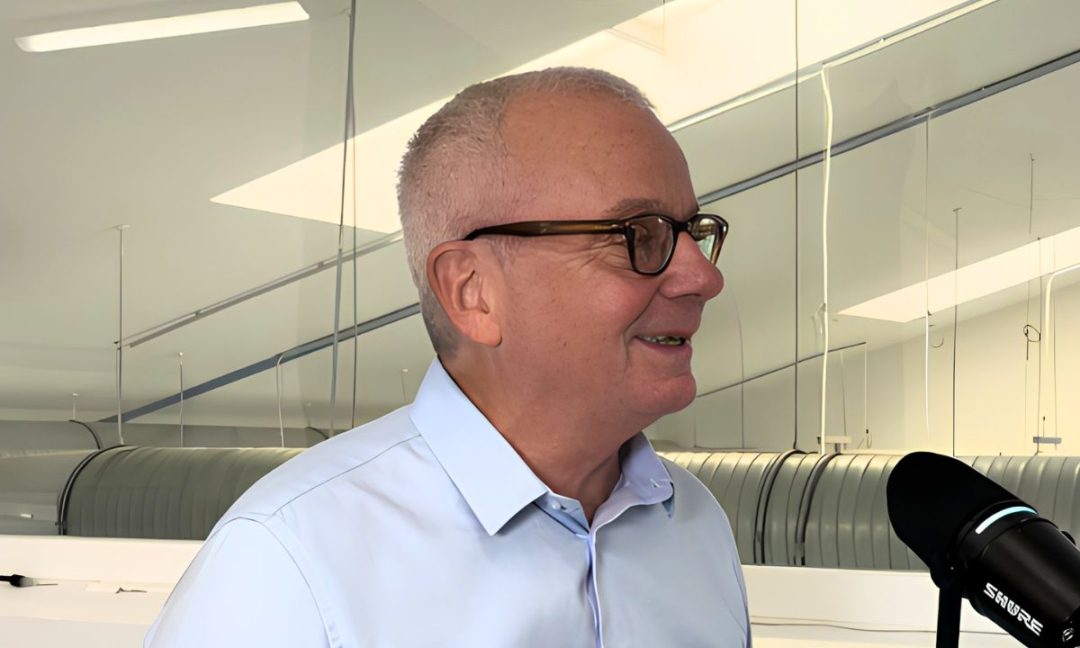
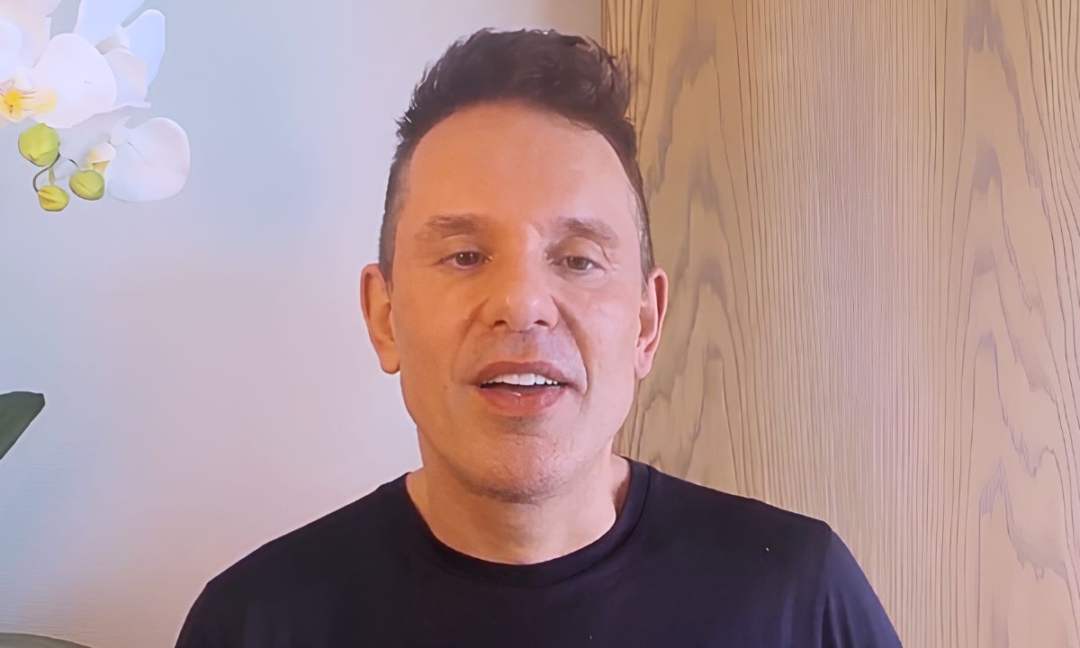
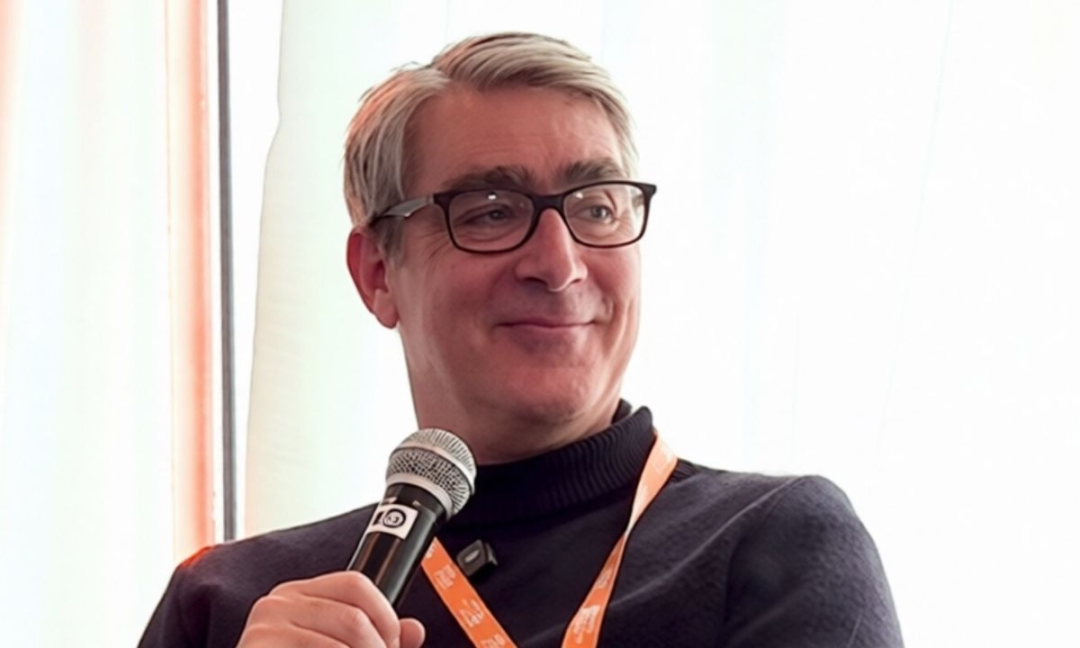
Philip Hemme: You have a new tune episode. I’m your host Philip, and on The Float Bio Show, I’m interviewing the best Europeans in biotech to help you grow. There is only a very few Europeans who have scaled the biotech companies to $5 billion in annual revenues. One of them is Hervé Hoppenot, the former CEO of the $20 billion market cap company, Insight.
So I caught up with him while we were both in Paris. I didn’t know him personally, but I knew him by name, and a listener of the show introduced me to him. We talked about the tough decisions you need to make to scale a biotech company 10 times. We also talked about his European roots and why big pharma doesn’t need to be slower than biotech.
Talking of biotech companies at scale, let me introduce you to today’s sponsor of the episode. It’s our own second product, the Float Bio Map. You can use it to discover the best biotech companies in Europe. For example, in one click, you can see the top 100 publicly listed biotechs in Europe ranked by market cap.
You can try it for free, and you can use the following discount code to get 20% off your pro subscription. Learn more at map.float.bio. The link is in the description below. All right, so here’s our conversation with Hervé, and please hit the and follow button if you’re enjoying it.
All right. Welcome, welcome to the show, Eric.
Hervé Hoppenot: No, thank you for inviting me.
Philip Hemme: Yeah, it’s cool. We managed to, meet in Paris.
Hervé Hoppenot: Yeah found, a way to meet somewhere in the world where we are at the same time, so it’s a good thing.
Philip Hemme: It’s a good thing. As I, as we mentioned before recording, but I heard many things about you yeah, Morphosis, but also previous guests on the show.
Okay. Which I, did an interview with, Pascal Fouchon as well on the show.
Hervé Hoppenot: Okay.
Philip Hemme: Who I think you probably know from Novartis.
Hervé Hoppenot: From Novartis,
Philip Hemme: yeah. Alessandro Riva you had him in January. So yeah, super exciting, and we’ll probably talk about this later.
[00:02:59] Hervé Hoppenot’s Incyte legacy
Philip Hemme: But yeah, I want to start with your time at Insight because– So you joined 2014 from Novartis, and then you grew the company like crazy after
Hervé Hoppenot: you grew.
The comp- the company grew.
Philip Hemme: Okay. Take the credit. But- you have a bit of credit for it. But yeah, the company grew, I think, over 10 times. So-
Hervé Hoppenot: Yeah …
Philip Hemme: employee, at least number, I think now it’s around, whatever, 2,008– 2,800. The revenue went up to $5 billion revenue. Market cap, 20 billion, and then you, stepped back as CEO and also stepped out from the board.
So just wondering yeah, how do you look at it? How do you look at the story?
Hervé Hoppenot: So the story was Before, in fact, I joined Incyte, I was at Novartis, where I was leading the oncology business unit, which is a larger organization by far. It was like 10 billion. It was 10,000 people with a, lot of countries, 50 countries, and a big, the biggest pipeline in the industry at Novartis at the time.
A lot of innovation. In fact, I am– one of the source of pride for me was the CART19. We did the first deal with Carl June at Penn was was Novartis.
Philip Hemme: Scales was involved
Hervé Hoppenot: after.
Philip Hemme: After,
Hervé Hoppenot: yeah . And but so at the time of the deal, it was Manny Richman and David Epstein, and we were basically going into the CAR T business.
We had obviously the Gleevec legacy with us, and that was that organization. And in, in that group, we decided to make a licensing deal with a small, tiny company in Delaware called Incyte for ruxolitinib. And that was really interesting because at the time, I remember a lot of criticism came from many people saying, “You paid too much.
How do you– how can you believe that myelofibrosis will be such a, market?” and et cetera. So the usual skeptical or people who were not happy because they didn’t make the deal, so they were like, “Why did you pay so much?” a mode. And what we found is that, in fact, this molecule, ruxolitinib, had a lot of legs, a lot of potential outside of the mainstream indication that everybody’s following.
Because we were developing it in myelofibrosis, which at the time was a word that nobody could spell, and even worse in polycythemia vera, and we ended up- Even harder to spell. Yeah . Harder to spell, and so on. So they were all obscure indication, frankly, at the time, and we had that belief at Novartis that there was in fact a lot of a lot of ways this could be very successful without going to the breast cancer, lung cancer, prostate cancer kind of a universe.
So that was the first connection with Incyte. Very good team, very exceptional chemistry abilities. JAK, as a target was not so exotic. In fact, there were other JAK inhibitors in inflammation. What was not common is to think about application in hematology and to do the right molecule, and it just happened that ruxolitinib was the right molecule.
And 12, 14 years later today, you can see it is still standard of care. Everybody tried to do a better JAK for myelofibrosis, and nobody could do it. So that was the first thing. And then when I was in
Philip Hemme: my- Yeah, but I think I didn’t mention, but the five billion revenue is basically on- only or mostly Jakafi or, or- Jakafi
Hervé Hoppenot: is like three.
Philip Hemme: Three? Yeah. Okay. Yeah.
Hervé Hoppenot: Yeah, in the US now. And but it’s p- if you look at the Novartis business plus the business from Insight, it’s a five plus billion brand worldwide,
Philip Hemme: yeah, because Novartis has all the
Hervé Hoppenot: ex-US,
Philip Hemme: yeah.
Hervé Hoppenot: Ex-US. And and so that’s how at the end of 2013, when there was a a good fit in term of the end of a cycle at Novartis for me, and then there was this idea of saying, maybe it’s a good time to go to a smaller type of organization, frankly.
And and we can speak about bureaucracy and and my way of dealing with it because it’s it’s not very subtle. But that’s where I joined Insight at a time where the launch was just happening, and it was a little choppy for Jakafi in the US. And then we had this pipeline and a lot of questions on how to rationalize this whole thing.
So we went from s- what was like 300 million in in revenue to 2025 was five billion. And the whole international moving outside of the US and the– and frankly, the big swings of the pipeline where you go from happiness to despair and back and and and today it’s a company. So going to 2025 directly, the company then had a lot of very good news happening on the portfolio.
Philip Hemme: Yeah.
Hervé Hoppenot: And I felt very, confident that in fact we are like out of the woods, and the woods is basically the cliff of Jakafi coming soon. And and that was a perfect time to, to organize the transition. So we did that last year, one year ago, more or less. And and it has been a very smooth and successful transition.
Philip Hemme: That’s great. Yeah. That was that was,
Hervé Hoppenot: It was very orchestrated. Yeah, It was very organized. It,
Philip Hemme: Yeah, because I saw you really
Hervé Hoppenot: like- It was maybe a surprise for people when they read about it because we didn’t speak about it, but we worked on that sequence with the board for a number of months before.
But I heard there were some rumors. There were some rumors already? I heard. I don’t
Philip Hemme: know. No, but what I saw was that you… So you, stepped down, but then you stayed on the board to accompany- Yeah, there was a
Hervé Hoppenot: transition- it was a real transition … As we do usually. But frankly w- you, cannot have two cooks in the kitchen.
So it’s always good to have a, good process so that people- Yeah … can speak to each other and make sure that there is no blind spot or something happening. But but the transition of power, a- and I know the word is exaggerated, but its reality in my mind has to be very quick. You know this system where the new CEO is announced, and six months later he’s going to take the job or she is going to take the job, and then in between, the old guy is still sitting there like a- Yeah
flowerpot. It doesn’t work.
Philip Hemme: Yeah.
Hervé Hoppenot: I s- I at, least for me. Yeah. So we did it in a way that was like, you know- Yeah … Band-Aid, like- But you’re still
Philip Hemme: here if needed.
Hervé Hoppenot: I’m still there, obviously. Yeah. And I’m still, to this day, I’m still a consultant for Insight. Yeah. I can I can obviously contribute if I am asked to do it,
Philip Hemme: a- and why you didn’t want to stay longer on the board?
Hervé Hoppenot: I think it’s also the same thing, is that if you’re on the board and there is a new CEO, every time this new CEO is saying something like, “We need to change this. This is ridiculous. Why are we doing this stupid thing?” How do you feel as the old guy- Yeah
sitting there? You can either say, “Oh, yeah, you are right. I never thought about it.” which is not true. Or you can lie- … and stand there, and frankly, you are not useful at all.
Philip Hemme: Yeah.
Hervé Hoppenot: Yeah, So this whole idea of the keeping– I think it can w- it can work under certain circumstances. In the case of most organization, I think it’s better to let the new person run the show and be able to, change things in the company, because change is necessary.
And frankly, when you spend 10 years, 11 years in the same job looking at the same thing, you start- Yeah … ignoring certain… I don’t want to hear about this thing. And then when somebody new is coming, saying, “W- what why are we doing this? It doesn’t make any sense.” And it’s a very good thing for the organization, so yeah, this– we can discuss transition. I say everybody has their own recipe. For us it was reasonable. It did not, Makes
Philip Hemme: sense
Hervé Hoppenot: to me. A lot of stability in the team. So the, whole R&D organ– which is the heart and the brain, and everything of Insight is sitting in the R&D flow, and how we are executing, how we are going out of the the path that everybody else is following.
And it’s difficult because there are a lot of companies doing work in immuno, onco, inflammation. Where we are is not the most quiet space in the pharma industry. It’s interesting,
Philip Hemme: yeah.
Hervé Hoppenot: Yeah. And and and still we are able to get like first approval, first in class approval for many, indications.
When you look at the pipeline and where we are with the pipeline of Insight, it’s fairly stunning how many of these indications are totally innovative.
[00:12:12] Leadership transitions in Incyte, argenx and BioNTech
Philip Hemme: We’re talking about the pipe… J-just on the topic of the transition, because it- It, it– I’m connecting a bit the dots, but the Argenx just announced the transition and– but quite inter- it’s a bit different than in your case, but the founder Tim, he went to chairman, and the COO, Kevin, took his CEO position.
Wow. Which
Hervé Hoppenot: is- It can work. I think everything has– everything can work. You need good people. But I
Philip Hemme: guess it’s depending on the people, depending on culture,
Hervé Hoppenot: depending on- I think if you need a change, if you need– if you, go into a transition after a long period 11 years- Yeah … like I did at Incyte, you have to assume that certain things need to be changed.
Philip Hemme: Yeah.
Hervé Hoppenot: It’s not like just another of the same thing. So if you have a change agenda, I think it’s better to be clear about the change agenda and what you want to transform. If you are in a mode of growth and continuity and how do we continue to do then it’s a very different
Philip Hemme: thing. Yeah. I see.
Did you see the BioNTech announcement of the, founders? Did you see that?
Hervé Hoppenot: That they would be moving, The step,
Philip Hemme: yeah.
Hervé Hoppenot: Yeah, I saw that.
Philip Hemme: Yeah.
Hervé Hoppenot: Yeah.
Philip Hemme: This I heard was very surprising to
Hervé Hoppenot: a
Philip Hemme: lot of people. Yeah
Hervé Hoppenot: I don’t know anything yet.
Philip Hemme: I heard even internally, even high levels they, had no idea.
Hervé Hoppenot: Okay.
Philip Hemme: And they announced it like, “Oh, we stepped down and we have no plan for the replacement. We’ll just start looking.” And I was like, “Wow, that’s surprising.” But yeah, let’s see. Let’s see how it goes. Yeah, good.
[00:13:43] The JAK inhibitor market
Philip Hemme: On the, pipeline, maybe you can touch a few words there because I think Incyte was very single asset company, at least I think for…
And you always– you tried to go into several assets, but I think it was also not easy. What, what– like how did this go or…?
Hervé Hoppenot: That’s a, What success gives you is that as soon as you get a big business out of a product, you have two questions that are emerging immediately. One is somebody going to eat that lunch?
Is there like a big– Everybody has in their minds the small companies are stupid and in some way not able to be dominating, and big companies can come in and they can basically take their business away which, is not true. But that’s the way people see it Anyway so that was the first thing.
So Jakafi, how can we maximize commercially Jakafi and push back on competitors? And there were a number of them. Celgene launched a Jak inhibitor Then, et cetera. There were a number of JAKs that were launched that people were saying are going to be a big threat to the Jakafi franchise, and in fact, none of them.
And to this quarter, like last quarter, Jakafi in the US was still growing at 7%, mostly volume, if not all of it. So, it is the first thing. The second thing-
Philip Hemme: In market share what does it look like?
Hervé Hoppenot: About market share if you are the only drug approved for PV- Yeah … you have 100% market share.
It’s the only JAK approved for GVHD, so same thing. In myelofibrosis, there is a drug from Glaxo. Yeah. And that’s– It’s a different– It’s mostly used after Jakafi.
Philip Hemme: Okay.
Hervé Hoppenot: So market share, I don’t know. It’s it’s most- Okay … it is standard of care. That’s what you use first line with very few exceptions.
Philip Hemme: Okay.
Hervé Hoppenot: But that’s the first thing, is can you continue to grow a big product in a competitive world when you are a small company? And and that I think is, And you can look at many other small-ish company or companies who were small at some point. Argenx is a good example, and they are still growing.
And I think that part is just a false anxiety. There is no, reason for small company not to be as successful as big companies in specialty pharma- Yeah … because the size of the sales force. We don’t– Nobody has 3,000 reps anymore. Yeah. Everybody’s working with these teams that you can, hire when you n-need it.
So that’s the first thing. And then the second question when you are successful with one product is, what’s going to happen when the patent is going to expire? And that has been, frankly, for us, maybe we overplayed it, but that was the one question that we started to work on 10 years before the patent expiration of Jakafi.
So we were basically already on the, cliff mindset. And that was very simple. It was either develop and cannibalize Jakafi with a better product for my- myelofibrosis or PV or GVHD. So it’s one aspect. You can see today in the pipeline each of the component for that. And then you had diversify, and we did two things.
We did obviously a research effort in hematology oncology, and that was full of successes and failures. And IDO was a big big story in the middle of all of that. And then we did something that surprised a lot of people, which is go outside of oncology and build an entire immunology dermatology franchise from scratch.
In fact, from molecules that we had, but not any experience in development or commercialization. And that was something that people were frowning at in some way when when we announced it. And in fact, it became very very successful. Opzelura is a big product. It’s doing very well, and we have now po-po-polycythemia and a number of of new products coming in that franchise.
So that should be successful. So the two aspect of defending, cannibalizing or replacing your product with better products that are more modern and at the same time diversifying is really what has been driving 10 years of strategic thinking at at Insight and investing in R&D.
In a way that was very disproportionate to what most people are- You told me
Philip Hemme: like 40%.
Hervé Hoppenot: To this day today it’s 2 billion out of 5. So 5 is the top line, 2 billion is the investment in R&D. A number of phase III. There are multiple phase IIIs ongoing, so there is a lot of a lot of activity.
Philip Hemme: And on, I guess what you also all said, at the end of the day, especially in, your role here, you have to prioritize resources, and I guess putting a lot of focus on commercialization and growing the franchise. You just create more value than putting more focus into diversifying, at least for some time until like in a way it’s, a hard way, like what you don’t do.
Hervé Hoppenot: Yeah. On, on, on the commercial side, I think the big issue is how much do you believe there is a business to be had? And I must say, when we launched in PV, for example, Jakafi in PV, most people were thinking there is absolutely no medical need, in fact. People are okay. It’s fine. It’s fine.
We always did that. And and we came with what was like a new technology.
[00:19:36] Why forecasting in pharma is so broken
Philip Hemme: What was PV and what’s the quick just in quick,
Hervé Hoppenot: polycythemia vera is basically one of the, MPNs that is translating into abnormal red blood cells. And and the– and so the launch there was Facing this idea of saying we are– nobody’s really sure if we need it.
And today it’s a billion and a half. It’s the biggest part of the whole product. When we developed it in GVHD, nobody could even spell it at the time. We were literally going into a field where ve-very few people could even speak of what was going on. Steroids were used, very high dose with a lot of problems, and it became also being a type of indication.
So there was, at the time, a lot of choices that were difficult to prove because it was not by doing market research that you could find that. It was believing-
Philip Hemme: Oh, you would find that there’s no market.
Hervé Hoppenot: Yeah, But that we can speak about market research because that’s a subject. But but yeah.
Yeah. So there was a lot of follow the science. I know everybody’s saying the same thing, but it was saying that’s where the benefit is clear, that’s where the biology is justified, and therefore that’s where we go. And sometimes you end up with relatively smaller businesses like pemigatinib in colon cancer melanoma with mutation.
That ended up being very good for patient, very important for patient, but not a very big driver of revenue for the corporation. And sometimes, surprisingly, what’s looked like a small thing ends up being way bigger than we think. Back to Gleevec we can go back to all the forecasts that people did on Gleevec and how, it could be in CML first, but then in GIST, where nobody could find– in fact, incidence of GIST was something that nobody knew exactly what it was before Gleevec was there.
So this sort of like good drugs or drugs that are in the right indications are creating markets that can be meaningful is a big learning of the Jakafi story. And-
Philip Hemme: Ma-makes me think about a, few things. But One thing is the guest we just had, we just published an episode is, Christophe Langeard, who was the C– founding CSO for Blueprint.
And saying, he said that no i– people didn’t even know the disease. But now it’s like they sold about 9 million to Sanofi, and it’s like- still not a billion-dollar drug, but there’s, po-potential to go there. Yeah. So if you did the market research was like– But it was not even like that.
There was a disease. The disease was really unknown. So it’s– and Argenx is a very similar story. Yeah. Small, and then they went into different indications, and it’s same product, but different indication, and they grow. Like- it’s crazy. But at the same time we, discussed a bit before, but at the s– at the other end of the spectrum, you have the, market research that tells you, “Oh, this will be a $5 billion for whatever billion-dollar product.”
And at the end of the day, it’s way smaller than, predicted, especially big pharma. They love to do like very high prediction. But-
Hervé Hoppenot: Maybe I don’t know if they use it the wrong way or if it’s- I don’t know necessarily. So- If it’s intentional, if you– Yeah, you don’t, I think it can tell you anything.
It’s a spreadsheet. You put a spreadsheet, you put a share, you put a price. It gives you multiply, and boom, you get to a number. So all of that is just completely artificial. The, truth, I– the one I believe, and I think between the Novartis experience and insight, and even some of the things I’m doing now with companies like Maze, is that if the biology is right- if the drug is doing what it’s supposed to do, and that is important for patients, then frankly, in term of how do you make decision, you should go-
Philip Hemme: Yeah, it was
Hervé Hoppenot: always- As long as it’s not completely absurd in some way. But you should go, and you will see later if it’s very big or less very big. Yeah. And you should not try to calibrate everything from the beginning.
And it’s a difficult– It’s difficult for people to accept that, that there is so much uncertainty on how successful financially your product is going to be at the end. But I think it’s a reality. And Gilead was very interesting because the CML business was considered to be a minuscule indication. So the flow of, new patient per year was like a few thousand new patient per year, and it ended up being a 6 billion,
Philip Hemme: Yeah.
But I I was not meaning that there was– I mean, the comp part and the thing is another thing, but more like I think a bit my, my, my thinking is I think it’s just very hard to forecast.
Hervé Hoppenot: I agree. No, I-
Philip Hemme: On the upside, on the downside, so yeah.
Hervé Hoppenot: Ah that’s– That has been a subject for me my entire life.
Philip Hemme: And it’s crazy that you have sometimes 5, 10X, like a gap in the forecast, which is-
Hervé Hoppenot: Yeah, but that’s coming back to the how do you make decision on your pipeline. And I’ve seen people who are using very methodical ways, and what you do is that you give a probability of success. You put a number in there, and then you apply a certain market size.
Then you… And you do the thing, and then you give a ranking. You put all of your pipeline, and ploop, it will give you like, this is the best, this is the worst. And then if you, are a rational person, you should start with the best and kill the, worst. But then you look at it and say no, because I like that one.”
So let’s go back to the forecast, and then you tell the guy, “Okay, put some stuff in it.” And then it comes back, and then say, “Yeah, look, it’s very rational. We can go for this thing.” so there is a, lot of that happening in the kitchen.
Philip Hemme: Yeah. And what do you think about– ’cause I feel like some biotechs, especially early stage, I hear that quite often that they don’t focus enough on the potential value delivered.
Not just commercial value, but the value to patients. Let’s say they don’t focus enough on the actual market research/what’s the impact. But because at the end of the day, you still need a patient population, medical need. How do you estimate the medical need if you don’t know how many patients there is?
Like that’s-
Hervé Hoppenot: No, that’s the problem. There is a– in our industries, there is a lot of uncertainty on how it’s going to play. And frankly, part of it is a competitive situation, is that if you are shooting six, seven years ahead, so much can happen in between that when you cross the finish line, maybe the race was not in this direction, but in that one.
And we saw that many times in cancer, for example. When PD-1 came, that was like a big bang and everything changed. You had a number of projects in melanoma, for example, who became obsolete, boom, in one minute. And they were very good. They had nothing to do with immuno-oncology. They were doing whatever, targeted something, and they became obsolete with and without knowing it.
It was totally unpredictable that there would be this thing. So, that’s part of the, spectrum of everything that can happen between the day you start a program and you put like a 50 million into a phase two or some program. And when you cross the line in between, there is all of this foggy area.
I always describe it as being like a forest at night, and the game is to run or to drive as fast as possible through the forest when you don’t know, you don’t know what’s
Philip Hemme: up.
Hervé Hoppenot: You don’t know what’s up what’s up and it can happen. It’s clearly something. But if the biology is strong, statistically you improve your probability of having a good product and sometimes a very big product that,
Philip Hemme: So that, I know, ’cause I hear that on the podcast also, like focus on the, biology, but what does it really mean, and what does it mean in the whole context?
But-
Hervé Hoppenot: The transformative medicines. Transformative medicines are medicines that will change the life of patients. That’s a,
Philip Hemme: so I think the audience probably knows it, but maybe some people in the audience that are not too familiar with what is crazy what you just described is compared to almost most other industry where you can forecast, right Not exactly, but you can focus quite well of whatever in retail, whatever real estate.
There is a mistake, but it’s– I guess the delta is, smaller versus what you just described in pharma. If you have a 510X like delta in both ways it’s just huge. Like it’s very
Hervé Hoppenot: unpredictable. There, there are very few industries where you invest as much resources so far away from when revenue is going to concretely come back.
There is a nuclear industry. Yeah. Like you, spend 10 years building- But
Philip Hemme: you know the markets. If there, there’s electricity, this is the main fuel.
Hervé Hoppenot: Exactly. Yeah, you know the market better. Yeah. But it’s a little bit of the same thing is that you spend 10 years building your thing, and then it takes 12 instead of 10, and then- It costs 10 as well.
And then one day you get your, electricity out of the system, but it’s impossible to predict 12 years ago what exactly the economics of the business will be. Yeah. The same concept.
Philip Hemme: Yeah. It’s good because I was asking about lessons and we covered a lot.
[00:29:17] Investor expectations and the Jakafi cliff
Philip Hemme: One thing I want to ask you is about when we talk still a bit connected to insight is about the appreciation from the financial markets.
And we talked a bit before recording, but I think when you joined was around, what, 12 billion market cap, something I guess? Yeah, 12. So yeah. And then, so now it’s 20, I mentioned it, and I think at peak was around 30. But basically when you joined 12 to 20 over 10, 11 years compared to the growth of the business it seems like from a return for investor was not as much as the growth of the business.
Hervé Hoppenot: But yeah, the business grew enormously. Yeah, 10 times. As we said, it was like a and, the profitability the, big story was the cash flow positivity. There was a day where suddenly we were investing money that we were making instead of investing money from other people, which is a big moment-
Philip Hemme: Yeah
Hervé Hoppenot: In the life of a corporation. And and that was that was because the top line grew so much faster than our expenses. Yeah. And therefore, obviously the lines are crossing after a while. And that was a, big deal. And then because of this expectation exercise, people were always looking at how big could it be, and they were in the pipeline moments where we had a product called IDO, which was a combination with PD-1, and it had a mechanism that could make you believe, and our biology was showing it, that you could improve on PD-1 in every indication where you would you would use it.
Obviously, we had a number of phase three studies ongoing. In fact, nine phase three studies were ongoing, testing the hypothesis with different PD-1 in different indications. So that was a very large program. Huge. It was very ambitious, and it just happened not to work. And there were some reason for that.
There was an autoinduction phenomenon, et cetera. And and but that was where you saw- you saw some of the, changes in expectation over time. My goal was always to build a lasting company, not just to have one event and sell it, for example. We were relatively clear to say we want to develop a company- There was
Philip Hemme: quite a few of us as well,
Hervé Hoppenot: yeah, we were basically saying our goal is to create what will be a biopharma company of a reasonable size that will be able to continue to invest to develop innovative co- products, blah, blah, blah. And and that’s what we did. So we expanded to Europe. We went to Japan, which was a sort of odd choice compared to many biotech companies.
But Japan is a very reliable market. It’s a very good market. There is a universal healthcare system that is covering for cancer, covering all the population. So it has a number of characteristics that are very attractive as a market. Obviously, Japan people don’t speak French, so it’s a little more complicated.
You have to adjust to the local, The
Philip Hemme: culture
Hervé Hoppenot: as well … aspects. But so we did that, which was a little bit counterintuitive. And and now we have a company that is basically with, a footprint around the world with a very strong pipeline. So that was– We are on the other side of the curve with a good pipeline and still growing twenty percent- Year over year
on the top line year over year. So it’s a good, it’s a good outcome.
Philip Hemme: But coming back to the return for investor, I mean-
Hervé Hoppenot: They are afraid of the jackpot. They will be till the day it’s happening. I think-
Philip Hemme: Because when you, go from, twelve to twenty, let’s say it’s whatever, sixty, seventy percent increase versus the business grew ten X.
Hervé Hoppenot: Yeah, because the value at the beginning is not the value of the business. It’s expected value of the pipeline.
Philip Hemme: Yeah. Yeah. But still I feel like the, return compared to the growth of the, or the execution and the cash flow I, feel like the return is actually not that– or could be much higher.
Oh, yeah. But very– or it could be much higher by intuition, right?
Hervé Hoppenot: If you assume, if you do a modeling of Insight and you assume that in fact, which I believe is true, that you can go through the JAKafi patent expiration with a bump but no bigger, then obviously the variations will be changing very quickly.
Philip Hemme: Or do you think that when you joined was like a bit overvalued?
Hervé Hoppenot: There were a lot of expectations for JAKafi in pancreatic cancer, for JAKafi in breast cancer. So some of the bigger indications where people get excited because they don’t see myelofibrosis as being– So that, that was part of the- Yeah.
Philip Hemme: And how do you feel at the– like as a more reflection about the stock market at the moment? ‘Cause I mean- You, you- … it’s quite a bumpy, a-
Hervé Hoppenot: for biotech specifically. For biotech in general there are two, two situations. Either you need to raise money, which is what a lot of companies are facing, and then your stock price matters very much because that- that’s dilution if you– et cetera.
And or even in some cases, it’s almost impossible to raise money. A lot of companies are struggling even to identify ways to, raise money. So that’s one category. And then you have another category where you are cash flow positive like Insight, and frankly, it’s a question of stock price, it’s a question of horizon.
Is at which– wh- where are you looking? If you’re looking for next week, should I sell and buy Monday, sell Tuesday? So that becomes like a subject. But if you are thinking, how is Insight going to evolve over the next five years, 10 years, then you don’t care exactly where you are that week. What is basically what is the actual value of the assets that you have in that order, and that’s a very different calculation.
So I, I don’t know.
Philip Hemme: So you didn’t check your stock price?
Hervé Hoppenot: Everybody’s checking the stock price. Everybody’s saying they don’t, but they all do. So that part is not is not true. There were, a lot of investors’ question on investment in R&D, frankly. For all these years, I was explaining that we believe R&D investment can be very productive as a sort of a financial decision.
So it will basically give us value over time. And obviously, when you have a few flops happening in your pipeline, there is a big question mark starting to build of people saying are you sure it’s a good idea to continue to invest that much?” So there was a little bit of pressure on the, on that aspect of saying, “Maybe you should cut your expenses and give me the money back.”
And that’s a, that’s a– that’s always the question you have to answer when you are in this situation, which I think now when we look backwards, what we see is that the pipeline that we have built is in fact very valuable or has the potential to be extremely valuable.
Philip Hemme: Yeah. And I guess it’s the, nature of the stock market to extrapolate.
When there’s a kind of a trend to go, to extrapolate down, to extrapolate high.
Hervé Hoppenot: Yeah.
[00:36:51] Biotechs trading under cash
Philip Hemme: Yeah. I guess you have to know it and play with it. I don’t know if you want to comment, but I saw with Bicycle, I saw that I think this week or last week, there was a ranking of the, all the biotech companies, I think globally, of the market cap versus cash on balance.
And I think number one was Elik from Galapagos, and number two was Bicycle.
Hervé Hoppenot: No, companies are going through this cycle where ex- as, as I said people are– and that’s their job. Frankly I’m not a banker. I could not probably be a banker. But I what I see is that people are making calculations on probabilities.
And I think in the case of Bicycle, there is a very large program or a big program that was targeted at bladder cancer. And that’s a case of a sort of a the dark– the black swan situation where in fact the PAT-safe approval in that indication changed completely the field, and it made it, in spite of the fact that the data is showing that the technology is very valuable, that it works, that it does what we hoped it would do, it, it makes it more challenging to get approval in that indication because the standard of care has been changing over the past few years.
So now people are resetting their expectations, and we start with very low And we will have to prove how we are going to use the cash that we have and invest it in a, number of projects that I think will be very valuable because we have a very good proof that in fact the Bicycle technology- It’s very valuable
Is a, platform is very valuable. It will take time. I think
Philip Hemme: still
Hervé Hoppenot: I
Philip Hemme: feel
Hervé Hoppenot: like
Philip Hemme: if I remember the, ballpark I think you had whatever, something like 400 million market cap and 700 million in cash. So you’re worth minus 300 million. Yeah, I
Hervé Hoppenot: don’t know, I don’t know the exact number. But- But it’s okay for many companies, by the way, yeah.
There is a, there is a- Must be–
Philip Hemme: I just can I, cannot imagine the, leadership or whatever that would tell me my, company is worth minus 300 million. It’s just- It’d be tough
Hervé Hoppenot: yeah. It– so I don’t know if it’s tough. I think the question is if you have the cash to execute on your program, which is the case for the, for Bicycle, you are in a very good situation compared to people who need to raise cash.
Yeah. So that-
Philip Hemme: It’s better,
Hervé Hoppenot: it’s way better. And then the question is how fruitful is going to be your use of the cash.
Philip Hemme: Yeah.
Hervé Hoppenot: And that’s exactly what the question is. Paul and everybody is discussing. There are a number of- It’s still
Philip Hemme: the question if you return it to shareholders or not. But it’s like, a few biotechs did in the last one or two years, like-
Hervé Hoppenot: You know, I think Bicycle is in the mode of identifying good use of the cash to make sure that it’s going to-
Philip Hemme: Especially with the platform behind it.
Hervé Hoppenot: And the platform has been validated by- Kevin, the founder
Philip Hemme: is still there, and I think yeah.
[00:40:01] Hervé Hoppenot’s European roots
Philip Hemme: Okay, good. I wanna talk– So we talked already the board And we talked about I’m cur- a bit more on a bit more personal side because as we talked when we entered the building and you have the US and French citizenship.
I’m just curious on, a bit on, I think a lot of our listeners are we have 70% of our listeners in Europe, 20% in the US. I guess quite a few are, like, wondering, “Should I stay in Europe? Should I go to the US? Could I do both?” H- a bit it’s always a bit generic lessons, but I’m wondering if you have some a bit more specific or what’s your– how did you prioritize it?
How, like, how much was it planned? How much happened? How much-
Hervé Hoppenot: No, it happened. I was if you want to go back it was Rhône-Poulenc. Like Sanofi. We are, we are– No, it was before Sanofi. It is Sanofi, yeah. It was before Sanofi, yeah. Yeah. And and it was about, I think more than the US it was, what was really defining for me was cancer.
Because I was involved in this project called Taxotere. So it was a sort of semi-synthetic form of of Taxol. It was developed in France. It was a business that nobody could evaluate in term of size again. And I just moved in 1991 to that new- Small as well … to the– no, to that new organization that we had in the– Rhône-Poulenc had in the– created in the pharma business, which was called RPA, Rhône Poulenc Rorer.
And the goal was to create a specialty division in the US based on two pipeline product. One was Lovinox and the other one was Taxotere. And and and it worked, believe it or not. It was very odd. It was a group of people with a beret, baguette going to, to- America … to suc- yeah, to America.
And and, we did. And it was both were big successes. I had nothing to do with Lovinox. It was a separate team, but I had the onco side of the business. We, created a team with people who ended up extremely successful. It was like Mark Aliz, it was a number of people who joined, but everybody was in their 20s at the time.
Yeah. Fucking crazy. Or their early 30s. And frankly, it was an adventure personally. It was exciting. And I just– when that happened, I just decided to stay in the US with my family, and we, all made the choice to, to become Americans and French. But frank- but today is a different time.
It’s a different situation. So I’m not in telling people where they should come to the US as if it was a sort of the dreamland where everything is happening. I see a lot of stuff happening in Asia now. So you could think about it, where is the new– What was US in 1992? The
Philip Hemme: Chinese
Hervé Hoppenot: dream now is a little, it looks a little bit like that.
And frankly, Europe It’s frustrating to see the sort of the game between China and US as if Europe was nowhere on the map. And you see it in many industries now as we speak. And and I think it’s a question of just owning it, being proud of it, and not asking too many questions about what do we have to do in this game.
What we have to do is discovery-
Philip Hemme: Execution …
Hervé Hoppenot: long term. And the Chinese– the– what happened in China was very interesting over the past 20 years because they moved from being opportunistic, me too, copy kind of stuff to very long-term investment. And frankly, that’s the secret that we need to, use in our recipe for Europe, is to find investors who are ready to spend 10 years wai- you know, investing into projects because that’s what the biopharma industry is about.
Maybe with AI it will be a little shorter, et cetera, but there is still this vision of inventing new products out of biology theory, which will take time. It will never be super quick.
[00:44:40] Big Pharma and bureaucracy
Philip Hemme: Can– What you say– How, did you look a bit at the evolution, let’s say Europe, US bio, biopharma over the 20, 30 years or studies when you were there?
‘Cause I feel like may- I’m– I don’t know the ’90s, but probably, maybe it was a bit more balanced, at least on the biopharma side.
Hervé Hoppenot: So there were big pharma- And
Philip Hemme: obviously US industry grew much like-
Hervé Hoppenot: So the big pharma there were, big pharma. The, European big pharmas, Hoechst was at some point the largest company in the world, pharma company in the world, Hoechst.
And that was merged with Rhône-Poulenc- Okay … to become Aventis and- Okay. Wow … et cetera. So there was a little bit of a, different balance between the US company big pharma. In biotech, I’m not very familiar with how the biotech world looked like in Europe at the time,
Philip Hemme: et cetera.
Hervé Hoppenot: What we see today is that there were, there were– in Europe, there are fantastic successes that are happening- in front of our eyes. And so it’s possible. It’s not– There is no reason not, to believe in it. I think you obviously have to look at the investment community to put money into startup, like large amount of money into startup. When you raise money, sometime I see biotech company in Europe raising a fraction of what can be raised in the US.
And that’s a, that’s an issue.
Philip Hemme: I mean on this maybe for the listeners, but the– I mean on the history of biotech from my, like a bit how I see it, but in short, actually what’s, really fascinating is that biotech was really started more in the UK. And in the ’70s was actually banned in, the US so genetic en-editing and, what, what– gene editing and, expressing it into bacteria was really edit– was banned in the US was allowed in the UK.
But somehow it reversed, and then you had the Genentech and the Amgen and, this was like basically mainly, in the US, and it was very little in Europe. And still today, the imbalance is, huge. I don– it’s always a bit hard to quantify, but probably whatever, 3, 4, 5X difference just from a biotech- ‘
Hervé Hoppenot: Cause that’s what what is is it the– what’s visible, what’s going to happen is still depending on, the quality of the research happening now. And, that’s where the Chinese factor is important, is that what we see a change, a qualitative change in the type of molecules coming from China.
Yeah
Philip Hemme: and what you said as well it’s a global market at the end of the day for- Is a molecule. There’s a bit of commercialization stuff, but still the fundamental is, very global, so that’s good. Maybe a last topic before more like a quick fire, quick question is what you, mentioned like moving from big pharma to a small organization, let’s say big pharma to biotech.
And we talked about it quite a lot on the show, and you said Pascal Touchon moved from Novartis and went to a smaller company, but Faris Sharaki as well on the, show, and he moved to, to to Flagship and Pharming. I’m wondering if you have some like- I don’t know. Not not original, but some some takeaways.
There’s some lessons there that are, yeah, that are– that you don’t hear that, commonly. What is for,
Hervé Hoppenot: you? I’ve been suffering the, label Big Pharma. I, think there is no reason for a larger organization to be more stupid than small organization. There is no reason for it. And there is this assumption that small companies are- More agile
more, more agile. They can make decisions faster. They can– And I don’t think so. I really don’t think so. I think it’s a self-inflicted disease that large organization become bureaucratic. And the question is really for leaders in large organization to break the bureaucracy and to go to the bottom of it, which is making decisions very fast.
Fast decisions are not worse than slow decisions, And and so it has been, frankly, my experience at Novartis, which was a fairly large organization, where we had a team of people who really worked together at the leadership level to be able to make decisions very fast. I spoke a little bit about CAT19 and the deal with Penn and the Carl June and the decision to invest and and develop this new technology.
It was done in a way that was not bureaucratic. It was a number of people looking at each other, looking at the science first, and coming to the conclusion that it would be a reasonable thing to do to go into this new direction. And it ended up being an entire new field of of pharma development.
I can– I have, yeah, a lot of examples of that. So it’s I think, this-
Philip Hemme: But you still think that some– larger, big pharma is still a bit slower, more– less agile than a smaller organization. I mean- That’s the benefit of a small organization …
Hervé Hoppenot: You see, that. Yes. So I think part of it is self-inflicted, is that people are covering their behind, so they need to have validation for a decision so that if, it was a bad decision, they can say, “It’s not me.
Market research told me,” kind of thing. I can stay in my seat. No. And so there is, a little bit of that where, in fact- Taking on the ship … if you are in smaller organization, you can– you, are basically making decisions knowing that there is uncertainty, and there’s a point where you decide, “Okay, let’s go.
Let’s do it.” And it’s a different dynamic,
Philip Hemme: yeah. No, because in a way, I mean- In biopharma is one, but if you look even at startups in general, a bit even tech we often say, and I think it’s quite true, that the– at the small organization, one of the your strengths is that you can take relatively a bit more risk and you can move fast.
Which typically a larger organization has a bit because established business, et cetera, et cetera, is a bit harder. And you s- you can see it even recently. You– whatever. The first thing that comes to mind is OpenAI and Google. It’s, crazy. And Google had… I, saw the number was like 95-plus percent of the AI research in the world were at Google.
They invented everything, tensors, everything. And they’re still basically are behind. They’re still doing re-really well, but it’s crazy. And OpenAI was nothing. They are good people, very little investment, but they went further, and they went pretty quickly.
Hervé Hoppenot: No it, can be that there is a risk appetite that is different.
Yeah. But it doesn’t need to be.
Philip Hemme: It doesn’t have to be. Yeah. Yeah. Yeah. That’s, So good.
[00:51:58] Quick-fire questions
Philip Hemme: So quick f- quick fire
Hervé Hoppenot: Quick fire, okay …
Philip Hemme: quick fire. So quicker question, quicker, shorter question, shorter answers. Or at least yeah, that’s right. So on industry M&A, are we entering a real M&A super cycle again?
Yes, no, maybe.
Hervé Hoppenot: Yes, no. No.
Philip Hemme: No? One sentence why no?
Hervé Hoppenot: I think companies who could be acquired tend to now say, “I’m going to go alone.” So s- people who want to be acquired, they are clear. There are– many of them are single asset designed to be acquired. But there are a number of companies where now they are thinking, “How can I be Vertex,” Algenex or Regeneron?
And so, that path is something that I think is very attractive for
Philip Hemme: one expensive mistake you made at Insight?
Hervé Hoppenot: Expensive. No, the mistakes are good faith investment in projects that ended up not being successful. I think that’s the biggest, most expensive thing you can do. And we did. We also did a number of good one, but we did we did a few that ended up being very negative.
Philip Hemme: How much more potential for JAK inhibitors as a class?
Hervé Hoppenot: JAK inhibitor, I think in– So you have the entire hematology field where we know, we see what’s happening. So I don’t think it will go beyond the current indication very far in hematology oncology. In inflammation and other disease, you can almost think about where steroids are used and say maybe there is an application for a JAK inhibitor there.
So then it’s look at large. Everybody’s using steroids for all kind of indications where potentially many of them could see a JAK.
Philip Hemme: Yeah. One of your biotech heroes or mentors?
Hervé Hoppenot: But the mentors are usually people I work close with, so they are people I’ve been in contact with. I would say Friedman, who was the CEO of Insight before I joined, is somebody I admire very, much because he obviously created the whole thing.
He did in a way that was adventurous, like going into the unknown. And then after that, he got involved in new companies that ended up being very successful. So-
Philip Hemme: Oh.
Hervé Hoppenot: So Paul Friedman is a good is a good mentor.
Philip Hemme: Cool. I don’t– I didn’t really know him. Cool. I will check him out. On the cell therapy industry, would you bet on autologous, allogeneic or in vivo?
Hervé Hoppenot: No, I would bet I would bet on allogeneic. That’s I was involved with Cellectis at some point. Okay. It’s very slow, so that’s painfully slow to emerge. But if you can think-
Philip Hemme: Slower than expected,
Hervé Hoppenot: yeah, slower than expected. But if you, think of what it can be, it’s really the solution for all the practical aspect of autologous cell therapy can be resolved with allogeneic, so yeah.
Philip Hemme: For the listeners, we talked a lot with Spastik about it, with Atara. Next question. On the rare disease space how, much more value do you think is remaining? Let’s say from a one to ten, and ten is the highest.
Hervé Hoppenot: Oh, ten.
Philip Hemme: Ten, yeah.
Hervé Hoppenot: Yeah, because every common disease will become rare. And that’s exactly what we are doing with Maze- Yeah
where we are identifying subpopulation in kidney disease, and they are- Yeah … way rarer, more rare than the– And the, and then you have an, increased benefit for that subgroup, and that becomes a rare disease that you can,
Philip Hemme: I guess same in oncology, right? Yes. Yeah. Yeah. What’s your peak revenues estimate for GLP-1s?
Hervé Hoppenot: I have no idea. I need to take one. That’s all I know about- No forecast. It’s a good example of un-unexpected. Look, we talked about uncertainty.
Philip Hemme: Insane.
Hervé Hoppenot: And you could look at PD-1, which was the previous biggest-
Philip Hemme: Sickest drug …
Hervé Hoppenot: selling drug in the world, which nobody thought about. It was sitting there- Yeah.
Twenty-eight, $28 billion … And then the GLP-1 it’s a great, example of okay, of something that happened in many ways without a lot of, Nobody predicted it ten years before.
Philip Hemme: I’m curious where’s the-
Hervé Hoppenot: Oh, I don’t know where it’s going …
Philip Hemme: the forecast then. We’ll see. Future will tell. One biotech trend you’re most excited about?
Hervé Hoppenot: I think AI. AI in biotech, I know it’s– everybody’s speaking about it, so it’s very boring. But I truly believe there is an enormous amount of productivity we can create, which will make this investment at risk smaller, and therefore it’s going to make biotech very attractive for everybody. And and you can see it.
You can see it already in the many areas of where we spend money in in in biotech.
Philip Hemme: Yes. And examples of where do you see the-
Hervé Hoppenot: I have examples from what I did at Insight a year ago, so it’s very old for– in an AI world. But we were able to change the, productivity of the manufacturing plant.
We were able to accelerate the writing of document for FDA and things that everybody speaks about. Yeah. But when you start adding all of that together, what you find is that you could be able to prosecute good biology- which is at the end what we are trying to do, test it in the clinical trial, and do all of that faster and cheaper.
Which structurally for biotech, I think will be a big plus. Yeah.
Philip Hemme: So I told you, I just listened to the interview with Stéphane Bancel from Moderna, and we talked a lot about AI so for the listeners. But, and even just quickly with the– because they’ve been using it quite a lot from twenty seventeen onwards.
Actually, they were quite early because of the mRNA product where they do a lot of–
Hervé Hoppenot: even before AI was invented. Something like this. But he was saying it’s
Philip Hemme: that it’s really affecting the whole– every part of their business, and they, they’ve– productivity gains can be– there’s a variation, but they have-
Hervé Hoppenot: Yeah, I think for biotech it will have a disproportionate benefit because of that at-risk money that you need to put before you know if you have-
Philip Hemme: For earlier stage companies.
Hervé Hoppenot: Yeah.
Philip Hemme: And what do you think about like the isomorphic fundraising, let’s say, like really AI drug development, autonomous?
Hervé Hoppenot: I, don’t, know. That I have not seen it yet, so we’ll see.
Philip Hemme: Yeah. It could be. Yeah. ‘Cause we talked with, Chris, our last guest, and he said bit similar what you– like he believes a lot on on the execution inside of pharma biotech, and that is-
Hervé Hoppenot: Yeah, because we know it already.
We see it. But
Philip Hemme: making autonomous drug developers.
Hervé Hoppenot: We’ll see.
Philip Hemme: You don’t seem too convinced.
Hervé Hoppenot: No, I don’t know. I really- But
Philip Hemme: does it fit– do you think it’s worth the two billion, two point one billion dollar round maybe? That’s crazy.
Hervé Hoppenot: Yeah, but it’s a drop in the… How much is the industry investing every year in R&D total?
If you take all the R&D budget for everybody, we are speaking, of hundreds of billions. So if two of them goes to that it’s
Philip Hemme: think you will tell also. Last one if you have one advice to, a young Hervé in your 30s
Hervé Hoppenot: One thing is that I think human beings are overestimating risk versus opportunity.
We have a sort of a brain that was the result of evolution probably that tends to oversize the bad things and undersize the good things that can happen. And I-
Philip Hemme: Survive a tiger attack …
Hervé Hoppenot: I, truly, see it every day when I’m discussing everything like career paths or projects, et cetera. So I would say like Monty Python look at the bright side of life is, look at opportunities carefully before you dismiss them, because usually people tend to be too conservative in their choices and in their, even in their investment and how they’re managing their, business.
So, that’s something I’m I’m sure of now after all these years, is that it is worth relooking at what could go wrong, obviously, because that’s important, but also how it could be way bigger than maybe we think, and that’s driving a lot of, At least for me, it was a big driver of decision.
Yeah. Love it.
Philip Hemme: Great. Thanks, Henri, for the conversation. No, thank you. Yeah. Thank you. Very cool.
I’m impressed by Herve’s track record and commitment to patients. I’m also impressed by how transparent he was to share his lessons. If you’ve enjoyed this episode, please hit the follow, or review button. Any of these actions help many more people discover the podcast. I would also love to hear what you think, so if you could leave a comment wherever you are, or shoot me an email at philip@flot.bio.
That’s P-H-I-L-I-P @F-L-O-T.bio. Thanks for staying to the end, and see you next episode