For decades, the narrative of European biotech has been one of “innovation flight”: brilliant science born in Europe, only to find its “gravity center” and ultimate value crystallization in the US.
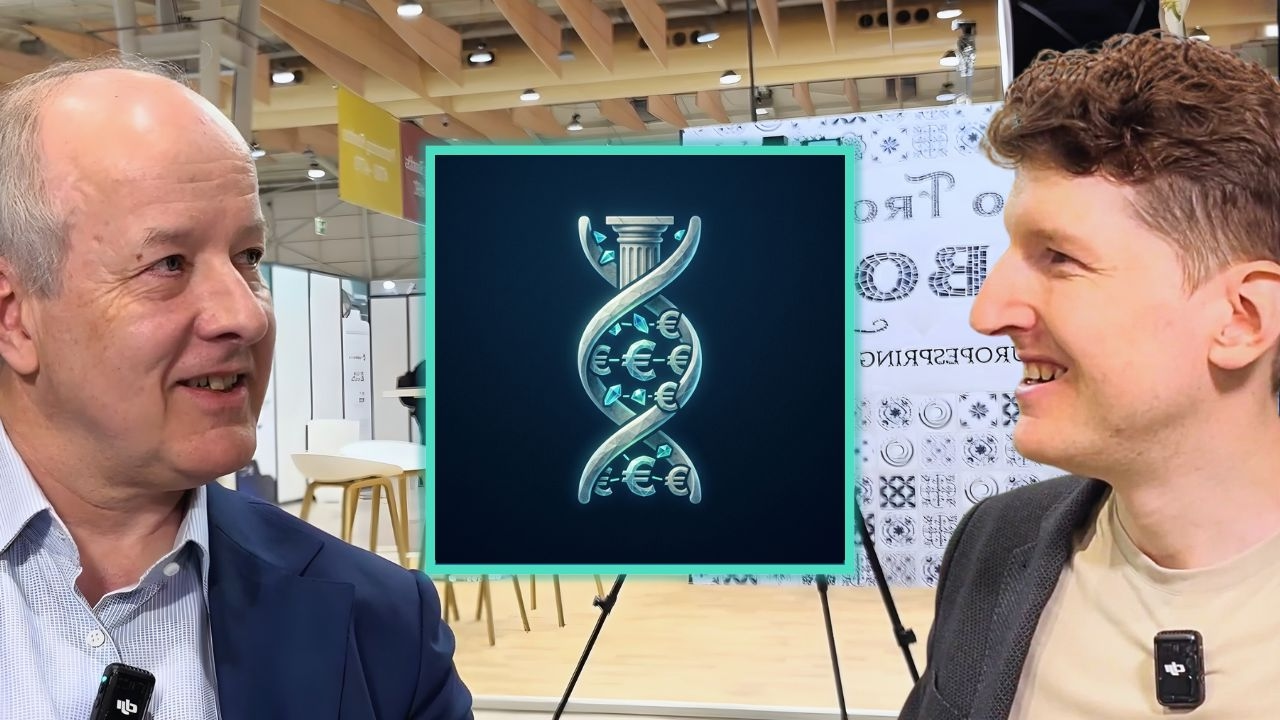
In a recent episode of the Flot.Bio Show, Sander Slootweg, co-founder of Forbion, one of Europe’s leading life sciences venture capital firms, challenged this status quo. From the rise of “Tech Champions” like argenx to the structural hurdles keeping European pension funds on the sidelines, Slootweg outlines a roadmap for a self-sustaining European biotech ecosystem.
The “argenx effect”: Keeping champions at home
The goal of the newly formed European Life Sciences Coalition is simple: Create more companies like argenx.
Argenx is the rare “European Tech Champion” that managed to scale globally while keeping its headquarters and operations firmly rooted in Europe. To replicate this success, Slootweg’s coalition isn’t starting from scratch; they are teaming up with Invest Europe to bridge the gap between biotech venture capital, policy makers, and institutional investors.
The billion-dollar question: Where are the pension funds?
If European Life Sciences VC has consistently outperformed other asset classes—including private equity, over the last 15 years, why aren’t European pension funds biting?
Slootweg identifies a “fee stack” problem and a scale mismatch:
- Ticket Size: Large pension funds need to deploy massive amounts of capital. Conducting due diligence on a specialized venture fund is as much work as vetting a multi-billion-dollar buyout fund, but the “ticket” is far smaller.
- The Fund-of-Funds Hurdle: While funds-of-funds solve the scale problem by cutting large checks into smaller pieces for VCs, the extra layer of fees often deters fee-sensitive pension managers.
- Outdated Data: Many institutional investors are still citing return numbers from 15 years ago, missing the sector’s decade-long streak of high performance.
The US vs. Europe: Cultural risk and geopolitics
The difference between the US and Europe isn’t just about the size of the check; it’s about the “Endowment Model” and a fundamental attitude toward risk. While US university endowments and ultra-high-net-worth individuals embrace the volatility of venture, Europe remains culturally conservative.
However, the tide is turning due to geopolitical necessity. “We don’t want to be fully dependent on China or the US for our innovative medicine,” Slootweg argues. For Europe to hold its own, it must treat biotech not just as a financial asset, but as a pillar of sovereign security.
Conclusion: The time for advocacy is now
With strong returns, a growing coalition, and a clear geopolitical mandate, the case for investing in European Life Sciences has never been stronger. As Slootweg puts it, now is the time to be the “advocate of the sector” and entice the capital that will build the next generation of argenx-level champions.
Watch the clip on YouTube:
Sander Slootweg co-founded Forbion in 2006. Prior to co-founding Forbion, Sander co-founded ABN AMRO Capital/Life Sciences in 2000. Sander serves on the boards of NorthSea Therapeutics and Azafaros, with previous board roles at NewAmsterdam Pharma, Replimune and uniQure. Find the full interview with Sander here: https://flot.bio/episode/sander-slootweg-forbion-eu-biotech-investment/