In the high-stakes world of drug discovery, a “brilliant idea” is often described as being simultaneously priceless and worthless.
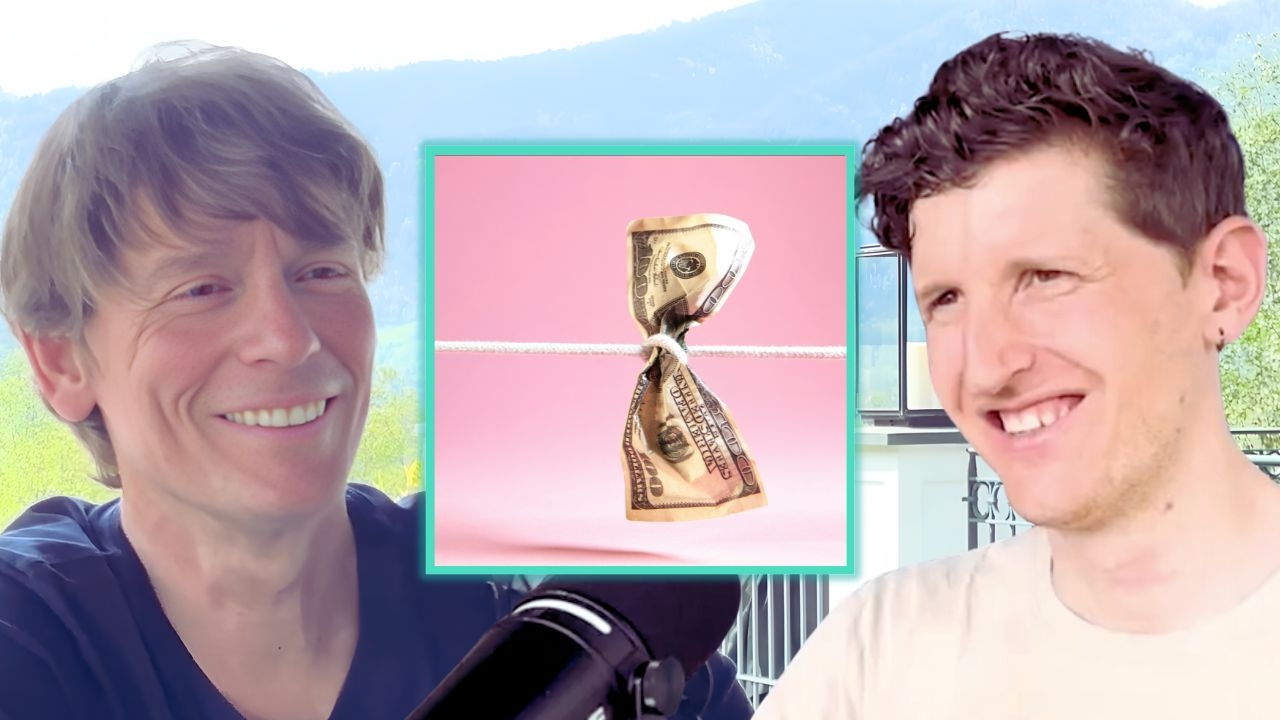
According to Christoph Lengauer, co-founder of Curie.Bio, this paradox is exactly why traditional biotech venture capital often leaves founders with as little as 2% equity at the starting line. Speaking on the Flot.Bio Show, Lengauer explains why Curie.Bio is pivoting away from the “VC-as-commander” model toward a system that prioritizes founder governance and double-digit ownership.
The “Spiritual” Difference: From VC to Support System
Most VCs approach a seed-stage startup with a utilitarian mindset: How much equity can I get for the least amount of capital? Lengauer describes Curie.Bio’s philosophy as a “spiritual” shift born out of personal frustration.
“We wanted to build a support system that we, as founders, wanted when we built our first companies. We want to make fewer mistakes but still feel like we have control. It’s about being a founder-entrepreneur, not just a founder-advisor.”
Governance: Who Really Holds the Reins?
A major pillar of being “founder-friendly” is governance. In many biotech settings, the lead VC effectively runs the show, often replacing the founder as CEO before the company even hits the clinic.
At Curie.Bio, the philosophy is simple: It is the founder’s company.
- The Decision Rule: If Curie recommends “COO A” but the founder prefers “COO B,” the founder wins.
- The Operation Rule: If Curie suggests hiring 10 chemists but the founder disagrees, the founder’s vision stays.
- The Exit Rule: If the founder decides it’s time to sell the company, Curie supports that decision.
The 30% Target: Closing the Equity Gap
Perhaps the most radical part of the Curie.Bio model is the equity split. While US biotech founders are often diluted into insignificance early on, Lengauer believes the founding team should own 15%, 20%, or even 30% of the company at the start.
Why aren’t other VCs doing this? It comes down to the “math of failure.”
The Net Present Value (NPV) of a molecule going from an idea to an approved drug is statistically low. VCs use this risk to justify taking 90%+ of the company. Lengauer argues that while the math is real, the utilitarian benefit of a motivated founder outweighs the extra 10% of equity for the fund.
Transparency as Respect
Lengauer admits that in his first company, he didn’t even know what percentage he owned—he was just happy to have “a million shares.” Curie.Bio aims to “get ahead” of this lack of transparency.
- They provide founders with the Cap Table Excel files directly.
- They encourage founders to “play with the numbers” to understand future dilution.
- They view transparency as a form of empowerment: “You can only own something if you understand it.”
The Bottom Line: Better Ideas, Better Returns
Curie.Bio’s “founder-friendly” stance isn’t just about being nice; it’s a competitive strategy. By offering more equity and control, they attract the rarest commodity in biotech: the truly good idea.
“If a founder has to choose between a fund where you get 3% or one where you get 30%, we have a bigger chance of seeing that idea,” says Lengauer. “We get the good ideas, we help make the drug, and we get the better returns.”
Watch the clip on YouTube:
Christoph co-founded Curie.Bio in 2022, after serving as Partner at Third Rock Ventures for 6 years. He also had leading roles at Blueprint Medicines for ten years, and at MOMA Therapeutics for one year. See the full episode here: https://flot.bio/episode/christoph-lengauer-curiebio-biotech-founders/