[00:00:00] Intro
Sander Slootweg: We raised some of the largest funds. We got the largest fund in Europe, the last one, just the venture fund I think is not a million. The growth funds at 1.2 Phil, with everything going on in the Middle East is not a sector that depends very much on energy. We are probably one of the least effective industries where it comes to everything going on.
Our industry has its own dynamic genetics pretty amazing because they managed to
Philip Hemme: remain
Sander Slootweg: headquartered. Yes, I think that’s a great example of a true European tech champion.
Philip Hemme: Will there be another 50 billion European biotech in the next 10 years?
Sander Slootweg: I would definitely hope so and we will try everything to make that a reality.
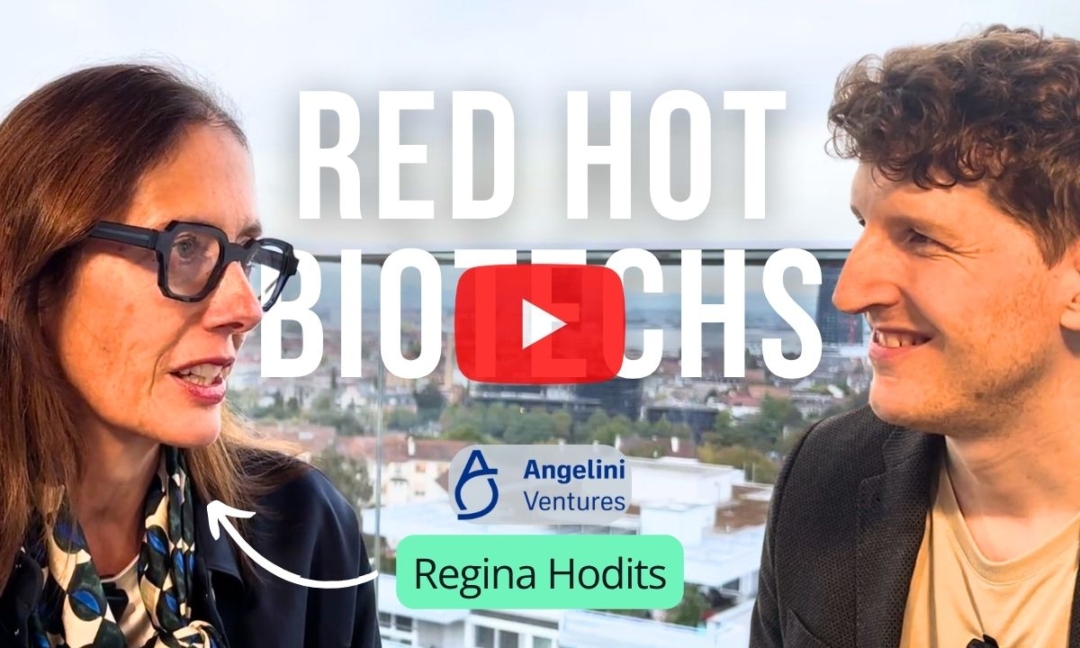
Philip Hemme: We have new to new episode. I’m your host Philip and on Flood Bio Show and doing the best Europeans in biotech to help you grow. Biotech cannot exist without venture capital. One of the best, if not the best in Europe is 4 billion. This fund is headquartered close to Amsterdam, and the last fund, the venture fund, is 900 million Euros and the gross fund, 1.2 billion.
So I caught up with one of the founders, sander while we were both in Lisbon. I actually didn’t know him personally, but I know many of his colleagues for a long time. We talked about the state of European biotech and the New Life Science Coalition to improve it. We also talked about Chinese biotech and why life should be fun, not only deal flow.
Before we start, here’s a quick word from our sponsor, the Ovate Investors Day taking place in Berlin on June 9th. This invite only event bring together. Startups, investor, scientists and industry leaders working at the forefront of gene and cell therapy. If you’re building, investing, operating in the space and would like to attend the end, please reach out to Nadia Powell.
Email is shown here or in the description below. That’s it. So here’s my conversation with Sander and please hit the and review button if you’re enjoying it.
Alright, welcome to Show Sand. Thank you Philipp.
[00:02:13] Uniting European biotech VCs
Philip Hemme: So I wanna start with the connection to some of the 50 plus previous guests on the show, especially so from,
and you recently co-founded Life Science or Life Science Co Coalition to recruit European biotech. So just maybe you can say or what’s the story behind and what we try to achieve?
Sander Slootweg: Yes. The story is that I think Europe has great science that we can leverage into hopefully great companies.
But there is a bit of a missing link in that the capital to some extent the Europe is is lacking both on the private side and the public side. And we even see that some of the smaller PC players are either having difficulties raising or some are even going out of business, as was recently announced for e’s
Philip Hemme: A-G-I-M-B, going out of
Sander Slootweg: life sizes business and to keep the ecosystem driving, we feel that therefore we we can do with more capital.
So this coalition’s main aim is to to seek from both institutional investors, but also from public sources, more capital to both certain European life sciences ecosystem.
Philip Hemme: Good. Yeah, because I, saw in the, you announced some Scots when you recreate, when you. When the, on the press release, some not one number of truck was a 7%, like 7% of VC money.
Biotech, VC money annually, or this recently went to Europe.
Sander Slootweg: RA was 63% in the us Yeah. That striking number.
Philip Hemme: Yeah. I’m curious on that number. Is it like, what’s the first, the source what’s the time or what’s the time frame that was used?
Sander Slootweg: It’s a good question. I dunno by heart, which is the source for this, but we got it from public databases such as PitchBook and also the investor Europe numbers.
If s Europe is the industry organization to provide capital, which also to caters to the venture segment and there’s also a life sciences task supports there. So they also gather a lot of data, but it’s definitely a striking number. But if you consider where, what’s the origin of this? It’s for instance.
One of the main sources in the US for venture capital is constitutional backers. So like venture funds, insurance companies. So on average they invest, I think 2% of their balance sheets in venture. If you compare that to the European 0.02% with European institutions, this is a factor of 100 difference.
And so if we can entice more institutional capital Europe, that’s now on the sidelines and to back venture firms, enhance venture companies that will be a major week to data care.
Philip Hemme: Yeah, because that on the members there to the, I would’ve more guests or what I had in mind was more around 15 to 20% a year or even the size.
Correct. I guess it depends on the years in the roofing, right? I guess it’s technically less than it. Could be,
Sander Slootweg: even if it were factor five. This is factor nine, but I think it just shows that if you consider the basic science really being bar with the us, if you look at publications with European
Philip Hemme: First authors, if you look at patents file with European inventors, we really
Sander Slootweg: stack up.
It’s really to translate that into concrete building and to growth capital. And also the idea of the coalition is that we all with more capital being available in Europe, and also thinking later about European public markets to keep European champions European for longer. Yeah. Because many companies at some point are forced to move some of their functions to the us for instance, because they’re pursuing an ASEC listing.
Your CFO has to be there. You conduct your trials in the US or your CMO is there, and at some point that the trust of these companies really moves towards the US And then once these products hit the market. That all of the economical value that is created crystallizes then in the us in US investors on nasdaq pocketing the gains also tax revenues flowing into the IRS.
And so we really lose out on that an opportunity to have a very they have valuable thriving industry here in Europe by not having the capital to keep these companies here.
Philip Hemme: And we had a few on the show. It’s true that, and in some companies really, they’re still European, but they almost run in the US and
Sander Slootweg: in name their
Philip Hemme: Arabian mirrors are, unique.
The, Gravity Center really in the Euro,
Sander Slootweg: that’s what happens. And, then the products are on the case of uniQure. They’re on the market. But that’s really when most of the value crystallized as many the products hit. The just look at Argen X, how the market cap has skyrocketed. Its says they
Philip Hemme: managed to we, the, we had Christina from, bio.
So familiar Fain, I think she was leading the
Sander Slootweg: invest Yes. In Argen X. Yeah. We, did this together and then she took AOR seat.
Philip Hemme: Yeah. That’s that’s Argen pretty amazing because they match to remain tens headquartered and still most of the operation is there.
Sander Slootweg: Yes. I think that’s a great example of a true European, we’re a tech champion and we, want to have more Argen in essence.
So I think if you would describe the objectives of a coalition in one sentence is to, create more, more Argen in Europe.
Philip Hemme: Yeah. It’s a good big line
Sander Slootweg: and we want more.
Philip Hemme: Yeah. And on the I’m curious also how you fit with the other trade organization. I understand you’re more on the financial side and I also think you’re part of the large organization.
I forgot the name, which more industry. But then how is it about like Euro bio, I guess FGI is also global pharma side,
Sander Slootweg: the be like main or eight or nine different associations trying to achieve at least some of the same objectives as the European Life Sciences Coalition. And that’s why we decided to set, not set up our own new association, but rather to work in tandem with the venture capital and private equity industry association, which is Invest Europe as they are already focused on both these topics.
So working with policy makers to improve the conditions for investments, but also they have for instance, many larger LPs or investors also being members of the association. So that’s why we said we should team up with Invest Europe and so jointly that we can really have the voice of of biotech venture capital, overt.
With the right policy makers and with the institutional investors and, be most effective. So that’s indeed why we teamed up with the best Europe
[00:09:25] Why European pension funds overlook biotech VCs
Philip Hemme: and the, I’m curious on the LT side, and it’s one, one thing I just listen also to hotel on the long run podcast to cock Putin in depth as well.
But he said the returns are also here, at least for some of the biotech VCs and that you’re quite, let’s say, competitive with other asset classes, even from more than, let’s say, some safer things that create stay Yes. To private equities. I’m wondering why, are like European pension Fund putting less if the, risk.
Four five of, let’s say biotech venture fund is so attractive.
Sander Slootweg: Yes, it’s very good question. So I think the billion dollar question, indeed it’s good to establish that European life sizes venture capital for hash strong returns over the last 15 years in essence. And I just came from a more investor oriented conference organized by investor Europe in Geneva, which is the investor forum.
And at this forum with there are always industry data presented. And one of the presenters showed 40 year investment track records of their firm where it it was obvious that venture capital was the European venture capital was the best performing asset flow in their portfolio. And in the previous year,
Philip Hemme: not only less since I guess
Sander Slootweg: the entity was across the board, but in the previous year they had shown that within, because this year they didn’t break it down, but that within.
We see Europe that life size is what was in fact the best, contributor to, those returns. So it’s not for lack of return. So I think the pension funds in general are not super keen on venture for a simple reason that it is to, for them, many times too small. If you consider a very large pension fund, they need to deploy per annum, quite an amount of capital in, say, private equity at large or including venture capital.
And for them it’s as much work to do due diligence among a small venture fund as it is on a big AYA fund. So they typically prefer to write bigger tickets, as we call it, to bigger funds so that they are more efficient in deploying their capital. And so in the past you would have, as an intermediate solution, you would have a fund of fund so that, the pension fund bu then commits to a funder fund.
And the funder fund would take this big venture fund check and cut it in smaller pieces and allocate it to the best venture funds. But in doing so, the funder funds charges an extra fee for that, right? Because they also need to make a living. And the venture funds are very focused on the total level fees that they pay.
So then they look at the fund to fund manager, plus the underlying VC manager, and they say the, fee stack is too high. So, there are some structural problems. And the other issue is that they’re simply not very familiar with these very strong returns because they haven’t focused on this asset class for the last 10 years.
So they may recite the numbers that they remember from 10, 50 years ago. And this was post the global financial prizes. I think the world’s and also Europe wasn’t doing too well but really in the last 10, 15 years, the s has shown very strong perform. And therefore I think this is the right time to to be the Africa’s office sector and to show these great results to the pension funds and entice them to invest more.
And especially now in the all geopolitical situation where Europe has to hold its own and we want to have a thriving industry for innovative medicine. We don’t want to be fully dependent on China, on the US for our innovative medicine. So we should, yeah, we should really focus on this segment.
Philip Hemme: And I guess in the US venture pension fund, the ticket side the ticket size and the due diligence is, a similar carbon.
Why? Why the, and the VC industries is older there with the returns. There’s some earlier returns already. We higher or good,
Sander Slootweg: I think it’s not just the institutional investors in the US I think it’s more broadly, of course, the whole endowment model of that, that you have in the US where university endowments are very focused.
On venture, but also ultra high net worth individuals are also, I think there’s more of a risk taking attitude when it comes to investing in the US that benefits venture capital. So it’s not just that the venture funds are on the sideline. I think also in Europe there’s less of of a risk taking attitude with investors as compared to the US It’s more a cultural difference.
Philip Hemme: And I’m curious because you had fund and you raised some of the largest funds from the largest fund in Europe. Yeah. In the last one is the venture fund I think is in, on
Sander Slootweg: no
Philip Hemme: million.
Sander Slootweg: But you in the growth, the funds at 1.22,
Philip Hemme: I guess at this size of phone, you start to have ticket size that the pension fund can look at and be like, okay.
Sander Slootweg: And that is true. And so we, it’s not per se our issue because we are getting pension money because of the size that they can justify doing the work. And, they can, you can write a meaningful check to our, funds. It’s more. In this case, we’re advocating for the for the sector because if we look at a growth stage company, it means that another BC somewhere else has probably already done the company building work.
And if the ecosystem, if we lose too many players who are the local company builders from the ecosystem, then ultimately our growth fund also doesn’t have too many choices to make in Europe. So I think together with Sofinnova and and with Health Cap with with Omega and Renovo, we said we should, we all benefit from a healthy ecosystem.
So let’s get together and let’s make the case for European VC life sciences
Philip Hemme: at the end of the day. For, I mean for people maybe also a bit less familiar with biotech VCs you’re competitive, but you’re also co-investing. So you’re also partner. And actually the competition in you from iTech VC is not the.
Sander Slootweg: No, you’re half high. You’re absolutely right. And yeah, people don’t realize it, but first of all, it’s a syndicated business. And so we typically do not invest on our own because the aspect of life sciences that, that causes that is that the further you get into development, the more, and the more successful you are in progressing your asset, the more expensive it gets.
So you can invest in a, in an early run on your own, but at some point you run dry because you cannot single handed the pony out a $400 million series C round to complete a phase three study. So it’s a syndicated market. And also there is still, because of this shortage of capital in Europe it’s one of the very few markets, if you will if you consider given river stocks, bonds, commodities, gold, bitcoin, everything is fully valued.
But European life sciences, it’s really a buyer’s market we see. About, I would say 2000 plans or 2000 investment opportunities per year. And, last year I think we were globally the most active lead investor. Have we completed like 20 deals. So that’s a, that’s 1% of our deal flow we invest in. And there are not like 104 billion around.
So that also means that some companies that probably deserve funding, they don’t get it simply because there aren’t that many VCs that can really lead and structure the round. So it’s a very interesting situation that you would really expect that more capital would flow to this under capitalized, underserved market.
And that’s, yeah, that’s what we’re trying to achieve
Philip Hemme: on the,
[00:17:36] Making European biotech an attractive market
Philip Hemme: a bit of attention, but still on the European topic as the European Biotech Act, which I think is, being discussed. I don’t think it has been really voted. I think it’s still on.
Sander Slootweg: Oh no, it’s been presented and it’s now being people can give input and then there will be some negotiations and in the end some actual come out,
Philip Hemme: have to deliver something.
But, what do you, what I mean, what’s this, what do you think about it?
Sander Slootweg: I think it’s good because it shows that people do realize that in Europe we cannot depend on low cost manufacturing. So we have to consider the sectors that we are really good at and where we can compete on the global playing field.
And life sciences is definitely one such sector, but there are also some structural impediments capital being one but also to harmonize all the regulations clinical trials, army legislation, so well, many aspects that all need to to work in tandem to make Europe competitive. And I think what the biotech act is trying to achieve.
Is exactly that, is to really make Europe for biotech like a single multi true single market. And that’s a big objective. And it also touches on things like the capital markets Union has to have a single capital market and ultimately to try to have an equivalent to, NASDAQ and Europe so that companies can really get their public capital to play over Europe.
So it’s all of that, that is linked to the biotech act and it shows that Europe is serious, but now we also need to make it happen. Yeah,
Philip Hemme: cause I want, because I feel like some of these topics have been discussed for I’m still relatively young in this industry, but I feel since I joined I hear it.
Yeah. When I joined, people tell me, oh, it’s been already 10 years. If we discussed it, it’s true. But there are why did it take so long? And what’s the trade offs there? Is that trade offs?
Sander Slootweg: I think what. There has been a big sort of moment of realization of Europe, I think in the new geopolitical system where it’s no longer say western democratic countries against more eastern oriented countries.
It’s now really it’s, us versus Europe versus China. I think this realization in Europe has catalyzed a new thinking, namely that we need to be able to hold our own and we cannot be dependent for our defense, for our critical minerals, but also for our tive medicine. We can no longer be dependent on these other continents.
So I think that’s why you now see these types of initiatives and discussions and we are very happy that that life sciences is among the sectors being prioritized. But we still need to make sure that in the end. We are also the beneficiaries of the new policies and incentives that will come from Europe to really strengthen Europe’s position on the global, landscape.
Philip Hemme: Because I, I heard the tele also saying that for your life strains industry, to take it at large is also one of the fastest growing in New York because it’s something like, whatever we can remember, six, 7% annual, we don’t know since how long, what’s the timeframe? But that’s way faster than a GDP of, most developed European capital.
And also what I see is that it’s got one of the few really high tech industries where Europe is, don’t think it’s leading, but it’s in the leaders for sure.
Sander Slootweg: Yes. And For to be successful, you don’t depend on, for instance if you consider the. Automobile industry the batteries and the lithium, we still need to come from, other jurisdictions in life sciences.
And you don’t need that many sort of credible resources. So you, can hold your own if you make the right type of investment. So we need to invest in manufacturing infrastructure and things like that across Europe, but I think this is one industry that is less dependent on things that we do not control.
Philip Hemme: Yeah. Yeah. And and one thing you, mentioned the capital union. Same, I heard it from this forever, but I feel like now it’s, it could actually happen from the European Biotech Act, but more see was announced the commission level and having like friends in Germany and maybe let’s say you fight extended or okay, let’s move on.
And let’s get the market together. I feel like there’s actually something,
Sander Slootweg: yes, it was it was at the bottom of sort of the list of priorities for many years. But at some point when Big France was the the, chair of of the, with the European commission, they prioritize it.
And I think since then people have been diligently working on yeah, taking away these structural impediments. And, so I think the capital market tuning is high, very high on the people’s priority list and rightfully so because free flow of of capital across Europe, I think is, applied to importance to also stimulate these sort of pan-European and global sectors like life sciences.
It’s not a local thing. So that’s still one thing we need to consider in Europe is that fossil across countries. We need to build bridges and. I say in, in our country we’re very good at manufacturing and maybe another country is better at with r and d and then the certain fields, because now France is saying that they want to be the Boston of Europe and the UK saying they wanna be the Boston of Europe.
And the Netherlands wants to be the leading life sciences country in Europe and they all make available money. But I think again, this transcends the national interest that we should really look to it. Ban European thriving life sciences of district.
Philip Hemme: Still wondering what’s the big bottom miss is I get that it’s a really hard project to do to visualize spot markets, but I feel like everyone agrees that it’s something that needs to be done.
Like I don get to work hill for a long time. I don’t know. I don’t, and it’s not just for bio, I mean for biotech. It’s probably what, it’s just even I heard the sea of totals and like in Europe you almost like half the valuation and its gears.
Sander Slootweg: Yeah, no we just need to make it happen. I better to recall, we spoke about Argen X briefly, that Argen X of course, was one of the co companies that managed to do a European IPO at the time on Brussels euro next. But we also spoke to them and said this is great. As a local hero, you can do your whatever, 40, 50 million IPO, but if and when you need to go back for a full on offering, you’ll find that the markets are not if enough.
And so you need to prep the grounds for a dual listing, which Tim Auman did super diligently. He, relentlessly did non-dual roadshows in the US and by the time that they pulled the lever and then, and did the Nasdaq IPO. Yeah, pretty much at the time of listing you saw a big fault in the stock price because all of a sudden from being an less followed European biotech they were seeing in their US peer group, and it was very clear that they were undervalued and hence they saw like an immediate op value.
And so I think that shows that if you, have a sufficiently deep and a liquid public market, that you can see a better price also forming in this market. And so we need to, have such market at the end earlier. Yeah.
Philip Hemme: And I saw even the stats, you also communicated, I think inside the coalition that think 66 of the last 67 years of Europe in,
Sander Slootweg: I saw another stat last week that I think probably included some Hong biotech IPOs, that there was like 86 out of the lost 87 IPOs were not.
European. So I think it just shows that, and in the past it’s not for lack of trying, we’ve had many companies go public in Europe. But it’s simply when you need more capital and also when you want, when you think you have good news to share with the market, then the stock goes down because the generalist investors don’t, cannot interpret this muse glow and you don’t have the right analyst following that can translate the complex science into easy to understand sound bites.
Then after some time investors lose faith in these stoves, right? So yeah, it’s not just having the market, it’s also having the, analyst having the specialized public life science investors having the bankers. So it’s this whole ecosystem that, that comes with that to be successful. So this is not a project for the next year or so.
We should be lucky if we have something decent like five to 10 years from now on the public market. So our. Immediate focus for the life side of Scottish is more on the private market. So that’s at least there’s enough capital to, to really make the industry flourish in Europe.
Philip Hemme: Yeah. And the, last thing still on, on Europe, because I feel like it’s also it’s, not easy, but you see all the problems and what needs to be fixed.
But I wanna really look also the Maer side. And on the podcast, I think that at least three people, including one a piece, remember fabric was this for the, he was a CEO farming for not too far from on little guys. And he said there’s never been a better time to be a VIN biotech. Yeah. Which I think is factually true.
As I look even over the last 10 years, there’s never been so many billion dollar biotechs. $50 billion, there’s never been so much investments, I think.
Sander Slootweg: Yeah.
We shouldn’t all be too gloomy on Europe. I think we still have, we have a few things going for us. And one is, for instance the, cost of operations in Europe, it’s still significantly lower compared to Boston.
And so the disadvantage that we don’t have this big cluster is also an advantage because of the density of the Boston cluster, there’s just a lot of competition for resources. And it’s not just staff, it’s lab space, it’s offices, it’s even had the clinical trials tissue for the, best PIs for the patients.
And so this all pushes up prices. And in, in, Europe, I think this hasn’t really happened. So some of our companies, they operate at only 50% of the cost that they could have operated on in, in Boston. And so that’s the first win. Also, from an investor perspective, the pre money valuations are only a product 40% lower in Europe.
So if you add the two, if you free money is 40% lower and your cost of operations is said 56% lower. But then once successful you turn to, to run an exit process, it’s a global buyer space that you cater to. So, the multiples are then higher. The flip side of that we find is also that the European teams that we work with are of course very bright and talented and ambitious people, but some are not as experienced as the US teams reward.
But so that means that we as a BC we need to have more hands-on capabilities to contribute to these companies to ensure that they don’t make the typical wooki mistake. So our setup is such that we have a whole stable, very experienced venture operated partners that can be parachuted into these companies or can even together with us, build companies.
You take forward walls, you on the scientific advisory board. So I think that value add capability has prudent to be quite important in Europe especially because simply some of the teams just lack, they haven’t done it before. If you find a team that has done it before you’re, lucky.
[00:30:24] Forbion’s “special sauce” and company culture
Philip Hemme: So let’s switch a bit to Fabian, Sandra van on the show.
Yes. Basic co-founder is one of the co-founders holding with you. Yes. Can you tell a bit the, story of how do you, how did you meet them? How did you end up co-founding?
Sander Slootweg: Yeah. Oh that’s a good question. The origins of Fian are with a large starch bank called AB and Emerald Bank.
And we were part of the captive venture and Bri Tech, the arm of the bank. So all the investments were in essence made on the balance sheet of the bank. And I was one of the first to, together with a colleague at the time, bar Bart Bergstein, the two of us were making investments in life sciences, but both with the more banking type background.
And so we needed a lot of outside help. In essence to make these investments and companies like Francis at the time, Crucell and Ryan Biotech, and we mostly used Sandon when we knew from a nearby academic hospital because he was at that time heading up a clinical, experimental medicine. So he was doing a lot of translational first in man type studies.
So we would then turn to him and he would say thumbs up thumbs down. And this is how we were making investments. And of course we said to each other and this is not the way to structurally invest in this space. We need proper people from pharma for academia. And so around 2000 we made a proposal to the AV Emerald Board that we wanted to hire people that typically at a bank could not be finding their employment.
And this was allowed. So then we built at the core of what is still Fian today. And at that point, Soler also moved over from his academic position. To spend 50% of his time with us and 50% he spent with a company that he had founded in his academic days, which was a MT who the predecessor to uniQure.
And then later on when we spun our activities out of the bank in 2006 to start Fabian, he then joined us as a he was a co-founder and also yeah, spent a hundred percent with DIVE after that. He, again I mean he’s a very prolific scientist, but also a founder. And then leveraging all his many years of experience in the gene care of space together, we founded this current company factory where he is now spending probably about 80% of his time and he’s still one day a week when we discussed this extensive deal flow at the 2000 plans.
Philip Hemme: He’s still there and and worked very closely with the team to read through the deal flow. So he is very valuable
Sander Slootweg: Resource for Fobe.
Philip Hemme: Seen a lot. Yeah. Yeah. He, I think he was episode eight or nine, I think, and he filmed at the victory office list of them. Okay. If the listener want to, check it out, he’s impressive.
I have to say.
Sander Slootweg: He is walking as the encyclopedia and and again, also comes up with great ideas. This whole concept of the vectorized antibodies to to affect intracellular processes in difficult to reach tissues like in the brain. And they’re now they’ve treated the first patients in their a LS study, and of course we’re all fingers crossed that this will have the desire, the effect, but that would be a major feat.
Of course, if you can treat neurodegenerative diseases with once and done gene therapy
Philip Hemme: and on, on the, on Fon itself, like what’s, impressive is, and you started. What did, what was it? Fabian is 20 years s Yes. 2006. So 2 0 6 when are you celebrating it? 20 years birthday?
Sander Slootweg: Throughout the year.
So with our LP meeting we last year we we did some special celebrations and also with the whole company, we’re going on a nice surf company offside trip. And so it’s a celebration throughout the year.
Philip Hemme: Yeah. Okay. And what I’m curious is that, you mean you Yeah. 20, 20 years and then some other VCs have been around for longer.
I feel like you and you guys had for the success stories, even fundraised think now is the largest, funds. But even just for the audience, I think LSP is equity now. Is in, was always they, the neighbors but they were always a big funds. I think they, but similar size. And then is Nova.
50 years old having very similar, also was 50 years old, and his skills that’s around there. So like how, like you mentioned that you want a special source earlier you, the special you mentioned like you operating partner. I think they can you as well. What
Sander Slootweg: special sauce? It’s always difficult to speak about yourself, but I think it is in our heritage.
Yeah. So the, way we are set up, it’s not just the smartest people from academia MDs, PhDs, Son Van of course he’s an MD PhD professor. So we don’t all have son, but we mix that with people say of my own background or Dear Rson, who’s a physicist by training or about yasa.
And so we. We bring all the different skills that we feel are important to be successful in this space, which is not just about finding the next thing in science or, the academical excellence or, the smartest trial. That’s very important of course, but it’s also about just helping companies to run an efficient businesswise, setting the right budgets, the right deal structures, such that are you launch in investment in a way that you can minimize risk and maximize the upside and pursue m and a non-organic world.
IP So there are so many aspects that are important to be successful that feel that a diverse team in, all different respects, I think has really contributed to that. Plus recognizing the opportunities if and when they present themselves. So one big accelerator of our growth has been that we at some point decided to set up a dedicated growth fund or with a, main focus on Europe because we saw in our due flow a very stark increase of.
More mature later stage companies and we were actually debating, it was around Fian five time where we said, are we going to include more of these late stage deals in the mix of Fian five? Or are we just keeping the same mix of one third company, building two thirds say our best selection of the existing deals out there?
And they said, no, this really warrants a different setup with its own dedicated team because you will need some different skills. A lot of these companies are preparing for commercialization. That’s where you need to think about market entry strategies. You need to think about at the late stage interactions with the FDA, what’s the label going to look like?
So it’s, different skills compared to
Philip Hemme: early science. Also, like the liquid, it is more liquid stocks also.
Sander Slootweg: Yeah. We can also, in the growth fund, we can do, we have a sleeve of up to 20% of Publix. And so it’s a different skill altogether. And there, I think we were among the first. Yeah. To recognize this and also convince the LPs that this was a, an opportunity, an untapped opportunity.
And so we were very rapidly be able to grow this now to again, the 1.2 billion fund where best one, so also a bit of entrepreneurial spirits. We recognizing the opportunities when they present themselves and also act, on it. So I think, yeah, that’s, if you want maybe the secret sauce. And the track record of course, is super important.
You can tell all sorts of stories to LPs, but the first question they always ask is, please show your track record. And they also very much value the stability of the t as the fact that we that the, core AV MRO team that we started off in year two thousands is for the most part still there. I think people value that because it is it’s such a big sort of knowledge space that we’re covering that to, to keep some of that collective.
Experience this learning curve and this knowledge base to keep it together. Yeah. It allows you to be more efficient in reading through the due flow because you can still relate to people that have reviewed a competitor company. And of course we also have all the modern data tools in terms of the databases that can be searched and replant flag that the company’s too early.
We can see it again two years from now. But this, collective knowhow experience base to be able to keep that together I think is also part of the success of order.
[00:39:31] Sourcing China’s biotech assets from Europe
Philip Hemme: Let’s and I’m curious on the fog culture, make a just office culture, but in Korea culture what, do you think is like we need,
Sander Slootweg: although we are now I think 13 nationalities, we try to instill still a little bit of the Dutch culture which is an collectivistic, egalitarian culture. And so like any organization, we have hierarchy and we have titles, but it’s not like the youngsters just have to sit still and listen. And we really value everyone’s input. So if you consider, for instance, our Monday morning meetings where we read through the extensive view flow it’s a very big or more or less Chinese style meeting rule where everyone sits around and everyone can weigh in and opine and perform cultures that are not used to that.
It takes a bit of getting used to, but in the end we think that this is the best way you really cool the best out of people. And yeah so we don’t have prima donna, so we don’t have like deal sharks that that do the deal and they keep the file close to their chest and then if they’re successful, then he or she’s the hero and.
We, we don’t have that with us. Successor celebrated in a collective way. So we really foster that, that sort of yeah, Dutch culture here with an international flavor.
Philip Hemme: And I heard that the working culture is quite hardcore, the love, have you heard any other plays or?
Sander Slootweg: No, it’s
Philip Hemme: just right. It very
Sander Slootweg: intense. It’s work hard, hard play art yes it’s it’s not a hobby club. But also I, it’s not a sweat show. So I think we we also organize a lot of team events, like I mentioned for the 20 years.
We’ll take the whole company to some, nice venue of some team building activities, but also some and a 40 type features. And yeah, so we, yeah, that’s how I summarize. It’s a work hard, play hard earning culture.
Philip Hemme: But most, I think most of the vc I know it’s quite, sim is usually work our culture.
Sander Slootweg: It’s, yeah, that will be my opinion.
Philip Hemme: Okay, cool. I wanna mention one thing that we, that we can touch on is on the new core model and especially like in license, say from on Chinese assets. So I think at least you have been very active there. Yes. Especially as it on the European VCs. I believe in globally, I think, but they very active.
I’ve even heard that on the last one, three years even. I dunno if the majority of your fund was in NewCo or Chinese, less, but like a very sizable fund.
Sander Slootweg: Oh no, I think, first of all, just to, get it straight so we don’t invest in Chinese companies because when we invest in companies, we want the companies to be close to one of our.
So now we’re near Amsterdam in Den, we’re in Munich for the German speaking part, and we’re in Boston for the us but we have no, no Asian presence. So the, way we go about it is indeed we find assets that have been developed for local markets in Asia where the rest of worldwide are available, where we can be a good partner to the originators and to really extract that rest of the world value by by, getting the right team to work on it, and also to put the company in the right jurisdiction.
And because of some of the geopolitical tensions, I think Europe has a, has an advantage again there. And that we are in between the US and China because when you do one of these deals, there’s a lot of tech transfer activities involved there. Some of the source data and in some of the cases has been in Mandarin.
And so a lot of translational work. Some the manufacturing is typically initially done locally in China. We were on tech transfer to manufacturing. So it means sometimes you need to take. A few people in your payroll from the originator company and all of this, I think yeah, is easier done in Europe.
So I think in that sense, that’s another advantage. I would say that there are about, but no, it’s not a majority of our portfolio, but we’ve been quite active in building western companies that incorporate some Asian assets and not just China, but also Japan. Like for instance the US and pharmas from its species to N Axi also acids Nav Korea.
Yeah we, have applied active scanning effort for such assets at the same time. We were really early movers. Yeah we, were the founders of bios for instance, that by quickly off the announcement was acquired via by GSK. It was a significant billion plus exit for.
Philip Hemme: T sit of cash.
Sander Slootweg: Yes. Yes. And and for instance, with the same founder team, actually this is another USP, as you asked about it that comes to mind. We like to keep close to the founders with whom we have been successful. For instance, we did investment in Gyroscope with a team led by Graham Faru. And then Riss Golf was was acquired by the parties.
And then with that same team, we we started iOS. And when iOS was sold we then moved on to found Fred Diva with with Graham. So this is one example of it. We did the same in women’s health and then we with with other founders. Yeah, that there will be one other distinguishing factor that I think we have several examples where we’ve worked with the same entrepreneurs time and time again.
Yeah.
Philip Hemme: I wanna talk about the also global situation. We mentioned it on, in, on the global landscape, and not just geopolitical the more capital, but to stay on China a bit more. Like how, like for the sourcing China or Asia in general, but the, any, like for the sourcing we have in the said, you don’t have an office there, but you have more local people to do some of the sourcing.
Maybe you send the team from
Sander Slootweg: Frequently our people visit China. And then of course we have some local collaborators but also some of our founder teams have their own networks and present us with assets. And then of course, as we discussed before, it’s a syndicated market. And so we have done some of the deals I just mentioned together with especially some leaf leading US firms.
We’ve been active with RA capital, with with ga, with Orbi met. With Bain. And so we also share opportunities and we rework on some of these opportunities together. So it’s a mix of sourcing capabilities in that sense, I would say.
Philip Hemme: And and what did you see to go earlier and in those, but that’s
Sander Slootweg: Maybe it’s a little bit of this entrepreneurial spears that we like to foster at the 4 billion when when there are clear arbitrages and the original arbitrage they described was between Europe and the US with the lower entry valuation, with the lower running costs.
But then at some point we, notice the arbitrage with China in terms of there being high value, potential, high value assets with parties that had no commercial or development capabilities outside of China and needed partners. And I think we were, yeah, just among the first to recognize that we could be and the teams that we could recruit could be such partner.
And I think the Iola deal really opened everyone’s eyes, including GSK, of course, that probably Then after that became much more active themselves in sources such assets and rightfully and so I think now this initial arbitrage is a little bit as it disappears. So markets are efficient and the pre-money valuation or the upfronts that one needs to pay for high quality assets has gone has gone up.
But still I think given the productivity levels in China, I think that this will be a lasting source for assets. Maybe not so much the late stage assets that we were initially with the source, but maybe now this high quality, early stage assets. For sure.
Philip Hemme: That’s interesting. As a vc you also want to timing matters a lot in investing in general that you want to be.
Like riding the wave. But you don’t want to be too late. You don’t wanna be too early. You don’t want to
Sander Slootweg: at the top of the, of the wave. But I think everyone’s attention is now a little bit more towards mid and earlier stage assets because yeah the good late stage assets, I think by and large are gone or are just more expensive so that they’re more pharma oriented.
Philip Hemme: Okay. What, did I see for you? 2025? That, what was it? But oh, 40 or 45% of power deal, even in value I think was from China somehow. So I guess what you’re saying, I guess it’s not just because there was a lot of there was a pool of asset and they got tracked, licensed, one of all at once.
Sander Slootweg: Yes. I think that is by and large
Philip Hemme: market correct. And a correction more than the right
Sander Slootweg: ongoing thing that every year you would’ve. Yeah, there was a discreet opportunity with a backlog of late stage assets that have been primarily developed for the Asia markets and now it’s more like an ongoing business where even the business model, some of the Chinese players is to be a development partner for western companies.
And they just develop a broad pipeline of early assets and venues like bio Europe that have partnering discussions as to who is interested to partner certain, the peace progress. Yeah.
[00:49:51] European biotech robustness in energy crises
Philip Hemme: And on the global economy and in on the dynamics theory. You touched a bit on Pex, but you’re also telling me like you, Europe, but could be quite beneficiary on top of what you sell as a we or like you can biotech as long it is the only area.
We don’t, that’s how we place ourself all. And how we then depend on our energy prices too much. And
Sander Slootweg: of course, everyone is now asking with everything going on in the Middle East, what does this mean for my sector? What does this mean for my business? Is this, first of all, this still the question, how there is this a short lived conflicts prices?
Or will this go on for longer or will the structural damage impact the world economy for longer? And I think the answer is is still out there. But we can definitely say that our sector is not a sector that depends very much on energy for one. And also the pharma biotech sector is not using tons of leverage.
Because the expectation is that if energy prices are high for a longer time, it’ll impact many industries. So it will cause inflation. Inflation goes up, interest rates will go off. If interest rates go up for listed biotechs, for listed Techstars, that’s typically, it’s not good because echo of money goes out.
But all in all I would say that we are probably one of the least affected industries when it comes to everything during on How so on a relative basis, I think we, we should stand to benefit from that. And tying this back to the European Life Science Coalition. So part of our pitch is in general our sector is less correlated with the, sort of the general economy.
It, has more its own dynamic and of course there the major long-term value driver is the continuous loss of exclusivity of pharma that the limited in-house r and d that cannot hike up for this in terms of pipeline additions. And so this story, I think is the main story that we tell in the gold of the European Life Science Coalition, that the foreign industry has its own dynamic.
It’s a long term undercurrent that will drive returns despite whatever’s going on in the, broader global economy.
[00:52:19] Learning science as an investor
Philip Hemme: Very good. I wanna switch a bit more to personal topic and personal career lessons. And you mentioned that biology or medical, like now what, like brought you to that senses and how do you cope with when?
Sander Slootweg: Yeah, that’s a good question. So indeed I started my career in investment banking been in equity capital markets. I had a stint with clients in Latin America, being based in Miami. And so very different things from what I’m doing today. But I’ve always had a fascination for science when I was a kid, but more on the, I would say the popular science levels.
I would buy magazines like Scientific Americans so that I could still better understand and when the opportunity presented itself, and that’s maybe a bit of the woman threaten. What we’ve been discussing. Also on a personal basis, I feel that life offers you sometimes chances, opportunities, and you can be very conservative and say this is a bit outside of my wheelhouse and let’s not do it.
But in this case, when at Abian, Emeral Capital, they said, we really wanna set of a dedicated activity focused on life sciences, who is up for that? I raise my hand and I says this is cool. I can be part of something new, something that I’ve always had a fascination for, but also realizing that I don’t have the, with the detailed know-how that some of our beach, the colleagues have.
And so hence the reach out to people like son and also our colleague Phil, partner Etal no, who joined us from the pharma industry with a background in clinical development. So we quickly were able to get those skills inhouse. So I never had to substitute for either son or Ong with my knowledge.
But I think, again, I bring other things sorry. Poor finance economical backgrounds. So when it comes to deal negotiations, exit structures helping companies to IPO all these things are also, I would say not as important, but also very important in the ultimate success of our portfolio. So this is how we complement because the
Philip Hemme: fundraising itself, we raised from the rps
Sander Slootweg: well.
And then, yeah, I always have to translate the complex science to a more easy to understand soundbites for myself to understand and memorize, but also to be able to convey and to our outside investors at the average pension fund. I really don’t know all the intricacies of drug discovery and development.
So you need to make it digestible and understandable. So I think I can also play that role given that I also have to do this for my, for myself. And so I think, yeah, that’s why together with our head of investor relations or Robert Fender Green, who’s who’s very seasoned.
Professional when it comes to raising one is together we, yeah, we make a good team. And then we usually, if we go more in detail through portfolios, we bring in some of the other partners who are more content oriented. And yeah. Together we can hopefully convey the excitement of investing in in life sciences so that we yeah, we have more capital to invest in.
Great companies.
Philip Hemme: I, one thing on the similar topic on the, for people listening to us who want to go and venture, like we had this discussion with Christophe from from equity actually. You, he also doesn’t have a background. Yeah, more finance. Finance, the background. That’s us saying that sometimes it’s also an advantage that you look at the deal, you don’t fall in love with the science, look at the deal, and you look it more about timing, what’s.
What’s the potential return, what’s the exits? Where’s the market quality of the management process instance and the, people. Yeah. And at that part could be an advantage as well. I guess you’ve seen that as well.
Sander Slootweg: That I can fully echo that. So I think it allows you to look at the, deals, but also the portfolio at the sort of ffr meta level.
The things we also need to consider is portfolio construction and that you don’t end up while doing only China deals or only oncology deals, or it needs to be a well balanced portfolio that can also withstand the other, the turmoil and that were icons that we’re all experiencing. For instance, today, if we if we, for instance, just to name something also on the fundraising side, if we only had middle, Eastern LPs it might pose a problem, for instance.
And we don’t have. Any Middle Eastern LPs for now. We we are partially European and US LPs, but all these states, you need to balance, I think, through so to operate at a slightly higher level and not just be in the weeds of the deals. It’s I think it’s beneficial.
[00:57:18] Sander Slootweg on skis
Philip Hemme: And even more, personally.
I, didn’t hear, or I didn’t find too much on your, like more personal side or not what, you are keen to share either, but for example what are you doing outside for the in person that it could,
Sander Slootweg: yes. That’s a very valid question. So one of my keen hobbies, for instance, which is strange for a Dutchman, is skiing.
Skiing, yeah. When I was a kid. I I I was, I took up ski racing. And in the Netherlands you do this on the artificial slopes. So if you have an old landfill and they cover it with a sort of plastic mats and then With with underneath your skis you can ski down for a hundred or 200 meters.
It’s very primitive. But from that, I then went to spend a lot of time also in places like Austria. Yeah. And did races. And of course, once as a kid you do this, you don’t lose the you the appetite for that. So I still yeah I, enjoyed it a lot. And I have three children and they all, each also enjoy skiing at different levels.
Some are fanatical and others are more sunshine opera skiers. But so it’s, so this is one way because as you said, it’s a very busy yeah. Career life that, that we have professionally. It’s also a great way to enjoy time off with, the family and really spend a quality time in the mountains.
So yeah that’s one of my hobbies, if you will.
Philip Hemme: And how did you. Curious with your family, how did you balance, the infinity of the work and and building a family
Sander Slootweg: Always easy. Yeah. I also mentioned that we had a stint professionally in in the us. I led the work in Miami when I was still in banking.
And we were young and we just had our first first born at the time. And so it was a hectic time moving with a small baby, a vault. And then I had to travel a lot. And so at that point we, my wife and I decided that we felt it was very important that at least one of us would be there to really yeah, cater to the needs of the, children and the family.
So we organized ourselves in a, you could say an old fashioned way in which my wife didn’t have a professional career. But I think that this was important
Philip Hemme: to be able to successfully raise the family and to be where we where we are today, that
Sander Slootweg: we, it’s definitely challenge also for the young people in our office, many will whom have dual careers.
And so one of the things we offer to our youngsters in order not to fall into the typical traps of balancing the jewel for is counseling from somebody who’s a professional. And if you can really share tips and tricks, how to most efficiently organize about your professional life and your private life and what to do, what not to do.
And I think it’s very much appreciated by our youngsters, many of whom actually are foreign nationals that move to the Netherlands, that they suffer from some of the same issues that we suffered from not having your social support sort of infrastructure around you. And then, and even during the balancing act.
So, this is one of the. Yeah. Value add that we like to give to the employees to add this career counseling.
[01:00:55] Quick-fire questions
Philip Hemme: It’s good. Good. I’m about to stop there. It’s also there. Curious personally. Okay, let’s finish on the quick fire. So quick questions, quick answers. We have half answered this one. Will there be another 50 billion European biotech in the next 10 years?
Sander Slootweg: I would definitely hope so, and we will, yeah. Try everything to make that a reality yes about with Fian capital, but also in the concerted effort with the European life science bodies because again, that is really the objective that we should have more argen and gen maps.
Philip Hemme: Yeah.
Sander Slootweg: Yes.
Philip Hemme: The most common misconception that leaders have about 40 leaders of the.
Sander Slootweg: The most common misconception? I think before it was that we were a pure, sort of European player. But I think that has now gradually been taken away as we do about 50 50 our investments between Europe and North America.
And also in terms of leading and structuring the deals, as I mentioned last year, according to some stats I saw, we were actually the most active lead investor. And I think Novo all things was second. So I think the, misconception that that, the Europeans are, small and they should cater to Europe and leave the US to the US guys, that’s probably the one that we have hopefully taken away.
And also, of course, with the Boston office, we’ve become much more visible in the US. Yeah.
Philip Hemme: One less take we made in the past 12.
Sander Slootweg: Ooh. Mistake I made in the past 12 months.
Yeah, that’s a good one. I should probably say one or the other deal that we missed out all. But that’s good thing. Let me, think about that while you keep it. Excuse me.
Philip Hemme: One of the biotech heroes or manx?
Sander Slootweg: I was in the industry very early on in the nineties. So in that sense no mentors, but in terms of heroes somebody that I really admire and it’s, again, back to the topic is stem from how may the con of genics.
So when we invested in Genics, there were literally three people and 10 llamas or alpac. And so the alpacas outnumbered the people. And from I vividly recall that. And, then that him having pulled off the the Brussels euro next IPO, but then still thinking ahead as to how to further grow company for lack of capital.
I vividly recall that one JP Morgan, we were sitting together in an America’s diner and, brainstorming on which crossover investors could he still approach for a potential IPO on Nasdaq. Such focus, such dedication sacrifice also in terms of time spent away from the family in the US and then achieving this result, and then at the peak deciding that it’s also time for someone else to then take over and retracting a little bit.
So I think I really admire what he has done, and I think many can. Can learn from that, but also the focus, the dedication, I think it’s really remarkable.
Philip Hemme: Last one to finish one advice to 50 years old son. So 50 years old son. 50 years old to yourself when you’re 50. Yeah.
Sander Slootweg: When I was 50.
Yeah. I think it’s, oh, life is not just about career and growing firms and stuff, and it’s, it is also about enjoying, because as you get older, more people that you know very well that feel ill or otherwise have issues. And I think life is is short. Although with biotech, we will probably try to prolong it.
But I think it’s very important to really also focus on enjoying life and not just about growing firms and and making money. So I think. Get, I’m now at the, phase of my life where I realized that more, but maybe when I was 50 I was still very product from growing for. Awesome. Thanks
Philip Hemme: sand.
Great
Sander Slootweg: conversation. Thank you very much for oh, for for this conversation. I really enjoyed it. And yeah, I hope you have a. A great rest of your bio Europe conference. Nice. You too. Okay, mate. Hey, thanks very much. Yeah,
Philip Hemme: I’m impressed by our sand build problem into what it is today. I’m also impressed by his clarity about the biotechnical system, especially the one in Europe. If you’ve enjoyed this episode, please hit the follow or review button. Any of these actions help a lot more people Discover the podcast. If you wanna see similar videos, we have plenty on our channel, so feel free to check it out.
I would also love to hear what you think. So if you could leave a comment wherever you are or shoot me an email@philipatflo.bio. That’s P-H-I-L-I-P at Ffl OT Bio. Alright, thanks for staying to the end and see you next year.