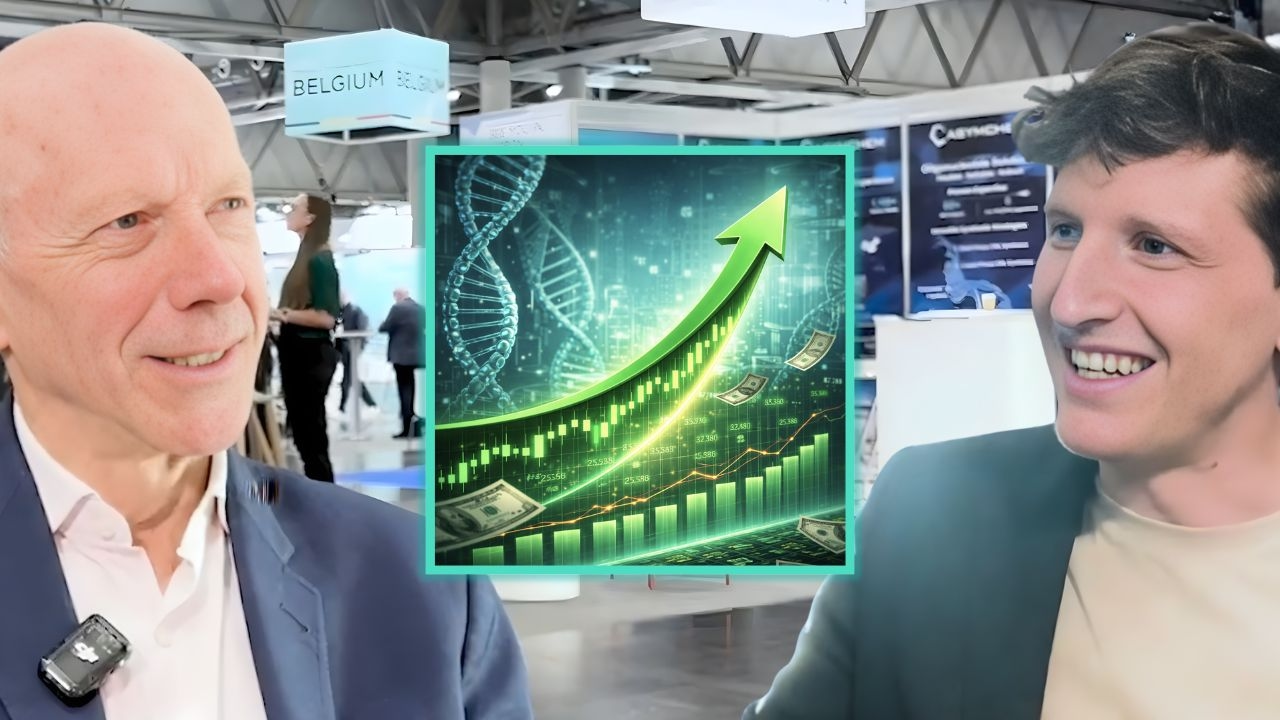
In biotech, Phase 3 data can change everything, or end everything. Few stories capture that reality as vividly as this one.
In a recent conversation, Marc de Garidel reflected on a moment that went from existential risk to historic success almost overnight: a Phase 3 clinical trial readout that triggered the biggest single-day stock price jump ever recorded on NASDAQ, with shares surging more than 600%.
But behind the headlines lies a deeper story about execution, uncertainty, investor psychology, and what truly drives value in late-stage drug development.
When Phase 3 Is Truly Make-or-Break
Two years earlier, the company’s future was anything but secure.
Despite strong leadership and scientific promise, funding was tight, so tight that Marc openly acknowledged that without a positive Phase 3 readout, the company would have been in serious trouble.
This wasn’t a comfortable “wait and see” moment. It was existential.
“If the readout had not been positive, we would’ve been in real trouble.”
For months leading up to the data, tension ran high. Questions lingered around the mechanism of action, and investor confidence was fragile. Even Marc admits that during this period, there was little reason to smile.
That’s the reality of biotech: until late-stage data lands, everything else is hypothetical.
The Data That Changed Everything
Then the Phase 3 results arrived — and they exceeded expectations on every front.
Not only was the drug clearly efficacious, but it performed better than it had in Phase 2b, a rare and powerful signal in clinical development. Even more surprising to the market was the strong safety and tolerability profile, which removed a major perceived risk.
That combination, higher-than-expected efficacy plus clean safety data, caught investors completely off guard.
The result?
- A 500–600% overnight stock jump
- The largest single-day gain in NASDAQ biotech history
- Trading halts on both Euronext and NASDAQ due to overwhelming demand
In Marc’s words, it was exceptional, even unprecedented.
Why Investors Reacted So Strongly
The market reaction wasn’t just about good data. It was about resolving uncertainty.
Before the readout, investors questioned whether the drug would truly deliver. After the data, those doubts vanished, instantly and decisively. When scepticism flips to conviction at scale, capital moves fast.
And in this case, it moved faster than trading systems could handle.
Managing the Chaos After a Historic Readout
Behind the scenes, the days following the data release were intense.
Investor calls that normally last 30 minutes were compressed into 15-minute rotations, as institutions scrambled for direct access. Phones rang nonstop. Interest was global and immediate.
Crucially, because the company was listed on both Euronext and NASDAQ, it couldn’t raise capital immediately. Regulations required a full day of trading before any fundraising could begin.
Instead of discussing capital, the team spent that day focused solely on explaining the data,while quietly gauging investor appetite.
The signal was unmistakable.
From $200M to $400M, and then $750M
Originally, the plan was to raise $200 million.
By the end of that day, the board made a bold call: double it to $400 million. Banks went out to the market immediately after NASDAQ closed, and the response was staggering.
Demand didn’t just exceed the target.
It exploded.
- $3.5 billion in investor demand
- Massive oversubscription
- Careful investor selection rather than open allocation
Ultimately, the company raised $750 million, prioritizing long-term institutional holders over short-term capital, a strategic move to stabilize the shareholder base and support long-term execution.
Despite the size of the raise, dilution remained relatively modest at around 18%, thanks to the dramatic increase in share price.
What This Story Reveals About Biotech Value Creation
This Phase 3 moment highlights several hard truths about biotech:
- Execution matters more than narrative
Years of strategy and storytelling mean little without late-stage data that delivers. - Markets price uncertainty brutally — until they don’t
Once key risks are removed, valuation can re-rate instantly and violently. - Phase 3 success reshapes optionality
After the readout, the company became fully funded through 2027, right up to potential U.S. launch — with licensing, partnerships, or exit all on the table. - Capital follows clarity
Clean data, clear efficacy, and manageable safety unlock capital at scale.
What Comes Next After a Phase 3 Win?
Rather than waiting for acquisition offers, the company is moving forward as if it will commercialize independently.
That includes:
- Building U.S. commercial infrastructure
- Hiring a Chief Commercial Officer
- Preparing for launch in the largest IBD market globally
At the same time, leadership remains pragmatic. Big pharma decisions can’t be controlled, only readiness can.
And with a dramatically higher market cap, the universe of potential partners has already narrowed.
Why This Phase 3 Story Matters
In an era where biotech investors are increasingly selective, this story is a reminder of what still drives outsized outcomes:
👉 Exceptional Phase 3 data
👉 Disciplined execution under pressure
👉 Credibility built before the readout, and proven after it
For founders, executives, and investors alike, it’s a case study in how quickly fortunes can change when science, timing, and execution finally align.
Here it is in video format if you prefer to watch: