
Founded in 1991, Camurus has grown into a $4B biotech with two products in the market, a rich pipeline, and 290 employees.
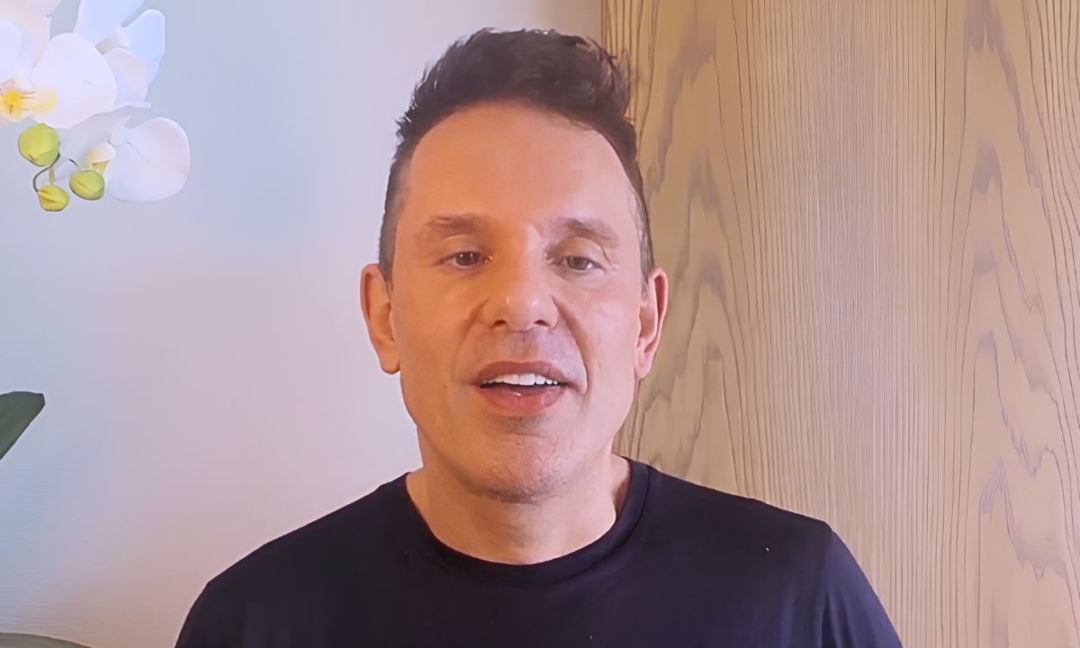
Fredrik explains how Camurus’ long-acting injections — part of its FluidCrystal technology — breathe new life into generic drugs, making it easier for patients to stick to their treatment regimen.
This has applications in many diseases, including hormonal disorders and obesity, with new formulations of GLP-1 agonists.
He also discusses how long-acting versions of buprenorphine can help patients to overcome opioid addiction and tackle the global opioid crisis.
Learn how YSDS helps move your most sensitive life sciences shipments worldwide, safely, on time, with full visibility at https://bit.ly/ysds-flotbio.
⭐️ ABOUT THE SPEAKER
Fredrik joined Camurus in 2002 as a member of the board and CEO in 2003. Before this, he was CEO of Heptahelix AB and a leading academic at Lund University and the University of Oxford.
🔗 LINKS MENTIONED
- Camurus’ website – https://www.camurus.com/
- Oczyesa’s approval – https://www.camurus.com/media/press-releases/2025/camurus-oczyesa-receives-marketing-authorization-for-treatment-of-acromegaly-in-the-eu/
- Brixadi’s approval – https://braeburnrx.com/media/press-releases/braeburns-brixadi-buprenorphine-extended-release-subcutaneous-injection-ciii-receives-fda-approval-for-moderate-to-severe-opioid-use-disorder
- Empire of Pain: The Secret History of the Sackler Dynasty – https://www.amazon.com/Empire-Pain-History-Sackler-Dynasty/dp/0385545681
- Camurus regains worldwide development and commercialization rights to CAM2029 from Novartis – https://www.camurus.com/media/press-releases/2018/camurus-regains-worldwide-development-and-commercialization-rights-to-cam2029-and-related-product-candidates/
- Camurus and Lilly enter collaboration and license agreement – https://www.camurus.com/media/press-releases/2025/camurus-and-lilly-enter-collaboration-and-license-agreement-for-long-acting-fluidcrystal-incretins/
- Nitazenes: Super-strength opioids spreading across Europe and North America – UN – https://www.bbc.com/news/articles/crgge1ez0r2o
📖 SHORT BLOGS BASED ON THIS EPISODE:
- Camurus CEO Fredrik Tiberg on Long-Acting Opioid Treatment: https://flot.bio/camurus-generic-drugs-opioid-use/
Transcript
[00:00:00] Intro
Philip Hemme: What surprised me was that not that many people knew, it’s a $4 billion company.
Fredrik Tiberg: I guess we have grown in the kind of shadow, so things, so now we are a profitable pharmaceutical company with strong pipeline. So we have a unique position in that sense and
Philip Hemme: the long acting. It’s amazing that it works so well and that it changes some of the drugs, which are basically generics and it can make such a difference
Fredrik Tiberg: As an opioid use disorder.
Patient really doesn’t wanna be reminded of their disease. So the fact that you have monthly doses makes you feel more ordinary.
Philip Hemme: How do you look at the Swedish biotech ecosystem in general?
Fredrik Tiberg: But I think the Nordics have had traditionally very strong healthcare industry and pharmaceutical industry.
We’re continuing to, build on that,
Philip Hemme: you have new 20 episode. I’m your host Philip, and I’m the fraud buyer show. I’m interviewing the best Europeans in biotech to help you grow. Long-acting drugs have changed certain diseases. One of the best biotech in the world in this space is cameras. It has two products on the market and is worth over $4 billion.
So I went to Lund in Sweden to talk to its CEO Frederick Berg. I didn’t know him personally, know cameras that well, but I’ve seen the company in the top 10 most variable biotechs on the flood bio map. And this got me cures. We talked about how cameras is helping to solve the opioid crisis. We also talked about the next.
Coming drugs, including long-acting GLP one for obesity and why being a biotech CEO can be more exciting than being professor in academia. So here’s my conversation is Fred, and please hit the follow button if you’re enjoying it. Today’s episode is sponsored by YSDS, your special delivery service YSDS help pharma and biotech teams move sensitive time category shipments worldwide with dedicated export available 24 sevens and full shipment visibility if you need reliability beyond standard logistics.
Why SDS is worth knowing can learn more by clicking on the link in the description below.
Fredrik Tiberg: Welcome to Sean.
Philip Hemme: Father.
Fredrik Tiberg: Thank you. Thank you, Philip. It was nice to have you here. Cool. Your new office, I heard you just moved in January. Yeah, it’s brilliant place. A lot of things happening around here. We have a neutron facility and a big x-ray synchrotron here, so it’s for a scientific field.
It’s a great grace. Yeah, that’s cool.
[00:02:47] Camurus: the $4-billion powerhouse
Philip Hemme: So I wanna start with with cameras, but at, large. Actually what surprised me when I prepared this episode was that. Not that many people knew you guys actually. And then I told ’em it’s a $4 billion company, top 10 biotech at this market cap in Europe.
Fredrik Tiberg: Yeah.
Philip Hemme: And okay you have basically two, two products on the market. 290, 300 employees in the market cap, 4 billion. So can you maybe just start a quick high level pitch for the people who don’t know you,
Fredrik Tiberg: I guess we have grown in the kind of shadows of things, but we have been around for quite some time.
I joined the company in 2003. At that stage we were just a small development company and then we have grown steadily. I think mostly organically over the course of several years. And now we are a profitable pharmaceutical company with a strong pipeline. So we have a unique position in that sense.
And perhaps we haven’t made multiple races of capital and so forth. So in that way, perhaps we are not as visual as others, but you’ll help us
Philip Hemme: hope so. And can you quickly on the what were the major milestones made from the, I think you’re founded 1990, what, right?
Fredrik Tiberg: Yeah, Actually we came from the nineties and, at that time it was like more service model Okay. Company. So we, when I joined in 2002, actually it just
Philip Hemme: as a board member.
Fredrik Tiberg: Yeah. No I, actually joined as head of r and d. Okay. And then six months later. Became the CEO of the company.
At that point we decided to focus more on, on building the technology platforms and, starting later on the first developments in terms of medical products. Yeah.
Philip Hemme: Yeah. I heard from Joseph Frederick when we preferred the call that that basically when you came in. You almost not started for a blank page, but you Yeah, we had started a lot of things new.
Fredrik Tiberg: Yeah. We, actually closed all ongoing projects because we realized that there was some kind of issues in, in terms of the IP and other things. So we, basically had to restart okay. The business in some way, but in a positive way
Philip Hemme: in hindsight is far story.
Fredrik Tiberg: Yeah. Okay.
Philip Hemme: And what were the major milestone, let’s say three to five milestones from 2022 until today?
Fredrik Tiberg: I think the first milestone was developing the full crystal technology and seeing that it worked in, both animals first but, then in patients, and that was a big break for us. Then of course, you always expect things to go faster than they do in pharma. This is so many hurdles you can enter.
But and then going forward, fast forwarding we did actually an important transaction with Novartis. On the what, is now the Camp 2029 program and now actually an approved product. So that was but there was some arrangements Novartis has changed things. Then we entered a, an agreement with broadband pharmaceuticals on the opioid use disorder indication, which we had developed previously is something I feel very strongly for.
I think it’s a very undertreated group and, a very exposed patient population. So going from there and then the IPO in 2015, which allowed us to start building up our commercial infrastructure. Then of course now with our second approval. So it’s been stepwise. And also we are now expanding from Australia and Europe now into the us So that’s a further important milestone for the company.
Philip Hemme: That’s impressive actually.
Fredrik Tiberg: Yeah.
Philip Hemme: Yeah, I mean there’s not that many biotechs even in Europe that make it through an in commercial not, just one product, two products,
Fredrik Tiberg: and hopefully three and four.
Philip Hemme: Actually it’s funny ’cause I talked, you mentioned Novartis. I just recorded a episode with someone from Novartis and actually mentioned you guys, and I think he was in charge of the deal at Novartis.
Fredrik Tiberg: Yeah we, actually had a very good relationship. It was a brilliant team work to work with, but there was some management changes and, changes in priorities. Unfortunately, we got the rights back so I, think that’s what happens in biotech often. It’s you do different choices for different strategic reasons.
So
Philip Hemme: it was not for the product, it, or the platform itself was more
Fredrik Tiberg: No, yeah, no, I think we always had a very enthusiastic team on the other side, so to speak. But yeah.
Philip Hemme: And that was on the, on so the, on the
Fredrik Tiberg: Oxy and Olay product, which just went, which, yeah, which we are now just launched in, in Germany, for instance.
And, we are now also resubmitting into the US so we’re expecting approval next summer and, we have multiple other. Indications, standard development. Yeah.
[00:08:25] The FluidCrystal technology
Philip Hemme: I think let’s talk about later about the how to overcome setbacks. I think that’s usually not easy for biotech executives and Yeah. But we can talk about that a bit later on, on the products.
Maybe just to, get back to the, platform. I find it’s, pretty, amazing that it works so well and the fruit crystal platform. Yeah. Could you just, yeah. Tell me basically why, like how it works and why it works so well? It works.
Fredrik Tiberg: Yeah. And we had a background in the area of lipids cell membrane lipids and other lipids.
And when we, the outset was that we thought about the technology that could be easily administered, deeper technology at that point. There was basically only polymer system available and they are often require reconstitution and mixing and have some limitations due to the degradation resulting in acid formation and other things.
So we developed a technology that we thought would work from administration up to delivery so we can, and with the lipid system, you can, you get very rapid encapsulation in a, defined geometrical matrix. And you can control the nanostructure by controlling the compositions. So I think we had all the attributes and, most importantly, of course, you also need to have.
Something that is biodegradable and, doesn’t result in any toxic substances and so forth. And we’re working with endogenous lipids basically. But still, with all the documentation that we had available we had to go through from a regulatory standpoint it, took us a long time just to have all the toxicologist data for, substances that should be very well known to to the, at least the regulators. Yeah.
Philip Hemme: I guess when you do something new it’s quite,
Fredrik Tiberg: yeah, it’s, you always have the development barriers to
Philip Hemme: Okay. And then basically you are, it’s a subcutaneous you inject
Fredrik Tiberg: Yeah, most of the time. Most, of our programs are subcut so subcutaneous under the skin.
But it can also be, we have done intramuscular injections and so forth, so. it’s not limited to subq however, subq is the most convenient injection form.
Philip Hemme: Yeah because basically you inject and then it makes a lipid aggregate and then it degrades over a month. And so you have the drug delivery or whatever time you want, you can control the, release basically up, I guess to, a month.
And then you have a steady release of drugs for months.
Fredrik Tiberg: Our sweet spot is weekly, up to monthly and three times up to bimonthly. Oh,
Philip Hemme: even, okay.
Fredrik Tiberg: Administration in, best cases.
Philip Hemme: Okay.
Fredrik Tiberg: Wow.
Philip Hemme: No, that’s cool. Yeah. And one thing I am also curious is that the, the long on the long acting it’s amazing that it works so well and that it changes some of the drugs, which are basically generics and makes them.
Much more valuable for patients as well. I don’t think I find it that obvious from a, that it can make such a difference and deliver some value.
Fredrik Tiberg: No, you don’t think so? But there are a number of components here. I mean from, a, convenience standpoint, it’s obvious that monthly injections are, going to be more convenient than daily or three times daily or whatever.
But, there is also from an efficacy perspective that you have a kind of continuous exposure at the certain level that, that is well defined and you avoid
Philip Hemme: pharmacokinetics.
Fredrik Tiberg: Yeah. Very. And you also avoid potential tolerability issues with spikes in concentrations and so forth.
And so those are important components. And but for a, another thing is that for instance, an opioid use disorder patient. Really doesn’t wanna be reminded of their disease. So the fact that you have monthly doses makes you feel more ordinary and you don’t have to think every day on taking your medication.
And and I think that’s this stigmatization, which is involved in many times in in, in, medications shouldn’t be under underestimated. Okay. So there, there are mass of drug is
Philip Hemme: also,
Fredrik Tiberg: yeah. Compliance is of course another very important aspect.
Philip Hemme: Yeah. Yeah. Okay. Yeah. But it’s, also it’s a bit different.
A bit contradictory with the, recent GLP one development where they don’t want subq and they want the pill.
Fredrik Tiberg: I don’t think that’s gonna, if you’re looking at areas where you had the pill, for instance, if you take oct. You we had first of all, we had a short acting injectable, then we had a long acting, and then we got the twice daily pill, which had a very difficult time getting any market shares.
And now it’s, I think it never was launched in Europe. Now it’s coming a daily pill potentially has a better faith, but patients don’t want to take usually not twice daily medication when you can get an injection every month. So I’m not sure. I think for the G one area, I’m sure there will be patients who are, who will prefer.
Daily pill, but I’m sure there will be a big group of patients that would prefer weekly, or monthly or whatever new modalities that come in the space. Yeah.
Philip Hemme: Yeah. I guess it’s good if the patient has the option.
Fredrik Tiberg: Yeah. Treat options are, optionalities is very important. You can individualize treatment to lifestyles and, other matters.
Philip Hemme: And the subcu, I guess it’s the same as for diabetes patients as a, prefilled syringe and the Yeah. Patient can inject themself or You mean our subcu? Yeah your, subcu.
Fredrik Tiberg: Yeah. We, that’s the, one of the good things with the fluid crystal system is because it’s a pure solution before it’s injected.
So it can be injected with relatively thin syringes and using state of the art autoinjector or PAM devices. So we are essentially using the same devices as you see for. For other commercial. Okay. Recently introduced commercial parts. Okay,
[00:15:24] Buvidal tackles opioid addiction
Philip Hemme: that’s good. Yeah. So maybe it’s, let’s move to the, first or to the first product.
I think the Vidal, I think it’s the worldwide name brick Saudi in the us. What’s quite funny is from, the research is that the, drug itself was, founded in the sixties in the uk I think discovered. Yeah, absolutely.
Fredrik Tiberg: It’s a very old molecular entity, but a very interesting compound because it’s a combination of an agonist and an antagonist.
So, you have very positive effects on, cravings and other things. On the same time, we avoid, for instance, respiratory depression, which is one big issue with opioids where it can result in overdose and death. So, it’s got a very good profile from a mode of action standpoint.
Philip Hemme: Yeah. And then the, actual treatment that it’s for basically opioid depending on patients to, to get them out of the craving.
Fredrik Tiberg: Yeah. It’s not saying maintenance treatment of ob opioid use disorder, but the other point is that typically we see, we also see that some patients when ready they are tapering out and going to total abstinence.
So it’s, a continuous treatment from, what you say, the early chaotic state of dependence to. To in some cases then patients becoming completely abstinent. But our part of the treatment is the maintenance phase, you can say.
Philip Hemme: Yeah, the maintenance. Okay. We’ll talk more about the o opioid crisis as well.
Yeah, I read the Produ Pharma book square shocked but was just after but the first on the, ’cause on the stage it, it’s doing like pretty well I think US, Europe, Australia, but I think you have quite a lot of difference in market shares from what I read. Like how come is what’s the
Fredrik Tiberg: Yeah I think that first of all, I mean from states, we, I think we’re we have had double digit growth now for, since launched in 2019, year by year.
And fortunately I, believe that will continue. Because there is a high medical need in terms of market penetration.
Philip Hemme: So the, global says it’s $180 million, 2024. That’s correct,
Fredrik Tiberg: yeah.
Philip Hemme: On there. Okay. Yeah.
Fredrik Tiberg: But looking at the market penetration I think once we have established, once there’s funding available for patients which is now in Europe the Austerities government, austerities is a big issue.
But, in markets where we have good funding the Nordics, Australia we are market leaders in, in almost all segments.
Philip Hemme: Okay.
Fredrik Tiberg: So that’s and, we have in Finland, I think we have more than 5,000 patients. When we started treatment, I believe the patient numbers available in patients was lower than 5,000.
So, we’ve actually. Captured also patients out of treatment. Australia, we have something like 20,000 patients plus in treatment out of a total of 60,000.
Philip Hemme: Okay.
Fredrik Tiberg: Then there are markets that are more difficult to enter, and that’s often the big European markets where there is financial hurdles.
So patients have difficulty getting finance versus reimbursement and so forth. Okay. But reimbursement is not always the problem. It’s sometimes it’s just government fund funding to the treatment systems.
Philip Hemme: Okay. You mean as in going to a clinic or something that Yeah, that has to be,
Fredrik Tiberg: yeah. The clinics, the budget for clinics can be limited.
Philip Hemme: Okay.
Fredrik Tiberg: In Germany, we have a lot of resistance because doctors are reimbursed. They’re paid basically on the number of visits you have and, then that, doesn’t really favor a long acting treatment. But nevertheless our data are very strong. We, showed superiority and reduction of illicit opioid use.
We have shown a lot of quality of life advantages for patients with biral. So I believe slowly and steadily we will continue to penetrate also the larger European markets. Okay.
Philip Hemme: And then in, when you say, for example, in in your, leading markets, you’re basically replacing the generic version, the pill version?
For
Fredrik Tiberg: this mainly. Mainly I would say, yeah. And what we are seeing more and more is that there is a heritage of methadone treatment. Methadone is has first of all it’s much more toxic and it’s very sedating. Okay. And we’re seeing in the younger poly, new patients mainly go into long-acting bovine.
Okay. But there is still, I think in Europe there’s a majority of patients on methadone. Okay. And we’re trying to, and working quite successfully to transfer more of the methadone patients over to buprenorphine, which is much less sedating. And has se several advantages also relating to the risk of overdose and respiratory depression.
Philip Hemme: And then I’m curious for the, from the pricing difference, because I guess the generic version must be quite cheap. The paid version must be quite cheap, but I don’t know. But
Fredrik Tiberg: yeah, I mean in many, and that’s,
Philip Hemme: I dunno, what’s the pricing? Your pricing, but
Fredrik Tiberg: despite that of it can be up to a factor of 10.
Philip Hemme: 10 Okay.
Fredrik Tiberg: In price difference. But we can see, and we have done work in, the UK for instance, that every patient that is, we put on, Birol.
Philip Hemme: Yeah.
Fredrik Tiberg: There’s a for ev every pound invested, there’s a threefold gain in terms of healthcare economical outcomes for and societal outcomes.
So you have to look at the totality of,
Philip Hemme: okay. Which I guess is, what the health authority wants. That’s the most important. Yeah. The
Fredrik Tiberg: problem
Philip Hemme: is, but I can imagine you must have some resistance from health, is that you’re saying?
Fredrik Tiberg: Of course
Philip Hemme: there is a generic and then
Fredrik Tiberg: I think every, company independent of still we are, low.
If you’re looking now at obesity, for instance and looking at the healthcare costs of the ob obesity sector we are much, we’re much under the radar in that sense.
Philip Hemme: Yeah.
Fredrik Tiberg: Yeah. Okay.
Philip Hemme: And you, we’ll talk about your, so you get the second approval in Europe, I think this year. And then you also have a, pretty promising, you just talk about obesity in a phase, say phase one B is, or V but one thing before I’m curious on on the, compounds you’re using, because it makes sense to use a proven.
Molecule and basically improving everything you mentioned. I’m curious also why, would you not develop a drug with a more let’s say, innovative molecule that is like proper that can only be done with your technology. Is it deliberate?
Fredrik Tiberg: Yeah. We are we’re working quite broadly.
We have several products with APIs that have not they, are not currently approved.
Philip Hemme: Yeah.
Fredrik Tiberg: Those are often earlier in our pipeline for various different reasons. So I, think we are not we are, not, we are agnostic to that. The, important thing is that any medical product should provide value to patients.
And ultimately, and that’s what drives our investments.
Philip Hemme: But I guess until now, it was just faster from a clinical development and, market access to use existing APIs. Versus new ones, huh?
Fredrik Tiberg: Yeah in a way we have the efficacy profile Yeah. The tolerability and so forth.
So the risk is much smaller of course for a, for an API, which perhaps has been in the market for 20 years. Like ide Yeah.
Philip Hemme: Yeah.
Fredrik Tiberg: The safety profile and tolerated profile is fully established. Yeah.
Philip Hemme: And I guess you even have the phase four data or whatever the Yeah. Everything. Yeah.
Okay. And one thing I’m also curious is a bit more general question as well is like. How much, let’s say people were looking at, your investors were looking at you as a a long acting versus the repurposing of drugs. ’cause that’s when I saw you guys, I, that’s the first thing I thought.
Okay. It’s a repurposing, but it’s delivery, but it’s repurposing of the drug. It’s not, but just wondering, maybe thinking, oh, repurposing doesn’t work that well in general. Investors don’t want to finance it.
Fredrik Tiberg: Yeah. No I think repurposing, yeah in some way it’s the same thing.
What we are doing is often you can say externally, life cycle, managing products and we, repurpose them in new indications and for new applications. So I, think it’s yeah, very similar. Okay. In a way. I don’t know if there’s a fundamental difference there.
Philip Hemme: Okay. But then did you get the, like pushbacks on the repurposing and there’s quite a lot of setbacks on repurposing, especially in the biotech world.
Fredrik Tiberg: Yeah We always get push backs. Is there, it’s the name of the game, that’s where we are living. It’s but we are working in new indication, if you call that repurposing, for instance like for camp 2029, we are going into polycystic liver disease where it’s current or okay.
Product available.
Philip Hemme: But for boda was, that’s like not you, it’s the same indication.
Fredrik Tiberg: Yeah. Essentially the same indication. Some nuances.
Philip Hemme: Okay. Yeah. As always in pharma.
Fredrik Tiberg: Yeah.
[00:26:05] Oczyesa’s commercial challenges
Philip Hemme: Okay. And so let’s talk about so your second product, I don’t know how you pronounce it exactly, o the commercial name at least.
Must be, yeah, must be pretty, feels pretty good I guess, to get the approval this year.
Fredrik Tiberg: Yeah.
Philip Hemme: FDAs are not, is already planned, I think for June next this year. Yeah.
Fredrik Tiberg: So for Oxy, which is a long acting ide there, we got approval in Europe in the summer and then we launched it and then uk yeah, we launched it in Germany, just in November timeframe.
Yeah. And so far we’ve got very good feedback and quite, quite a positive initial uptake. It’s a small rare disease indication.
Philip Hemme: Yeah.
Fredrik Tiberg: But it’s exceeded our initial expectations at least. So, we’re looking forward to penetrating the, continuing to see the uptake during 2020.
Philip Hemme: What were your expectations?
Fredrik Tiberg: I never go we haven’t announced anything, but we have a good uptake.
Philip Hemme: Okay. Yeah. And, but I saw there was maybe competitively a bit more competition on this indication and got some drugs available. And also from a pricing point of view
Fredrik Tiberg: we have pricing we have in place in Germany, so it’s, I think we have
Philip Hemme: a little more from a pricing competition of some competition cheaper or cheaper prices.
Fredrik Tiberg: That’s I, think what, we are offering, it seems that is appreciated and has a clear. Medical value for patients because this is the first product that can be long-acting product that can be administered by patients themselves, conveniently with a autoinjector pen and on a monthly basis. And that has large value.
Plus we have shown convincing strong long-term efficacy. So combine the, there’s a, and there is a high medical need in this population. Yeah.
Philip Hemme: And, from a, I think I asked on the cover from a peak size or from a sales estimates, like what’s the, what does it look like?
Fredrik Tiberg: This is a relatively small indication.
Acromegaly. Looking at it globally, we are expecting maybe up 200, up to 300 million. Okay. The US in terms of, peak sales. But we are also pursuing the neuro endocrine tumor indication as our second indication where we’re expecting phase three data. Somewhere we have said late, mid to late this year is closing the study, but then we’ll see how, long time it takes to get the data.
That’s the current estimates. But that market is maybe at least tenfold larger. So it’s more like 2 billion.
Philip Hemme: Okay. Wow.
Fredrik Tiberg: So that’s a blockbuster potential.
Philip Hemme: And on Bo, on Vidal, what was the peak sales estimates or like?
Fredrik Tiberg: In the us the estimates are our, estimates are peak sales above 1 billion us.
So
Philip Hemme: space to grow.
Fredrik Tiberg: Yeah. I mean it’s large potential, but more importantly, I think we are seeing very positive effects of the treatment out in the treatment landscape.
Philip Hemme: Yeah. Yeah. But, and I guess it’s also depending on the opioid crisis. Unfortunately the, number of patient grew a lot.
I don’t know, probably in the last 10 years.
Fredrik Tiberg: Yeah,
Philip Hemme: probably. It’s growing, maybe. It’s, at least it’s calming down. I hope. I think so.
Fredrik Tiberg: I think what you’re seeing in the us is that actually overdose numbers are finally starting to decrease. Okay. So, we it was peaking at just opioid overdosing was peaking at 80,000 per year or so.
Philip Hemme: Okay.
Fredrik Tiberg: And, total overdose numbers sold, drugs included was up a hundred thousand or so. It’s coming down, but I do believe a large portion of that reduction is that treatment. Especially buprenorphine treatment and has a positive impact on. So I think it’s, not that people are stopped being using drugs it’s, probably more, and this is, I should say maybe not fully elucidated at this point but, more that because buprenorphine has said partial antagonist, it blocks it, it avoids then respiratory depression and, protects patients from pure overdose deaths through or, incidences, I think, to the respiratory depression.
[00:31:03] Metabolic programmes in progress
Philip Hemme: Okay. I think I want to go deeper into a bit. Yeah. Just fi find, finish on on, I wanna talk out the, last the, I think in your pipe on the, Glide program and finish on the finance, I think on the pipe. I think that has, from what I understand, quite a lot of potential as well.
And it’s quite interesting from, in, from an investors, from the investors point of view, this program. And obviously this is a sales from VY and Yeah. And, the Lilly product. Yeah, I, when I have a few things that comes to my mind because you’re using vy, but then you have a deal with Lilly.
Fredrik Tiberg: Yeah.
Philip Hemme: But you don’t have a deal with No at least I don’t think so.
Fredrik Tiberg: No.
Philip Hemme: So how do you source it? Like why this this deal with, Lily? How does it compete?
Fredrik Tiberg: No, I mean we, we announced partnership with Lily this basically in June last year. I, think it’s very interesting because they obviously have a very strong position in the incretin space and specifically for treatment of obesity and other related disease.
And yeah, also they had a unique position in, their functionalities. With semaglutide, we had the opportunity to source the API ourselves, and we also wanted to keep an own development. So we conducted a first initial phase one B study in, in patients with overweight or obesity with BMI above 27 to 39.9.
And that study was very positive in terms of the readouts rapid weight reduction and also very extensive in, relationship with the label dosing that is for the active comparator, which was we go with them. We think the data are so interesting that we wanna continuing to phase two B study.
And I think that’s, and meanwhile of course, our relationship with really continues to evolve. We’ll see how, it progresses.
Philip Hemme: Okay. But, how can you source it independently if you don’t have like even the procurement agreement? No
Fredrik Tiberg: there are multiple suppliers of GMP material. You should be aware that semaglutide is losing patent in certain countries like.
Canada and Brazil I believe, and potentially so forth in China already in 26, but Okay. But, even so for clinical purposes there is typically GMP material available for, development.
Philip Hemme: Okay.
Fredrik Tiberg: Yeah,
Philip Hemme: because I know, more for the, all the immuno-oncology trials where I think all the drugs that do combination with, Keytruda or with Opdivo, usually they still have a, some kind of
Fredrik Tiberg: biosimilar system.
Much more difficult. They’re more difficult to, develop and scale and so forth.
Philip Hemme: And not biosimilar. No when they do combination trials
Fredrik Tiberg: Okay.
Philip Hemme: With Keytruda, usually they have an agreement with Merck somehow to get Keytruda. Yeah.
Fredrik Tiberg: Yeah.
Philip Hemme: Yeah.
Fredrik Tiberg: That, may be for different reasons.
Philip Hemme: Okay. Okay.
Fredrik Tiberg: Okay.
Philip Hemme: Okay.
[00:34:45] 4 years of profits
Philip Hemme: F and then on the, finance side, just to finish I think what’s pretty amazing that you’ve been, I think profitable for, what is it, for four years, I think now. Yeah. And now you’re like very profitable. I think in 2020 2024, even 2025. What was it? And your profit grew a lot. And you like basically more than 50% net profits.
Fredrik Tiberg: Yeah.
Philip Hemme: This 24,
Fredrik Tiberg: yeah. We’ve got our guidance for this year is a profit of 0.9 to 1.2 billion sec.
Philip Hemme: Yes.
Fredrik Tiberg: So that’s and we have a profit margin of, I think we are lost quarter about. 43% or, that’s amazing. Yeah, that’s good. I think the most important context there is not the profit margin it’s the fact that we are actually financing our pipeline as well.
So we’re, I think what’s unique with us is that we do have a strong commercial side but also we have an interesting and, advancing pipeline. So that’s, how I wanna see the company.
Philip Hemme: Yeah. And then I guess with these, with this profit also it goes with cash balance and gives you a lot of options.
Yes. And also your market, your very high market cap. I guess it gives you quite some options. And I heard you were looking also on, on the m and a side. You have looking also.
Fredrik Tiberg: We’re working I mean it’s, such an evaluation and ongoing processes
Philip Hemme: in progress.
Fredrik Tiberg: Yeah. In progress.
Philip Hemme: How is JPM
Fredrik Tiberg: JP Morgan this year?
It was it was very good. I must say that it felt like there was a fewer people and ordinary, and I thought it was a little bit more. Tame that it can be, sometimes it’s a complete circus, but this year it was a little bit slower but it was still very productive and, Okay.
Yeah. With, but the hotel rooms are ex as expensive as ever and the chairs in the lobbies and the chairs in the lobbies. Yeah.
[00:37:00] Solving the opioid crisis
Philip Hemme: Okay. And then, so maybe to continue on the, to zoom back a bit more on the three topics on the, opioid crisis, and I read the, book about Purdue and I was like quite shocked.
It’s, quite a crazy story and quite in terms of and ethically and greed and whatever you wanna call it. Yeah, maybe on the, outlook, how do you look at this aspect? And obviously you’re bringing a solution which is much, much needed by patients. Like how do you look at at this crisis?
Fredrik Tiberg: The original of the crisis o obviously there’s been opioid use has been an issue in all of humanity. So it is, not a new issue. But I think the combination of the marketing efforts and so forth that was done and the messaging around chronic pain and, so forth was very yeah I’m not a judge, so I should just be, but it wasn’t appropriate.
I do think there’s other companies that joined. Purdue was. Certainly very obviously visible in this, but there was a lot of other companies that, joined the success in the chronic pain space in the early two thousands and so forth. So they, it was not alone but for us I think the future is to have good treatment for patients.
If, they this continues to be an issue beyond the Oxycontin and so forth, because you have fentanyl coming in, in the US and so forth. So there are new, challenges and
Philip Hemme: so Fentanyl would come in the same category.
Fredrik Tiberg: Yeah. Fentanyl is also it’s a synthetic, super potent opioid.
Philip Hemme: Okay.
Fredrik Tiberg: Which also is very largely responsible for the increase in deaths that we saw in the kind of late 2000 tens because of its high potency. It is a respiratory depression. So, I think we’ll have to continue to fight these drugs coming in, but also make sure that patients who are impacted or treated and, receive medical treatment, because it’s the most, the effective way of dealing with this topic for patients,
Philip Hemme: but I guess especially in the US, must be a challenge when they’re already in, in the opioid dependence and maybe they don’t have proper, he proper coverage or healthcare coverage, then they don’t even access.
Treatments, or
Fredrik Tiberg: I, think you can say that in the US there is a big problem. Also you have a big part of the co com comorbidity program. So you have a lot of patients that have psychiatric disorders and opioid use disorders, and they are often living on the street and, not receiving treatment.
I think this is I mean from a humanitarian standpoint, this is an important topic to address that also these patient categories should, have access to treatment. And I think it would be from a society standpoint, it would be a very, wise investment.
Philip Hemme: Yeah. Yeah. And then, something like Medicare I guess helped.
Fredrik Tiberg: Yeah. Medicare has been to some degree, Protected from a lot of the issues and cuts that have been taking place. So for instance, the work requirements that were going to be introduced is not impacting substance use disorder.
Philip Hemme: Okay.
Fredrik Tiberg: Yeah,
Philip Hemme: that’s and yeah. And how because I feel like in, in Europe it’s much, it’s less,
Fredrik Tiberg: there are many Europeans.
You can see as we have been UK we have had quite good, especially in Scotland and Wales, but there’s still. Very limited funding and there is a large portion of patients that don’t have access to treatment. Okay. Especially don’t have access to treatment with long-acting yeah.
Buprenorphine, for instance. There is huge potential for improvement and, improved coverage of the, broader patient population there.
Philip Hemme: No, I, yeah I meant more from, number of patients per capita, or, I feel like the severity of the opioid crisis was just much stronger in the US than the Europe.
I don’t know if it’s true actually.
Fredrik Tiberg: I feel Scotland is actually the country with the, highest the rate of, opioid use disorder per capita. So, the US is not absolutely not isolated but, in terms of total population, of course it’s there’s an estimated 2 million Americans in treatment right now, but they say that approximately 6 million are, or say, candidates for treatment.
So it’s, a huge
Philip Hemme: EU compared even, how does it
Fredrik Tiberg: eu, it’s somewhere around patients in treatment, a little lower than 700,000.
Philip Hemme: Okay. Okay. So that’s still a factor of four or five
Fredrik Tiberg: Yeah.
Philip Hemme: Per capita basically.
Fredrik Tiberg: Yeah.
Philip Hemme: Which is a huge difference.
Fredrik Tiberg: But a lot of countries reporting is not always great.
Philip Hemme: I guess U five if you take year five per capita, I guess that’s where more better reported.
Fredrik Tiberg: Yeah. If you take E five, it’s lower incidents and prevalence than the US for sure. Yeah. Okay.
Philip Hemme: And that, and I’m curious on the opioid, because at the end of the day, opioids are also very a very useful from a clinic in a hospital setting.
And there’s also a lot of in even fentanyl I, just heard that, it’s used in hospital
Fredrik Tiberg: Yeah. As
Philip Hemme: a painkiller or something.
Fredrik Tiberg: It’s very effective painkiller. Yeah. And it’s used extensively in, in certain treatments. For instance, surgical interventions. Yeah.
Philip Hemme: But what’s spinal of Assertion is inventing new painkillers.
Do we replace opioids for the
Fredrik Tiberg: patient there? There’s a large effort to go for non-opioid painkillers, but in many cases, opioids are, a very good anergic agents. The right and the best. Yeah.
Philip Hemme: So it’s not,
Fredrik Tiberg: so it’s, about finding the compromise and using different medical interventions where, they should be used and perhaps not
Philip Hemme: overused
Fredrik Tiberg: too broadly.
Philip Hemme: Okay. Because that’s the crazy thing with the crisis as well. Is it? Set site du. In some, I think quite a lot of hospital settings or patient are just overusing opioids, and then that’s what led to the dependence and then the, some of the crisis. For individuals or for patients?
Fredrik Tiberg: I think it’s a combined issue.
Dependence is, to one extent relating to, over usage, but it’s also relating to many other factors. And as I mentioned life of people growing up and addiction is a problem if it’s alcohol or, opioids. It’s, it’s. a problem that we have had as a, species.
Philip Hemme: Yeah,
Fredrik Tiberg: For a long time. And sometimes it needs treatment and sometimes it can be resolved by other means and intent.
Philip Hemme: But what I had in, in the back of my mind was also when we think of opioid crisis, we think of fentanyl even we think, oh, it’s like a drug addicts or recreational, and then when went badly.
But if it’s from a, like hospital, like the origin is from a hospital overuse, a bit like antibiotic and overuse.
Fredrik Tiberg: Yeah.
Philip Hemme: And then it has very severe consequences. And that was surprised me a lot in the opioid crisis in the US was like the,
Fredrik Tiberg: what we’re seeing now in Europe, which is also very concerning, is that there was some super potent Tokyo that came in the sixties and fifties actually.
So s for instance, which are. Now being seen in the different markets. So, that’s multiple times more potent than fent. Okay. And that’s also, again, a threat mainly because of the risk of overdose and, mortality.
Philip Hemme: Okay. Yeah. Fentanyl. I looked at a few things at Fentanyl and how that’s crazy.
How, the whole cartels took it over and how it’s manufactured. So I think most of it is manufactured in China and comes through cattails and then exported and how it’s so cheap to make and so potent that it’s insane.
Fredrik Tiberg: More quantities become cheap if the synthesis is not today.
Philip Hemme: Yes. Yeah.
But also how addictive it is at the end and how potent it is. Yes. Yeah. Yeah. Than for getting into political solution that’s a, different topic.
Fredrik Tiberg: Fortunately. Not my response be right now.
[00:46:44] Europe’s long-acting drugs scene
Philip Hemme: But back to back to, biotech. One thing, and it’s really crazy, is that on the long acting.
Category. I think, I mean there’s quite a lot of successful biotechs in eastern in Europe. Obviously they’re not direct competi, but in similar space. I think asen, this is also
Fredrik Tiberg: quite, asem is a different, I mean they’ve been very, they, their first product was the growth hormone. Yeah. Once weekly growth hormone.
Philip Hemme: It’s also a bit of like enough, is it longstanding? You categorize it as longstanding
Fredrik Tiberg: technology for the approved products I’ve seen is once daily or weekly.
Philip Hemme: Okay.
Fredrik Tiberg: But obviously I, I don’t know their pipeline, whatever
Philip Hemme: but then at least the one I den cell is the one I think of.
Fredrik Tiberg: Yeah.
Den Cell has a polymer based system. It’s a French company.
Philip Hemme: Yeah. Which passed the billion dollar mark, I think.
Fredrik Tiberg: Yeah. And they have also mainly focused on, I would say anti-psychotics, which is a category where this long-acting. Injectable concept has been used for a long time.
Philip Hemme: Okay. Yeah. Yeah. It’s cool too.
Yeah. And I think AIA as well, and I guess
Fredrik Tiberg: I, I don’t know I mean I
Philip Hemme: also, French company
Fredrik Tiberg: seen it, but I, haven’t, Okay. Big insight into what they’re doing,
Philip Hemme: but they’re also in the diabetes, obesity, but they’re smaller than you guys, but still, I think 200 plus million market cap dollars.
Okay. And then maybe one on the Swedish biotech industry because it’s, pretty cool. Europe, even on I think I looked up because one of our product is a podcast. The other one is a map or database. And I look and there’s basically three Swedish companies in the top 10 most valuable companies in, Europe at is the publicly listed.
You guys are number two. We can, so as a biotech company,
Fredrik Tiberg: this,
Philip Hemme: and it is, then bio was yeah, Guera was actually on the show last year. Yeah. I think they had 2.5 billion. How do you look at the, how do you look at it at the Swedish bio ecosystem in general?
Fredrik Tiberg: It goes in, I think at one time it was even more successful, I would say in the middle of the 2000 tens.
We had a lot of really quite large IPOs coming in 2015. I think we were the first company in 10 year timeframe that did not listed.
Philip Hemme: Okay.
Fredrik Tiberg: But there was a number of companies that, and some have been successful and been like, wheels and Therapeutics were sold to the US and so, it’s been a there’s movement going on, but I think the Nordics have had, had traditionally very strong.
Healthcare industry and pharmaceutical industry and we’re continuing to build on that. And we, I think the nice thing is that we do have a few, which is a reasonably sized companies like biotic cameras and, a few others. And that’s very important to keep the kinda momentum in the space and the, interest in the in the area of healthcare.
Philip Hemme: Yeah. I guess it stimulates the whole ecosystem.
Fredrik Tiberg: Yeah, I think so. It’s and, Denmark has of course, been successful with, as Sandis has been one, so it’s a strong development and seal and Gura, which we actually have a collaboration with. So yeah.
Philip Hemme: Very Nordic and, the part of
Fredrik Tiberg: general, yeah it’s a, I am, I’m really impressed by the.
And of course we would see to see that spread more over across Europe. Yeah.
Philip Hemme: But at least it’s not far across the bridge. No. It’s, I came actually from, Copen. I landed there and, I’m going after and yeah. Actually I would talk to the CSO of NOIs or industry biotech by solutions.
Also really cool company. They’re really strong in bio solutions in general. It’s very impressive as well. Absolutely.
[00:51:05] Fredrik Tiberg’s background
Philip Hemme: Maybe to finish a bit more on the some, more personal questions. One thing as more from a career, lessons, one thing that struck me was that you were. First you, you’re very like connected to L because you studied in L and then you’re a professor in L and what’s pretty crazy also you transition from professor to CEO.
Fredrik Tiberg: Yeah.
Philip Hemme: Which is not completely uncommon, but it’s also not that common. I lot of professor foreign companies, but it’s more like scientific co-founder or sit on the board. Like why how was the transit? Why and, how was it?
Fredrik Tiberg: I think basically I’ve always been entrepreneurial in mindset. And I, really liked the academic environment.
However you could see that it became increasingly in my view, bureaucratic and resource strained. And it, so over time I always worked parallel with companies and my academic work. But unfortunately I think it you have to search for grants and innovation was slow.
So I thought it was, for me, it was great to go into this position and be able to work in a more effective and agile way. You, we would expect that would be the case in university. But, sometimes academia is a little bit on the back waters. But so, plus what is exciting to work in pharma is of course, you the, closeness between research and patients and
Philip Hemme: what, were you doing as a professor?
What was a
Fredrik Tiberg: I was I, worked I mean everything from condensed matter physics to physical chemistry. I worked a lot with the nano structures.
Philip Hemme: Okay.
Fredrik Tiberg: Material science and things like porous media through complex fluids,
Philip Hemme: but not necessarily pharma then, like
Fredrik Tiberg: it was also No, I had a pretty broad repertoire.
Philip Hemme: Yeah. You told me you ended physics in France for one year.
Fredrik Tiberg: Yeah. Yeah.
Philip Hemme: And how, was that to transition to motor Pharma?
Fredrik Tiberg: No, I think we are somewhere in I, think it was I think this is a super interesting area to work in. And because, again, because of the closeness between patients and actual science and to make that leap was great fortune for me.
And I, was always interested in biomolecular, bioscience. So, it was a very natural move.
Philip Hemme: Okay. Yeah. And I’ve seen also that you’re you said you worked in France, you worked here and I think you’re a professor also in the, in, in Oxford. Yeah. So joined
Fredrik Tiberg: visiting professor.
Philip Hemme: So quite European as well, like how, like
Fredrik Tiberg: Yeah.
Well, Europe is great.
Philip Hemme: I maybe you, yeah. Tell me bit more on, on that part, on how, I don’t how, important is it for you now that you worked in the different countries?
Fredrik Tiberg: I think it is always in this space we have a large group of people from Australia and now up to nude, nor the largest north northern part of Norway.
So I think you have to have an international perspective and being able to. That’s also part of the fund being in running a company like this is that you have so many great people with geographical distributions and different approaches. So that’s enrichening, I think all of the, all of our lives in the company, so to speak.
Philip Hemme: That’s cool.
Fredrik Tiberg: Yeah.
[00:55:15] Quick-fire questions
Philip Hemme: We’ll do, I’ll finish with a more quick fire. So it’s like, quick questions, quick answer. Just after that, I’m curious, even more personal, but what do you do outside of work?
Fredrik Tiberg: Oh, that’s yeah, I’m a good gardener. That’s why you’re so nice. Pants on the office.
Philip Hemme: Yeah. Yeah.
Fredrik Tiberg: And the wall.
The wall of friends. The one on the wall. Yeah. Yeah. No I mean I you’re the one climbing and changing the plants. Yeah, exactly. We do that. Yeah. I, like you being out nature. I have a little bit of a esoteric interest. I’m a, little bit of a, my, my interest in skateboarding is a little bit of
Philip Hemme: wow.
Fredrik Tiberg: So I do some of that. I’m a little bit too old for it, but I try to just try.
Philip Hemme: That’s good. That’s good. Okay. Finish on a, on the quick fire. So Mark, quick questions, quick answer. Yeah. The first one is cameras going to be a $10 billion company?
Fredrik Tiberg: I think that would be not, what I can see here.
And obviously we are striving to be that and more, but I’m not gonna say anything more than that, but certainly our ambition.
Philip Hemme: Yeah. Is Lund a great place to build a biotech?
Fredrik Tiberg: I think for most aspects it’s a really good, it’s a nicely located geographic. We have closeness to the airport. Very good, educated people and also Copenhagen next door.
I think it’s a good place. Yeah.
Philip Hemme: What’s the most common misconception that people have about s
Fredrik Tiberg: Oh, I don’t know if we, are there any misconceptions? I cannot, swear on that but I guess I think the most common is that people say Camaros
Philip Hemme: One mistake you made in the past 12 months.
Fredrik Tiberg: One mistake I made, I can’t count the mistakes I make, but yeah. I, made a few I can’t really dig one up right now but, I’m certain that I’ve done some part of working is that you, make successes, but you also make mistakes. Yeah.
Philip Hemme: How much is AI changing cameras?
Fredrik Tiberg: I think we are not on the front line of ai, but we are implementing more and more. And of course we’re implementing it into our business processes, our intelligence and so forth. So it’s going to have a big impact on the company and in the future. But I wouldn’t say that we are in the front of these developments but we do have an active strategy.
Philip Hemme: It’s more the foundation and the core business of the core drug development. It’s more like the, yeah. Yeah,
Fredrik Tiberg: I would say so.
Philip Hemme: Who is one of your biotech heroes or mentors?
Fredrik Tiberg: I think when it comes to heroes, he’s no longer around. But I told you I was working in France with Dejan. He was a physicist, but he was a fantastic mentor and quality person.
A little bit of the Mick Jagger of of physics breaking a lot of boundaries and, also bridging theory and, experiment, which I think is something of great importance and, make being able to explain it as well.
Philip Hemme: He deserves his Nobel Prize.
Fredrik Tiberg: He deserves his Nobel Prize, for sure.
Yeah.
Philip Hemme: Last question. If you have one advice to 40 years old Frederick.
Fredrik Tiberg: Oh. Work harder. No yeah I, think obviously if I knew the tracks and I would maybe do a few things differently but I think this is a great sector to work in. It’s fulfilling and yeah, I think I would just do what you do even more.
Philip Hemme: Yeah.
Fredrik Tiberg: Good. Thanks. Work. Great conversation. Thank you. Thank you. Yeah. Enjoyed it.
Philip Hemme: I’m impressed by what Frederick has built in over 20 years. I’m also impressed by depth of experience and his calmness. If you enjoyed this episode, please hit the like review or follow button. Any of the actions will help many people discover the podcast. We also have plenty of similar videos on our channel, so please free to check them out.
I would also love to hear what you think. So if you could leave a comment wherever you are or shoot me an email@philipatflo.bio. That’s P-H-I-L-I-P at FLO t.bio. Thanks a lot for watching to the end and see you in the next episode.
![CEO Jean-François Brepson on Scaling a CRO, and Selling to Charles River | E59 [Sponsored]](https://flot.bio/wp-content/uploads/2026/06/Website-Thumbnail-PathoQuest-1080x648.avif)


